What can *The Remains of the Day* and *Never Let Me Go* teach us about duty, fate and personal responsibility? Exploring how we choose our lives—and how easily we accept what we should question.
Why does non-verbal communication feel so intense yet so mysterious? I explore eye contact, facial expressions, personal space, masking, and why understanding signals isn’t the same as understanding people.
Why do ordinary conversations often feel exhausting and chaotic? I explore verbal communication, small talk, sensory overload, and why I often seek understanding while others seem to seek something entirely different and, to me, unknown.
Mark Manson’s The Subtle Art of Not Giving a F*ck challenges us to focus on what matters. But knowing what matters and living by it are two different things.
Most job interviews focus on ambition and achievement. Discover why exploring values, meaning, and purpose may help employers recruit people who thrive and stay.
Achievement isn’t about perfect grades or impressive success. Discover how small victories rebuild agency, self-esteem, and hope when you’re struggling with anxiety or depression.
When anxiety and depression steal your sense of purpose, meaning can become your strongest anchor. Learn how authentic values help you find purpose and meaning.
Positive relationships do more than make life enjoyable—they help you heal. Discover why emotional safety, belonging, and authenticity are essential when recovering from anxiety and depression.
Discover how engagement and the state of flow can quiet anxiety, interrupt rumination, and support recovery from anxiety and depression through Positive Psychology.
A letter to my younger self on the morning I met the woman who changed my life forever. A story about hope, second chances, and why it’s never too late for life to surprise you.
A personal tribute to King Harald V of Norway—remembering a monarch whose humanity, courage, humour, and unwavering belief in love made him the true King of Hearts.
Positive emotions aren’t about pretending to be happy. Discover how genuine joy, hope, curiosity and gratitude can support recovery from anxiety and depression.
Positive thinking isn’t the same as Positive Psychology. Discover why science offers better answers than slogans when overcoming anxiety and depression.
Think you have no strengths? Anxiety and depression can hide them. A simple “flip-the-coin” exercise that helps you see your weaknesses from a different perspective.
Personal strengths can transform your life—but only when you use them wisely. Learn why overusing your strengths can become a weakness and how to find the right balance.
How to rediscover your personal strengths when anxiety or depression only focuses on your weaknesses? Learn why strengths hide, and why honest introspection is your most reliable guide.
Anxiety and depression draw your attention to what’s wrong with you. But recovery isn’t only about solving problems—it’s also about rediscovering your strengths.
When anxiety or depression takes over, your strengths can become almost invisible. They haven’t disappeared. They’re waiting to be rediscovered and deliberately used.
Could shame keep someone from recognising their own autism? Reflections on denial, bullying, stigma, and why being different is not the same as being broken.
On a cold April morning in 2013, I faced one of the hardest decisions of my life. This is a reflection on hope, responsibility, and why tomorrow may still hold possibilities you cannot yet see.
Hope is not blind optimism or wishful thinking. It is the choice to believe that change is possible and to keep looking for opportunities, even when life feels impossibly dark.
When in the grip of anxiety and depression, flexibility is more important than strength. A personal account of learning enough flexibility to start healing.
What does the autism spectrum really mean? In this personal exploration, I move beyond stereotypes and discover a multidimensional view of autistic traits, masking, and neurodiversity.
Do you feel ashamed of anxiety or depression because others “had it worse”? Trauma isn’t a competition. Your suffering is valid—no matter what caused it.
A reflective Easter postcard from Skipton: on canals, choices, uncertainty, and why life rarely turns out as planned—but may still lead to where we’re supposed to be.
The real burden of anxiety and depression is often shame. Understand where it comes from—and how to overcome it without waiting for the world to change.
After 40 years of anxiety, depression, and denial, I discovered a crucial truth: what you feel is not who you are. A personal story about identity, mindfulness, and hope.
Anxiety and depression can feel like your identity. This article explains why—and how mindful awareness can help you separate who you are from what you feel.
A personal tribute to Felix, a beloved dog and loyal friend for ten years—and the unexpected lessons about love, courage, and being human he left behind.
A powerful personal story of living in denial about anxiety, depression, and toxic relationships—and how acknowledging the truth opened the path to healing.
Anxiety and depression thrive in denial. Discover why we avoid the truth, how it traps us in silent suffering, and why facing reality is the first step toward real healing.
Driven and solution-oriented? Learn why deliberately doing “pointless” activities—with no goals or evaluations—is essential for mental health, recovery, and balance.
Anxiety and depression are shaped by the brain’s negativity bias. Learn why positive experiences matter—and how the PERMA model helps build resilience.
There’s no roadmap for the journey out of anxiety and depression. Learn why flexibility—not force, perfection, or rigid rules—is what helps you survive setbacks and move toward your future self.
What personality traits should we look for in someone to talk to? Trust is the key, and sometimes, we need to look outside the most obvious groups of people.
About people for whom harsh opinions matters much more than knowledge, platitudes are favoured over truth, and hurting others is an inexhaustible source of self-inflatement.
No, dear Johnny. You aren’t stupid, and you have never been. Hold on to that tiny piece of self-respect deep inside you. Have faith in your abilities and talents.
People settle for a level of despair they can tolerate and call it happiness (Søren Kierkegaard). How many of us confuse tolerable pain with happiness? Way too many!
Well, are they really pathetic? Of course not, it’s just our brain trying to protect us. However, understanding what is going on is the first step out of it.
It’s fair to say that I didn’t consciously KNOW I was doing self-therapy while I was writing most of the examples above. Still, sometimes, it was what kept me alive.
Letting go is important for healing from trauma, but we can’t depend on the people who created the problem to find closure. Forgiveness isn’t mandatory!
What does it mean to be normal? How is it decided what normality is? Is it always a good thing to be normal? Questions that everyone should ask and answer.
Being a warrior on the internal battlefield of emotions isn’t easy. It’s about doing what’s necessary to become a better person for ourselves and the people around us.
Last weekend, we had the pleasure of discovering Hawkshead, Cumbria. There are good reasons why this charming village has been uknown to me, being an immigrant and all. However, I might not have been the first immigrant to visit. I’ll return to that. My wife, on the other hand, is virtually a local. She has… Read more: Discovering Hawkshead
Self-compassion is essential if you suffer from anxiety or depression. But don’t be too kind. Too much short-term kindness is long-term cruelty towards yourself.
My big decision in the spring of 1989: I would buy myself a Personal Computer. This might not seem like a life-changing event today, but it was for me back then.
I couldn’t remember when I watched Stanley Kubrick’s 2001: A Space Odyssey. I remembered the film affecting me in one way or another, but I didn’t remember how.
In a world that presents abundant challenges to every human, we need all the niceties we can collect—even the bright yellow face of this year’s first dandelion.
If you suffer from anxiety or depression, it’s essential to know if you no longer can handle the situation on your own. But how can we see that thin red line?
On a chilly Sunday in February, we took a trip to Grange-over-Sands. Like many coastal villages here in Cumbria, Grange started out as a fishing village but became a popular seaside resort after the railway was built in Victorian times. While the village still has a lovely promenade along the seafront, the previous beaches have… Read more: A chilly winter Sunday walk in Grange-over-Sands
Getting an anxiety or depression diagnosis can be both a shock and a relief. Understand what a diagnosis is and how to handle both the negative and positive sides of it.
Will lazy content ‘creators’ use Artificial Intelligence to drown us in worthless rubbish? Yes they will, and that’s what I find slightly annoying right now.
Feeling sad or anxious is a natural emotional response when life is hard in one way or another. There’s nothing wrong with you if you have emotions like these.
“I don’t know why I react like this. No one else does. There must be something wrong with me!” It’s hard to acknowledge we have a problem with anxiety or depression (or both). Often, it’s even harder to admit we have a reason to carry these injuries, let alone have the right to feel hurt.… Read more: Anxiety and depression: Why you shouldn’t compare yourself to others
Is it wrong to make significant changes midway in your life? Are such changes are made in a state of blind, pathetic panic? And is a crisis always a bad thing?
A quarter of the UK population feels Christmas has a negative impact on their mental health. To make Christmas nicer for everyone, we must reflect on why.
A report from my 40-year-long on and off relationship with Ms Nicotine and a clear warning: Stay away from her! That’s a million times easier than breaking up.

 What can *The Remains of the Day* and *Never Let Me Go* teach us about duty, fate and personal responsibility? Exploring how we choose our lives—and how easily we accept what we should question.
 Why does non-verbal communication feel so intense yet so mysterious? I explore eye contact, facial expressions, personal space, masking, and why understanding signals isn’t the same as understanding people.
 Small contemplations posted as reels on Deliberate 1 social media during October 2026.
 Why do ordinary conversations often feel exhausting and chaotic? I explore verbal communication, small talk, sensory overload, and why I often seek understanding while others seem to seek something entirely different and, to me, unknown.
 Mark Manson’s The Subtle Art of Not Giving a F*ck challenges us to focus on what matters. But knowing what matters and living by it are two different things.
 Most job interviews focus on ambition and achievement. Discover why exploring values, meaning, and purpose may help employers recruit people who thrive and stay.
 Achievement isn’t about perfect grades or impressive success. Discover how small victories rebuild agency, self-esteem, and hope when you’re struggling with anxiety or depression.
 When anxiety and depression steal your sense of purpose, meaning can become your strongest anchor. Learn how authentic values help you find purpose and meaning.
 Positive relationships do more than make life enjoyable—they help you heal. Discover why emotional safety, belonging, and authenticity are essential when recovering from anxiety and depression.
 Discover how engagement and the state of flow can quiet anxiety, interrupt rumination, and support recovery from anxiety and depression through Positive Psychology.
 A letter to my younger self on the morning I met the woman who changed my life forever. A story about hope, second chances, and why it’s never too late for life to surprise you.
 Does autism mean nothing can change? Learn why accepting an autistic identity doesn’t end hope—it can become the beginning of a more authentic life.
 A personal tribute to King Harald V of Norway—remembering a monarch whose humanity, courage, humour, and unwavering belief in love made him the true King of Hearts.
 Positive emotions aren’t about pretending to be happy. Discover how genuine joy, hope, curiosity and gratitude can support recovery from anxiety and depression.
 Positive thinking isn’t the same as Positive Psychology. Discover why science offers better answers than slogans when overcoming anxiety and depression.
 Think you have no strengths? Anxiety and depression can hide them. A simple “flip-the-coin” exercise that helps you see your weaknesses from a different perspective.
 Personal strengths can transform your life—but only when you use them wisely. Learn why overusing your strengths can become a weakness and how to find the right balance.
 Knowing your personal strengths is only the beginning. Learn how to use your strengths deliberately and build a life that suits who you really are.
 A personal letter to myself as a 15-year-old boy, now available as an audio recording.
 How to rediscover your personal strengths when anxiety or depression only focuses on your weaknesses? Learn why strengths hide, and why honest introspection is your most reliable guide.
 Anxiety and depression draw your attention to what’s wrong with you. But recovery isn’t only about solving problems—it’s also about rediscovering your strengths.
 When anxiety or depression takes over, your strengths can become almost invisible. They haven’t disappeared. They’re waiting to be rediscovered and deliberately used.
 Could shame keep someone from recognising their own autism? Reflections on denial, bullying, stigma, and why being different is not the same as being broken.
 On a cold April morning in 2013, I faced one of the hardest decisions of my life. This is a reflection on hope, responsibility, and why tomorrow may still hold possibilities you cannot yet see.
 A personal reflection on reading Tarzan of the Apes, pulp fiction, and how low-quality literature can be the gateway young readers need.
 The deliberate.one site has now updated the “About” page with videos explaining the Deliberate 1 mission.
 Hope is not blind optimism or wishful thinking. It is the choice to believe that change is possible and to keep looking for opportunities, even when life feels impossibly dark.
 Most people see a weed. I see a lesson in determination. Here’s what dandelions can teach us about overcoming obstacles and refusing to give up.
 When masking becomes an unconscious habit, how do you find the person you were before the world demanded change? Join me as I begin the excavation.
 Can trauma and autism look the same? An exploration of PTSD, C-PTSD, autistic traits, and the difficult question of nature versus nurture.
 When in the grip of anxiety and depression, flexibility is more important than strength. A personal account of learning enough flexibility to start healing.
 What does the autism spectrum really mean? In this personal exploration, I move beyond stereotypes and discover a multidimensional view of autistic traits, masking, and neurodiversity.
 Do you feel ashamed of anxiety or depression because others “had it worse”? Trauma isn’t a competition. Your suffering is valid—no matter what caused it.
 Am I autistic? A personal deep dive into autism, questioning medical definitions and discovering what autistic traits mean from the inside.
 The start of a new journey, a personal exploration of autism and self-understanding. What if “feeling different” isn’t a flaw—but a clue?
 A reflective Easter postcard from Skipton: on canals, choices, uncertainty, and why life rarely turns out as planned—but may still lead to where we’re supposed to be.
 A personal account of how mental health shame shaped a life—and how it can be overcome. From denial and fear to self-esteem and openness.
 The real burden of anxiety and depression is often shame. Understand where it comes from—and how to overcome it without waiting for the world to change.
 After 40 years of anxiety, depression, and denial, I discovered a crucial truth: what you feel is not who you are. A personal story about identity, mindfulness, and hope.
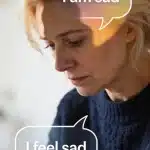 Anxiety and depression can feel like your identity. This article explains why—and how mindful awareness can help you separate who you are from what you feel.
 A personal tribute to Felix, a beloved dog and loyal friend for ten years—and the unexpected lessons about love, courage, and being human he left behind.
 A powerful personal story of living in denial about anxiety, depression, and toxic relationships—and how acknowledging the truth opened the path to healing.
 Anxiety and depression thrive in denial. Discover why we avoid the truth, how it traps us in silent suffering, and why facing reality is the first step toward real healing.
 This is the personal story of how relentless striving became a health risk—and why learning to do something “pointless” may be one of my bravest acts.
 Driven and solution-oriented? Learn why deliberately doing “pointless” activities—with no goals or evaluations—is essential for mental health, recovery, and balance.
 Anxiety and depression are shaped by the brain’s negativity bias. Learn why positive experiences matter—and how the PERMA model helps build resilience.
 There’s no roadmap for the journey out of anxiety and depression. Learn why flexibility—not force, perfection, or rigid rules—is what helps you survive setbacks and move toward your future self.
 A reflective review of Haruki Murakami’s Norwegian Wood, exploring youth, grief, suicide, and how silence shapes a life long after loss.
 The mind–body connection is a real phenomenon. Physical self-care isn’t vanity — it’s essential to mental healing.
 Therapy works when we engage honestly with the emotions we’ve buried. Here’s how to stop avoiding the hard parts and start doing the work in therapy.
 Never trust first impressions. While I believed Carnforth was a ‘has-been’, it turned out to be a living, thriving town with a wonderful bookshop.
 If therapy isn’t working, it doesn’t mean you’ve failed. Find out how to identify a therapy mismatch and take the next step forward.
 Feeling nervous before your first therapy session is entirely normal. Learn why this isn’t the time for giving up anyway.
 Struggling with anxiety or depression? Here’s why professional therapy may be the smartest, most self-respecting choice you can make.
 What personality traits should we look for in someone to talk to? Trust is the key, and sometimes, we need to look outside the most obvious groups of people.
 Why do we need other people because of our evolutionarily developed capacity to connect and communicate, and my own personal journey there.
 About people for whom harsh opinions matters much more than knowledge, platitudes are favoured over truth, and hurting others is an inexhaustible source of self-inflatement.
 No, dear Johnny. You aren’t stupid, and you have never been. Hold on to that tiny piece of self-respect deep inside you. Have faith in your abilities and talents.
 People settle for a level of despair they can tolerate and call it happiness (Søren Kierkegaard). How many of us confuse tolerable pain with happiness? Way too many!
 Self-therapy is like emptying a dam without breaking it, knowing the limits of our capabilities and when to stop.
 Well, are they really pathetic? Of course not, it’s just our brain trying to protect us. However, understanding what is going on is the first step out of it.
 It’s fair to say that I didn’t consciously KNOW I was doing self-therapy while I was writing most of the examples above. Still, sometimes, it was what kept me alive.
 It was good to be allowed to be there, sort of, at the last gig. Thank you, Black Sabbath. You have left a lasting legacy.
 Dear Johnny, you don’t know it yet, but your world will be hit by something on the level of a comet impact today.
 Letting go is important for healing from trauma, but we can’t depend on the people who created the problem to find closure. Forgiveness isn’t mandatory!
 Self-therapy can be an alternative for many people suffering from anxiety or depression, but it’s essential to understand when it’s not.
 Investigating WHY expressing what we have experienced and what we feel is necessary for healing and HOW writing be a good alternative for doing this?
 Identifying psychological defence mechanisms protecting us from anxiety and things that we don’t want to think about or deal with.
 A tale about facing the ghosts of the past and hearing the song of a forgotten child.
 What does it mean to be normal? How is it decided what normality is? Is it always a good thing to be normal? Questions that everyone should ask and answer.
 8 good reasons why talking about our anxiety and depression helps, and who is the perfect person to talk to?
 Being a warrior on the internal battlefield of emotions isn’t easy. It’s about doing what’s necessary to become a better person for ourselves and the people around us.
 I had started my exploration of music in the best way possible: with the Beatles. And that set my expectations for quality in music high, for life.
 The truth is that anxiety and depression medication at their best are emotional painkillers. But they can’t and won’t solve any underlying problems.
 A postcard from Lillehammer, Norway, also known as the site of the 1994 Winter Olympics and the TV series Lilyhammer.
 The first step in treating depression is almost always to put you on antidepressants. Which isn’t NECESSARILY the best thing for YOU.
 Stop doing what hurts you. Stop other people from hurting you. Get out of the situation that hurts you. But it’s not always that easy, is it?
 Last weekend, we had the pleasure of discovering Hawkshead, Cumbria. There are good reasons why this charming village has been uknown to me, being an immigrant and all. However, I might not have been the first immigrant to visit. I’ll return to that. My wife, on the other hand, is virtually a local. She has… Read more: Discovering Hawkshead
 Choosing change might be the most important decision of your life. So make it. Decide to leave your anxiety or depression behind.
 Your journey out of anxiety and depression will be a personal journey of trial and error because no one has ever done YOUR journey before.
 Self-compassion is essential if you suffer from anxiety or depression. But don’t be too kind. Too much short-term kindness is long-term cruelty towards yourself.
 My big decision in the spring of 1989: I would buy myself a Personal Computer. This might not seem like a life-changing event today, but it was for me back then.
 ‘Simplicity prophets’ are people who stubbornly claim they have a simple solution that will solve a complex problem for everyone. Can we trust them?
 7 good reasons why you should educate yourself about your condition if you suffer from anxiety or depression.
 The towns up in the Lakes are charming but way too busy for my taste. Last weekend, we went for a quieter alternative: a stay at Near Howe.
 I couldn’t remember when I watched Stanley Kubrick’s 2001: A Space Odyssey. I remembered the film affecting me in one way or another, but I didn’t remember how.
 If you’re still flogging yourself for being weak, decide to stop doing that. You’re not. And decide to stop all the other negative self-talk as well!
 In a world that presents abundant challenges to every human, we need all the niceties we can collect—even the bright yellow face of this year’s first dandelion.
 If you suffer from anxiety or depression, it’s essential to know if you no longer can handle the situation on your own. But how can we see that thin red line?
 On a chilly Sunday in February, we took a trip to Grange-over-Sands. Like many coastal villages here in Cumbria, Grange started out as a fishing village but became a popular seaside resort after the railway was built in Victorian times. While the village still has a lovely promenade along the seafront, the previous beaches have… Read more: A chilly winter Sunday walk in Grange-over-Sands
 Whether you’re slightly miserable or seriously ill, you are your own most important healthcarer – and, in most cases, the only one you’ll need.
 The ‘big day’ arrived – my 60th birthday. We had a trip to County Durham and back again to celebrate the day.
 Getting an anxiety or depression diagnosis can be both a shock and a relief. Understand what a diagnosis is and how to handle both the negative and positive sides of it.
 Will lazy content ‘creators’ use Artificial Intelligence to drown us in worthless rubbish? Yes they will, and that’s what I find slightly annoying right now.
 Feeling sad or anxious is a natural emotional response when life is hard in one way or another. There’s nothing wrong with you if you have emotions like these.
 “I don’t know why I react like this. No one else does. There must be something wrong with me!” It’s hard to acknowledge we have a problem with anxiety or depression (or both). Often, it’s even harder to admit we have a reason to carry these injuries, let alone have the right to feel hurt.… Read more: Anxiety and depression: Why you shouldn’t compare yourself to others
 What is a good life? For me, a deliberate life equals a good life. Why? And what is a deliberate life? Let me tell you what I think.
 Is it wrong to make significant changes midway in your life? Are such changes are made in a state of blind, pathetic panic? And is a crisis always a bad thing?
 A quarter of the UK population feels Christmas has a negative impact on their mental health. To make Christmas nicer for everyone, we must reflect on why.
 A report from my 40-year-long on and off relationship with Ms Nicotine and a clear warning: Stay away from her! That’s a million times easier than breaking up.