Unexpected destinations: A personal reflection from Skipton
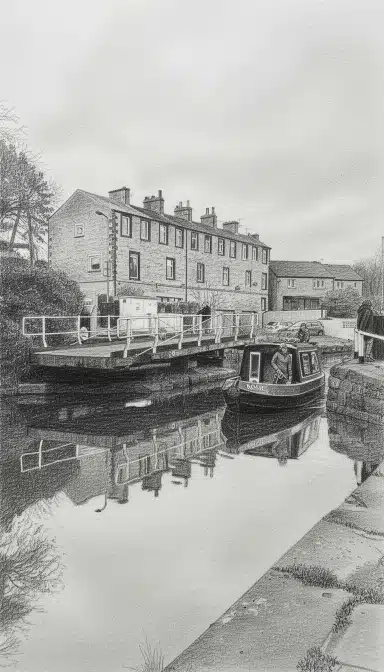
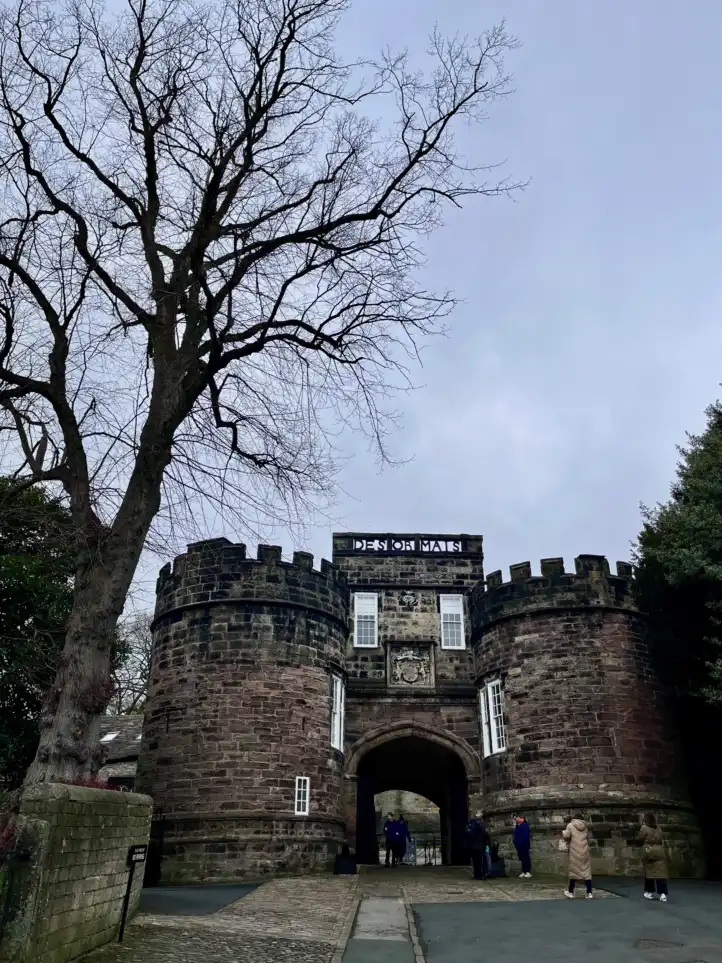
This Easter week, we spent a couple of days in Skipton, Yorkshire. Historically, a market town with a well-preserved medieval castle. And what a living, pulsating town it is still! Unlike many English towns I’ve seen while living here during and after Covid, I hardly saw an empty shop window in Skipton.
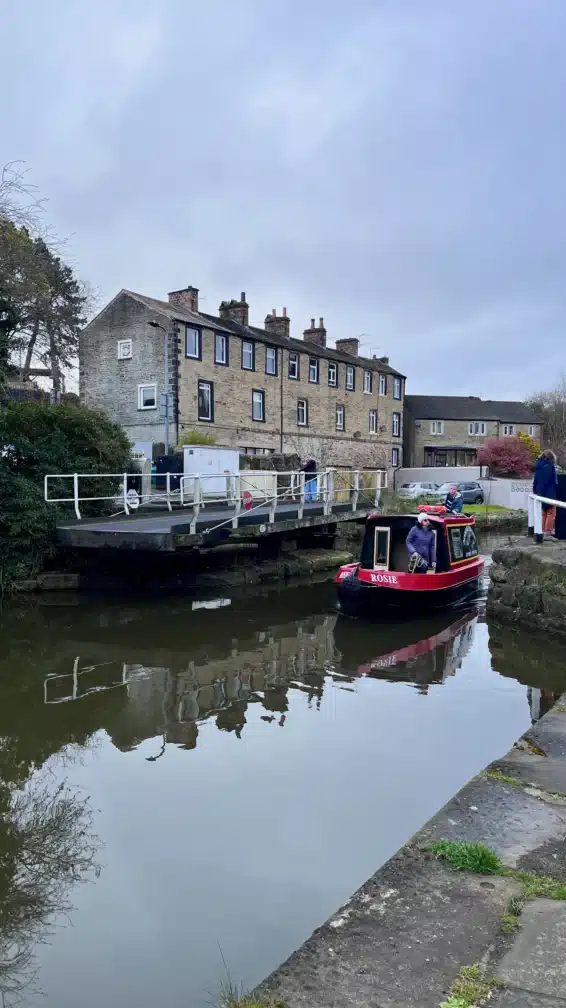
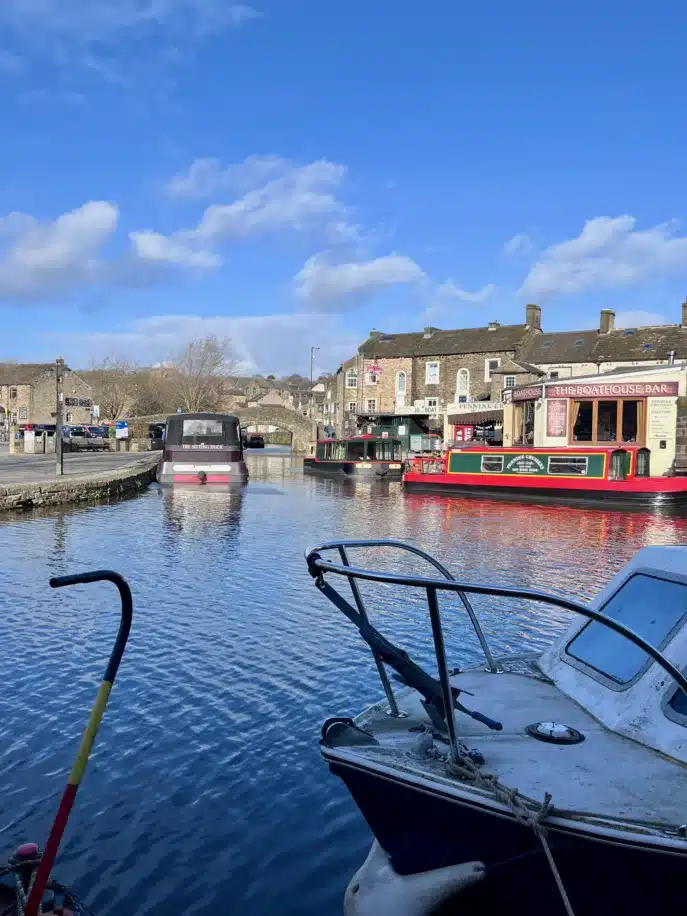
For our stay, we booked a flat overlooking the Leeds and Liverpool Canal, only a 15-minute walk from the town centre. However, the canal itself was the centre of my reflections this time.
Now, what do 18th-century canals have to do with the choices we make in our own lives? Perhaps more than you might think.
England’s canals: Quiet giants of a bygone age
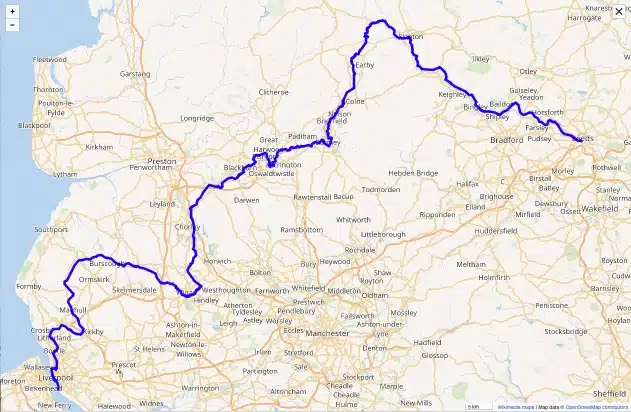
Chat-GPT tells me that England has roughly 2,000 miles of navigable canals and inland waterways. The Leeds and Liverpool Canal alone contributes 127 miles (more than 200 kilometres).
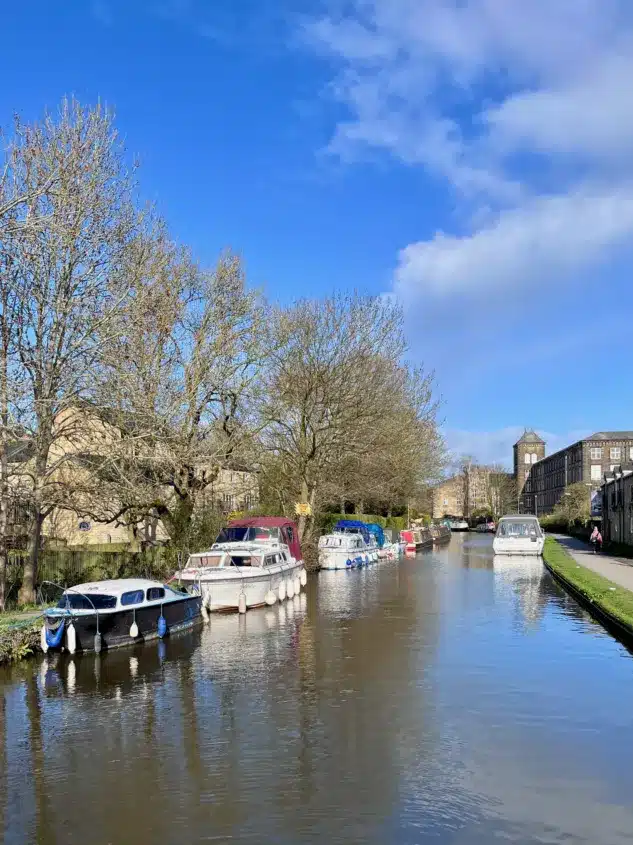
Today, the canals represent lovely, picturesque waterways for sailing narrowboats, or for walks along the tow paths, from which horses towed the barges before the time of motorised boats.
Built for industry, not beauty
Of course, the canals weren’t created for recreational use. Canal companies were founded in the mid-1700s to provide a means of inland transportation of heavy goods, an essential part of the Industrial Revolution.
The main line of the Leeds and Liverpool Canal was completed in 1816, after almost 50 years of work. Think of the capital investments required! Think of the engineering and innovation required!
And think of the manual labour required to dig out 127 miles of wide-open waterways in an age when the available technology was mainly spades and wheelbarrows, powered by ill-paid human bodies!
When the future arrives uninvited
Little did they know what the future would bring.
Within the next 20 years after the completion of the Leeds and Liverpool Canal, railway construction not only began but also accelerated tremendously in England.
Building railways isn’t cheap, even in a topographically easy-going country like England (easy-going compared to, for instance, Norway). But it’s still, on average, relatively inexpensive, simple, and quick as a construction project, compared to digging out waterways by hand.
I don’t know what happened to the canal companies under this new competition, but it must have been a technological shock–and probably financial ruin for some who believed they had made safe investments for centuries to come.
A walk along the canal–and into thought
And this was what triggered my reflections as we were promenading the idyllic canal towpath just before Easter in 2026.
You may assume I was thinking about the challenges of predicting the future now, particularly the technological future, compared to the 1700s. I wasn’t.
Even though it’s interesting, now, to think that the owners of the Leeds and Liverpool Canal could plan to build for 50 years before expecting to collect the full revenue stream. In our age, it would be difficult enough to predict the communication technology five years from now.
The weight of life’s long-term decisions
No, what I was pondering while walking along the old canal was the big choices we make in our personal spheres.
Often, we just need to make decisions that will impact our lives for years, even decades. And the results may not turn out as expected over time. We might regret our choices and reproach the circumstances, and bitterly blame ourselves, others, or our bad luck.
I believe few people pass through a whole life making choices related to education, work, finances, starting or ending relationships, or other things having a lingering effect on them, without one day thinking, “I should never, ever have done that!”
Some of it feels like (metaphorically) building canals for 50 years, just to be (metaphorically) “run over by a train”.
Living with regret–and learning from it
Oh, I’ve made my share of bad decisions. Sometimes out of ignorance, sometimes out of fear, and, well, sometimes out of pure stupidity. I’ve been better than most at blaming and shaming myself for the outcomes.
And after I got far enough in my process of self-restoration and healing to stop blaming myself for absolutely everything, I must admit I’ve had problems with forgiving others.
For good reasons.
Blame, responsibility, and human imperfection
The “others” I struggle to forgive are mostly people who believed themselves entitled to systematically belittle fellow humans because this (in mysterious ways) made them feel bigger themselves.
What I still sometimes blame myself for is reckless, dangerous behaviour, even though I was fully aware of the risks. Smoking cigarettes for years, and some of my most drunken escapades fall into this category.
However, apart from when we deliberately bully others or act equally destructively towards ourselves despite better knowledge, most of us actually do our best in each moment of decision.
Before you blame yourself, consider this
Regardless of our best efforts, however, the outcomes of our choices often go wrong. Sometimes it seems to happen more often than not.
And this is where we perhaps need to give ourselves and others some more space before the regrets, reproaches, and blaming set in.
Let’s reflect on the following for a moment:
We control far less than we think
Fact 1: Most of what happens in this world is completely out of our control.
In my lifetime, we have seen that a global pandemic has hit the human species “out of the blue”. We have seen earthquakes, tsunamis, floods, and devastating storms strike just as surprisingly.
We have seen wars declared behind closed doors, with the real motives unknown to ordinary people. And ordinary people are always those who die in wars, not the ones who start them.
We have seen that a chronically narcissistic and dangerously unpredictable person can be elected as the president of one of the world’s most influential countries. Not only once, but twice.
There is no way to predict the advantages and potential dangers of our technological development. I lived almost half of my life (so far) before the Internet was available. And I dare say this was a technological revolution that by far outclassed even the idea of steam engines pulling trains of carriages on iron rails in the early 1800s.
We cannot possibly see where all our choices lead
Fact 2: We cannot possibly see every potential outcome of our choices.
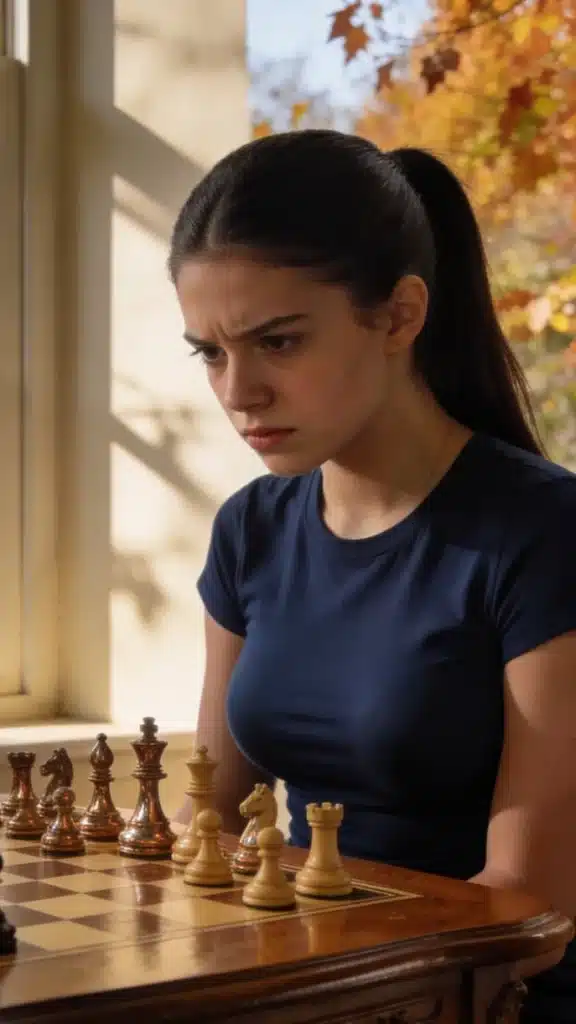
A chess genius may be able to predict every possible outcome of each move she makes on the chessboard. That’s quite impressive, isn’t it?
Well, the complexity of a chess game is nothing compared to real life. A chess game has 32 pieces, a relatively simple set of rules for moving them among 64 possible positions on the board, and two minds controlling it all.
Think for a moment about the number of “moving parts” in your life, all the possible positions in time and space, and all the minds influencing what you do and the outcome of it.
The number of possible outcomes of every action is exponentially higher than in the play-environment of a chessboard.
We are not the rational beings we imagine
Fact 3: Humans aren’t as rational decision-makers as we like to believe.
Most human decisions are made without deliberate contemplation at all. Evolution has built numerous mental shortcuts (heuristics) into us to help us make decisions as quickly and efficiently as possible, which doesn’t always mean the decisions are accurate or even the best ones.
Why? Because “quick and dirty” decisions probably increased the probability of survival more than occasional mistakes decreased it.
On top of this, we will often systematically misjudge situations we are in and the information available to us because of our built-in cognitive biases.
Again, evolution has “decided” that leaning towards certain ways of interpreting (sometimes misinterpreting) information increased the probability of surviving more than the disadvantages of not seeing things as they actually are.
The problem is, humans aren’t living in environments where our heuristics and cognitive biases have proven statistically favourable anymore.
An unexpected outcome is not always a bad one
Fact 4: An outcome we didn’t expect isn’t necessarily worse than the one we planned for.
All of the above may sound terrifying. Are we really tossed helplessly around as a ship without a rudder and sails on a stormy ocean?
Of course not. Although we can’t do much about the storms and oceans of our lives, we all have our means to influence our course (the rudder and sails) if we use them with courage and persistence.
And what if we still don’t end up exactly where we expected to be? Sometimes, this will feel like a failure, but it might not be.
We may find that the place we decided to go, a decision often made under the delusions of our heuristics and cognitive biases, wasn’t the right place for us after all. And the place where we, seemingly by chance, ended up was where we were supposed to be all along.
Staying open to the unexpected
While we often cannot predict the consequences of our decisions, please keep an open mind for the possibilities hidden inside the things we can’t control. Sometimes, these possibilities will appear to us when and where we didn’t expect.
At Easter time six years ago, while the world was shaken by the start of the Covid-19 pandemic, I didn’t expect to emigrate from Norway and start a new life in England soon afterwards. At 55, I only hoped to age as peacefully and gracefully as possible. This was the extent of my ambitions. I didn’t know that fate would pull an ace out of its sleeve a few months later.
For me, this twist of fate brought me the love and companionship I had always wished for. But at least I found it, although unexpectedly, for which I’m eternally grateful.
What remains after plans fail
The owners of the Leeds and Liverpool Canal were probably not equally grateful for the surprising appearance of railways. Perhaps the canals didn’t keep their financial importance and their role as a freight highway for as long as expected.
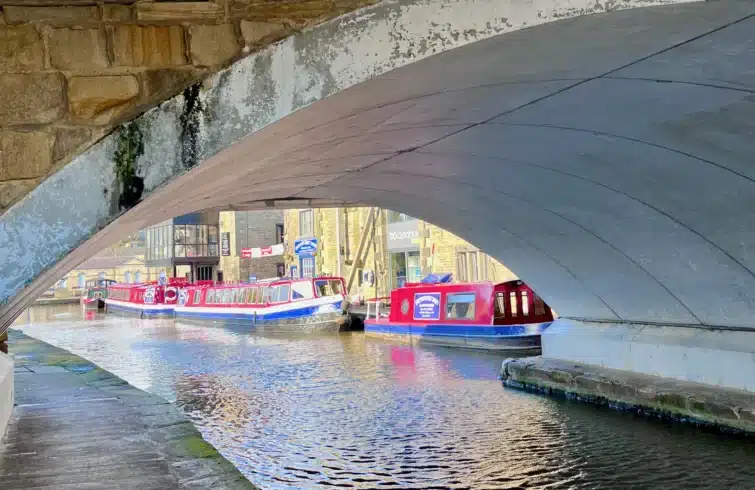
However, more than 200 years later, we still have the most beautiful waterways to walk along. What remains after plans fail might be something of high value.
Happy Easter, everyone.











Post Comment
You must be logged in to post a comment.