Engagement: The quiet power of being absorbed
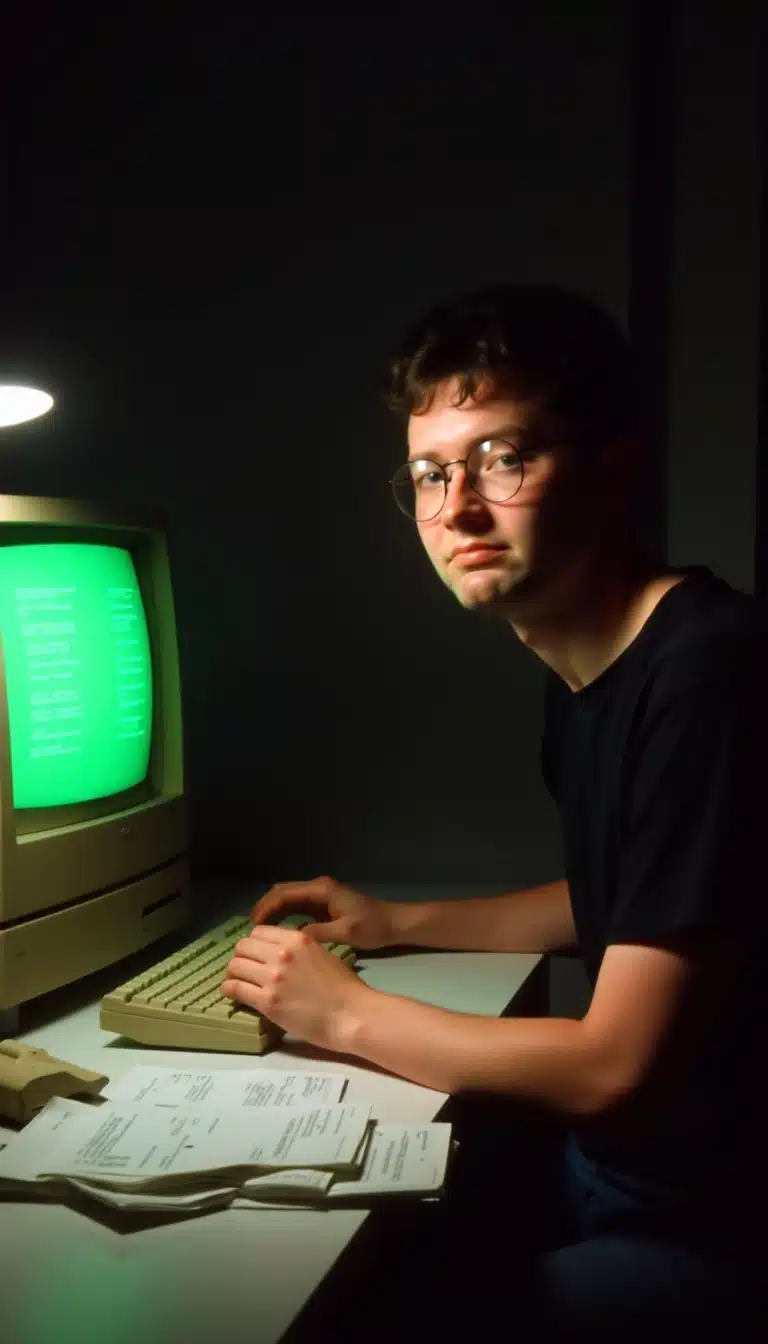
I bought my first computer in the spring of 1989.
I had used computers extensively for five years already. I had even taught computer science in technical colleges. But I hadn’t owned one myself until then. Buying a personal computer was quite a financial mouthful back then, especially as a student.
However, I had decided that my vocational future would be tightly connected to those technological wonders, and I needed free access to one of them to build my knowledge.
The brand-new IBM PS/2 Model 30-286 finally sat on the desk in my bedsit, smelling strongly of plastic and electronics, the hum of its fan and spinning hard drive filling the room. I opened Peter Norton’s book “Inside the IBM PC”, also bought the same day.
Then time and space disappeared.
When time and space disappear
You must know the feeling. When you’re so engaged in something that you forget time, forget to eat, forget to visit the loo until necessity makes you run.
This is what psychologists call flow.
Teaching myself how computers worked (in detail!) was only one of the activities I’ve lost myself in. Other examples have been reading high-class authors, deep conversations with interesting and knowledgeable people, and (in some periods) running or hiking.
As I grew older, I became less interested in how computers work, and increasingly interested in figuring out how humans work instead. Particularly understanding the mysteries of my own brain. And, in the later years, writing about exactly this.
None of these activities was just a pastime. I discovered early that I didn’t only forget about time while submerged in them.
I also forgot about my anxiety.
My brain was quiet. Thoughts like “What if I do something wrong?”, “What if I fail again?”, “What will they think of me?”, and “I’m such an idiot!” were gone!
Because flow anchored me in what I was doing right there and then.
Flow changes what your mind pays attention to
The circumstances hadn’t changed. My anxiety was definitely not “cured” by this. But I got my perspective shifted for a while, and this can be really important.
Think about what anxiety and depression do to us!
They hijack our attention by grabbing us by the neck, constantly pushing our face into a foul pool of worries, rumination, mistakes, faults, shame, and guilt.
Engaging activities can lift our attention out of that pool and give it a different focus.
Did you ask, “Isn’t this just some kind of distraction?”
No, it isn’t. If we are discussing binge-watching TV, doom-scrolling on social media, consuming alcohol or drugs, or compulsive shopping, then we are talking about distractions. This is numbing our minds.
True engagement is different. It’s often about learning or creating something, solving problems, or deep, genuine connection with good people. This is expanding our minds. And distracting only in the sense that it refocuses our attention.
Flow isn’t magic—it has a recipe
Of course, you might get engaged by entirely different things than I’ve been. Perhaps it’s gardening or bird-watching. Perhaps it’s knitting or volunteering for a charity organisation. It doesn’t matter what it is, as long as it genuinely puts you in the much-quoted state of flow.
Flow isn’t something mystical. We all experience it under the right circumstances. To put it simply, flow happens when we find the optimal combination of our skills, the challenge at hand, and the possibility of focusing our attention on it.
In other words, when what we’re doing isn’t so difficult that it overwhelms us, but challenging enough to keep us from being bored, and we can enjoy it without being distracted.
We can deliberately and relatively easily find activities that put us in the flow if we want to.
Why engagement broadens your world
But how can I claim this is expanding the mind? While we are so submerged in one activity that we notice almost nothing else?
First of all, because we are lifting our minds away from anxiety and depression’s electron microscope zoom-in on problems, self-blame, fear, and helplessness.
Being in the flow lifts your eyes. It shows you an alternative perspective, where you actually are in control of something, where the dominant feeling is mastery. And creativity is often at its best when you are in the state of flow. Ideas may come to you, seemingly “out of the blue”.
This is exactly what Barbara Fredrickson’s Broaden-and-Build Theory predicts. Anxiety narrows your attention until you see only danger and problems. Genuine engagement does the opposite. It widens your field of view, making room for curiosity, creativity and possibility again.
That’s why you need it in your toolbox.
Don’t feel guilty about feeling engaged
And that’s also why you must avoid the shame trap.
When you’ve found something that puts you in the flow, it’s natural to want to spend some time there. But if you’re suffering from anxiety or depression, it’s easy to think you don’t deserve it. And you’re perhaps not doing anything “useful” or “productive” when you’re in the flow. Shame on you!
And even worse, others may share that view!
There are three problems here. Firstly, if you’re doing something that counterweighs your problems with anxiety and depression, you are definitely doing something useful.
Secondly, other people’s opinion doesn’t count unless they have taken the time to really understand your situation and what helps you.
And lastly, sometimes other people just don’t know what they are talking about.
In my family, we rarely talked about things that mattered at all, but I suspect my father must have thought my private “computer studies” were wasted time. As a child of the pre-war era, he would probably have held me in higher esteem if I had spent my time repairing old diesel engines.
But, perhaps surprisingly to him, my “studies” opened the door to a 35-year-long career in IT for me.
Does engagement become more important with age?
Now, in the later part of life, I’m more interested in how the technology can support my other interests than how it works under the bonnet. But I still find a lot of satisfaction in the things that engage me, such as my writing projects. I hope they will be “useful” to someone, but my engagement in them doesn’t really depend on this.
I’ve begun to suspect that the importance of engagement becomes bigger as we grow older.
I wrote in my recent article, Positive emotions: Why they matter when you’re fighting anxiety and depression, that we can’t expect our positive emotions to stay the same all our lives. We can’t expect them to feel the same.
And it makes sense. Early in life, we experience new things all the time, such as seeing sunlight refracted to tiny rainbows inside water drops for the first time. I think many positive emotions depend on novelty to some degree.
People at my age haven’t seen it all, far from it. But we have seen much. We don’t experience something entirely new every day. When the positive emotions triggered by novelty don’t arise as often as before, maybe engagement triggered and sustained by mastery becomes even more precious?
Go looking for your flow
If you’re not sure what puts you in the flow, there is a risk that you haven’t prioritised yourself much. Maybe it’s time for you to go looking for engagement.
You can try asking yourself questions like:
- “What makes me lose track of time?”
- “What activities make me forget myself?”
- “What makes me forget my anxiety/depression?”
- “What did I love to do before anxiety/depression?”
What engaged you sometime earlier in life may still work. Or perhaps not. If so, that’s not a defeat. You’ve learned what doesn’t work, and you can look for something new.
You don’t need to find the “perfect activity”. You need one that fits your current capacity: demanding enough to hold your focus, manageable enough to not overwhelm you. This is where engagement starts. And this is how flow becomes possible.

Don’t give anxiety your full attention
Perhaps your anxiety or depression makes you think, “How on Earth can I engage in anything when I’m feeling this bad? I’ll think about this when I get better.”
The thing is, you should reverse it and seek engagement even if you don’t feel ready. Engagement is one of the tools you can use, along with positive emotions and the other PERMA elements, to make your healing journey manageable. Perhaps they are also necessary to give you the required boost to start this journey in the first place.
Anxiety and depression will demand your attention every minute of the day.
Don’t give it all of it!
Give some of it to something that quietly reminds you there is more to life than anxiety.
Find your flow.
All pictures used in this article are AI-generated illustrations. Two of them resemble me at different ages, but aren’t real pictures.
Feel free to use one of the buttons below if you want to share this article with someone.











Post Comment
You must be logged in to post a comment.