Positive emotions: Why they matter when you’re fighting anxiety and depression

I remember this autumn moment so well. I was on my way to school. It had been raining. The tall yellow grasses along the roadside were soaked and bent their tops towards the ground, with big water drops hanging on as long as they could before gravity pulled them off.
Then the sun broke through, low on the October morning sky. The sunlight instantly turned the water drops into thousands of tiny prisms, each containing a miniature rainbow.
I will never forget the discharge of joy that all this beauty sparked in the seven-year-old me.
Through the years, I often wondered whether it’s possible to feel the same level of joy again, or the same level of intensity of any positive emotions, in the later part of life. I’ll return to this.
But first, let’s investigate positive emotions’ role in Positive Psychology and why this matters for anyone who wants to leave their anxiety or depression behind.
Positive Psychology and the PERMA model
Scientists researching Positive Psychology identified five elements that contribute to human emotional welfare. Therefore, these elements may be invaluable tools in your toolbox for self-development and healing, if used deliberately and wisely:
- Positive emotions
- Engagement
- Positive relationships
- Meaning
- Accomplishment or achievement
Some sources add Health to the model (PERMA+H) to honour the tight connection between body and mind.
You will find articles about all the elements here on deliberate.one, and we are starting with positive emotions here and now.
What are positive emotions?
Which may seem like a strange question. We all know what positive emotions are, right?
Let’s linger a bit on this subject anyway. We might uncover facets and perspectives you haven’t considered.

Positive emotions are not the opposite of suffering
You might imagine suffering and positive emotions as the opposite ends of a slider, where your mood can be turned down to suffering (such as when suffering from anxiety or depression) or turned up to positive emotions (such as joy). We may think we’re usually somewhere in between.
But that’s not how it works.
Suffering and positive emotions will often coexist.
Sometimes, we joyfully laugh when we remember a dear, deceased person, while we are also in deep grief. We may also feel a profound fascination and curiosity about something, even when we’re anxious.
Positive emotions are not luxuries you need to wait for
Therefore, we don’t have to wait until suffering has disappeared before we seek and allow ourselves to feel positive emotions. Please don’t think, “I’ll seek joy again once I’ve recovered”.
On the contrary, there are good reasons to seek joy, other positive emotions, as well as the rest of the PERMA model elements, while you’re suffering.
Every positive experience you find is placed on the scales of your mind and helps counterweigh your suffering. Not only will every gem you find among grey pebbles make it easier to cope in the moment, but they may also inspire hope and aid your recovery.
So, what are positive emotions?
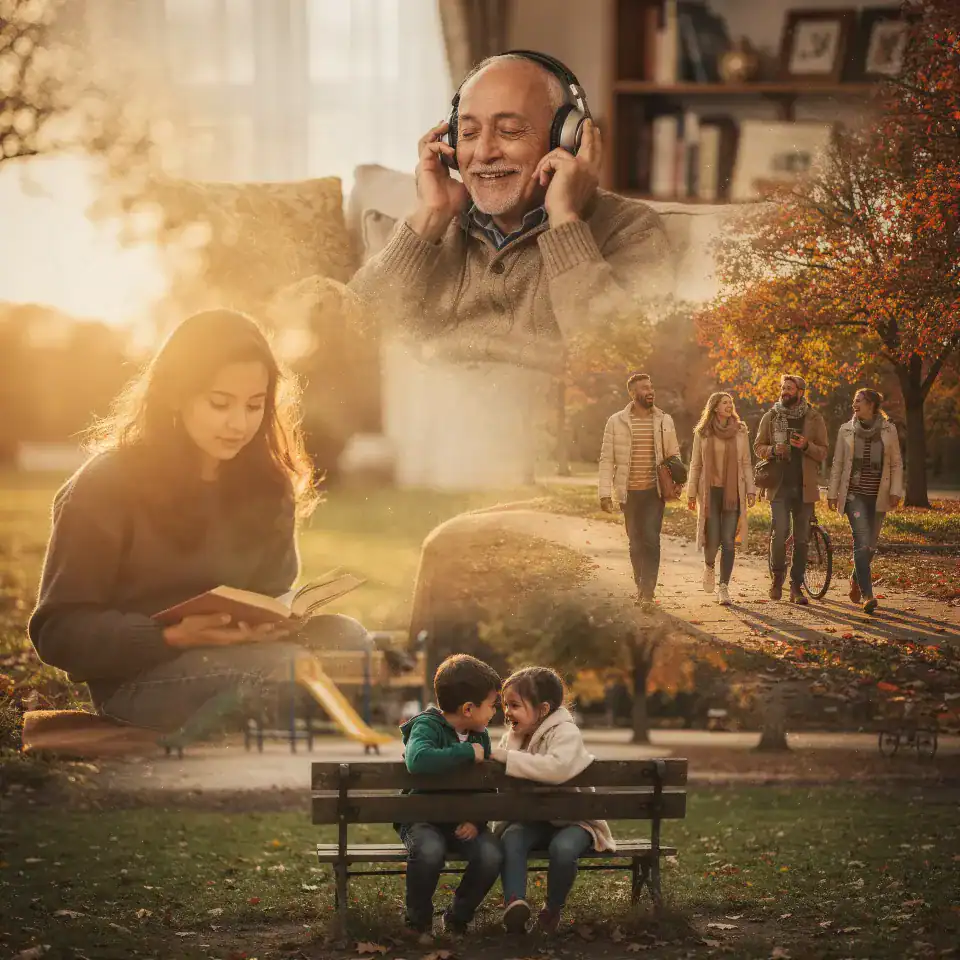
In one way, this is simple: positive emotions are emotional responses that are generally experienced as pleasant. For example, joy, curiosity, amusement, interest, gratitude, hope. And love, of course.
However, they are emotions. This is different from forced positive thinking and pretending (“fake it until you make it”). It’s not the same as inherited beliefs and learned attitudes.
The thing with emotions is that they can’t be faked or pretended if you are utterly honest with yourself. They are spontaneous reactions to experiences.
How can you create positive emotions?
This means that positive emotions are created automatically if you seek the right experiences.
While the emotions themselves are virtually uncontrollable (unless you or others forcibly suppress them in you), you can often influence which experiences you are exposed to.
What can you do to trigger positive emotions in yourself?
- What hobbies would you need to pursue?
- What people would you meet?
- What memories would you recall?
- What places would you go to?
- What music would you listen to?
- What else?
But isn’t this selfish?
Yes, isn’t it selfish to do things to make you feel good? Isn’t it hedonistic to seek positive emotions for their own sake? Perhaps it’s a sin, even?
Let’s turn it around: wouldn’t it be cruel to deny someone the chance to feel good? Isn’t this true even if this “someone” is you? What if denying yourself positive emotions prolongs your suffering and, thereby, also affects others negatively?
Selfishness is prioritising yourself at the expense of others. Despite what many of us have been raised to believe, there is nothing unethical about feeling joy, love, curiosity, even sexual pleasures — unless the pursuit harms yourself or someone else.
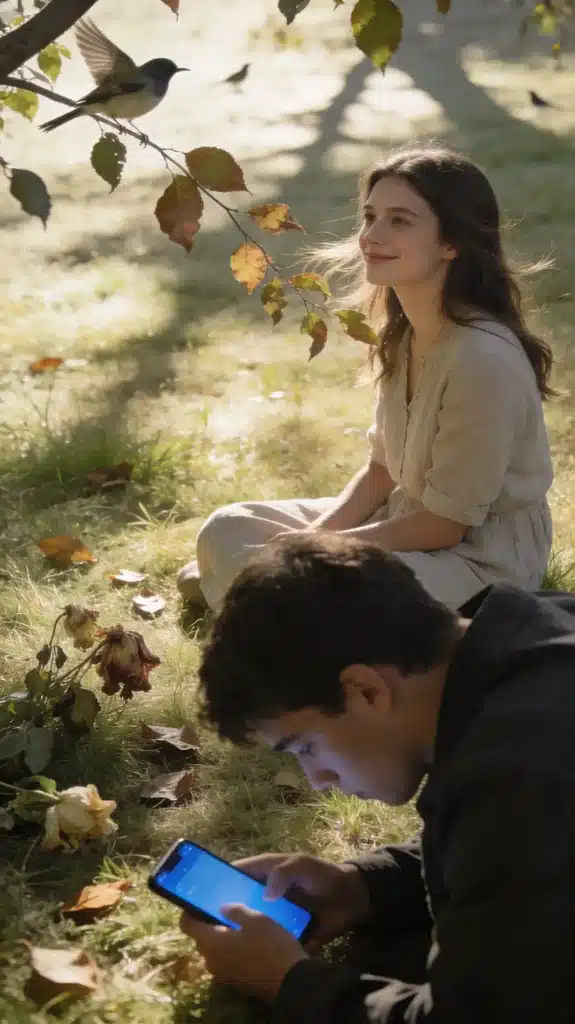
Are positive emotions less worth than other PERMA elements?
Oh, you could easily think that being deeply engaged in something (selflessly submerged in solving a problem, for instance), seeking positive relationships (“I’m doing it for them, not for myself”), finding meaning (“I’m doing it for something bigger than myself”), and (again selflessly) achieving something big is more valuable than merely invoking positive emotions in yourself (you egoist!).
Think about it! You know this is a distortion of what the PERMA model is about, and also a misunderstanding built on the firm ground of low self-esteem.
Stop thinking like this and start considering what would make you thrive, heal, and function as well as possible. Which you deserve just as well as anyone else.
Understand the interconnectedness of the PERMA elements
There’s no reason why you shouldn’t put all elements in the PERMA model in your toolbox.
Besides, all the elements are interconnected and mutually reinforcing.
When I’m absorbed in writing (engagement), I feel joy (positive emotion). When I complete a project (achievement), I feel satisfaction (positive emotion). When I deepen a friendship (relationships), I feel warmth and belonging (positive emotions).
It doesn’t make sense to consider positive emotions as something separate and optional. They are woven through everything else.
And the best thing is: deliberately seeking experiences that give you positive emotions is actually something you can do to make your life better.
How can positive emotions aid your recovery?
Apart from making your life better?
Do you remember the anxiety or depression electron microscope, constantly zoomed in on your weaknesses and flaws?
It’s a dreary existence this microscope shows you. And it’s not a true picture of yourself and the world at all.
The Broaden-and-Build theory
Here’s where Dr Barbara Fredrickson’s Broaden-and-Build Theory has been a solid contribution to Positive Psychology.
Fredrickson and her research asked, “What’s the point of positive emotions?”
The theory suggests that while negative emotions narrow our repertoire of thoughts and actions, positive emotions broaden it.
Instead of focusing exclusively on danger, flaws, and obstacles, we become more likely to notice possibilities, beauty, ideas, relationships, and opportunities. In other words, positive emotions don’t simply make us feel better—they help us see more.
One of Fredrickson’s early ideas—the famous 3:1 positivity ratio (also mentioned in earlier articles on deliberate.one)—received widespread attention but was later criticised mathematically.
While the precise ratio has not stood the test of time, her broader work on how positive emotions expand our thinking remains highly influential.

How can you cultivate positive emotions?
You may come across a lot of rather self-evident advice, for instance:
- Keep a gratitude journal: note three things each day you appreciate (highly recommended in most self-help books, this one).
- Try an anticipation journal: write three things you’re looking forward to tomorrow.
- Use music deliberately: listen to something that energises you — find that old AC/DC album, and avoid music that brings you down.
- Learn something new: the mind thrives on discovery.
- Spend time with people who make you feel safe: connection nurtures warmth and belonging.
- Use a photographer’s eye outdoors: train yourself to notice beauty, however small.
All well and good. But the thing is, what works for one person won’t work for another.
Not all roads lead to Rome (for everyone)
I don’t doubt that gratitude journaling has helped many people. And I’ve tried. I really have. It’s just that my brain finds that doing the same thing over and over feels like filling in the same questionnaire form every day. It just gets too boring and soon too easy to forget.
Learning something new, well, now we’re talking! Learning and discovery have always been important for my motivation and a huge source of positive emotions.
But this is me!
Use articles like mine or self-help books for ideas and inspiration, but only you know what gives you true positive emotions.
Along the timeline of life
I mentioned at the start the shot of pure joy I felt when the morning sun magically put a tiny rainbow inside each raindrop hanging from the straws, one October day in 1972.
Sometimes, I miss this feeling so much. There are other feelings I miss as well. Opening a book I’ve waited months to read. Smelling the new vinyl of an LP brought home from the record shop just now.
Well, not just now. Decades ago.
I buy books all the time. It doesn’t feel the same. And even if I bought a vinyl record now, it wouldn’t feel the same.
We can’t expect our positive emotions to stay the same all our lives. We can’t expect them to feel the same. They change. But they’re not gone. Don’t give up on them!
Sometimes, I look up and see my wife standing by the windows. This fills me with an overwhelming love I didn’t even know existed a few years ago. Yes, I do still feel, and I can feel intensely. Just about other things.

We can’t be happy all the time, can we?
I know some people will think this, after all my talk about positive emotions. And technically, the statement is correct. We can’t expect to be happy all the time. I’d prefer it if we could be, but that’s not how the world is.
There are, however, two problems with this statement.
First of all, happiness isn’t necessarily one-to-one synonymous with positive emotions.
Happiness is the output.
Positive emotions are one type of input, along with engagement, relationships, meaning, and achievement, working together to build resilience while suffering and recovering from suffering, on the way to ensuring long-term well-being – and happiness.
Remembering magic rainbows
And the second problem: “We can’t be happy all the time, can we?” is a little bit too easy to use as an excuse for not doing anything about our unhappiness.
True, when suffering from anxiety or depression, there are some days we just need to survive.
But most days, it’s possible to do something about the situation.
So, why not start with the small, simple things? With the small, deliberate choices that spark genuine emotional lifts and help you stay upright while you rebuild yourself brick by brick?
Each spark matters, and will add up to a bloody decent light if you keep igniting them.
Meanwhile, I will sometimes return to the memory of magic rainbows hanging from the grasses. Well, I’ll never be seven years old again. But I don’t need to.
There’s still magic and wonders in this world, and I’m willing to look for them.
All pictures used in this article are AI-generated illustrations. Some of them may resemble my wife or me at various ages, but they are not real pictures.











Post Comment
You must be logged in to post a comment.