Rediscovering you: Why anxiety and depression hide your strengths

Finding and getting to know your strengths isn’t a matter of inventing something. It’s a matter of rediscovering who you are.
Let’s go rediscovering!
Looking for El Dorado through an electron microscope
Picture yourself standing on a hilltop, looking out over the vast landscape of your personality. The shining, snow-clad mountains of your courage and determination, the endless plains of your perseverance and stamina, and the mysterious, shadowy valleys of your intuition and creativity.
Stop the film!
That’s not how it is to rediscover who you are while suffering from anxiety and depression. You have no wide-angle, cinematic colour palette camera at hand. Instead, you’ll have to do with this ugly, black-and-white electron microscope relentlessly zoomed in on your weaknesses and flaws.
Doesn’t leave you with much hope of finding your internal El Dorado, right?
Missing out on half of the picture
Not that it helps you much, but for all it’s worth: if you’re entirely focused on what’s “wrong” with you, you’re not alone.
That’s what most doctors, therapists, other healthcare professionals, and most psychological research focus on as well.
It’s not that this perspective is incorrect. It is, however, incomplete.
Here are some common flaws when employing this one-sided perspective:
- The perhaps well-meaning but insufficient emphasis on reducing symptoms instead of seeing the big picture of you. This is, for instance, what happens when anxiety and depression are attempted to be “cured” by prescribing antidepressants–as discussed in other articles on deliberate.one.
- A hyperfixation on spending a lot of time and energy on “repairing” faults, while the possibilities of at least improving the situation through using natural strengths are overlooked.
When problems become your whole world
But it’s not fair to put all the blame for the pathology fixation on doctors and therapists. Most of us do it ourselves, to a certain degree. Sometimes to a paralysing degree.
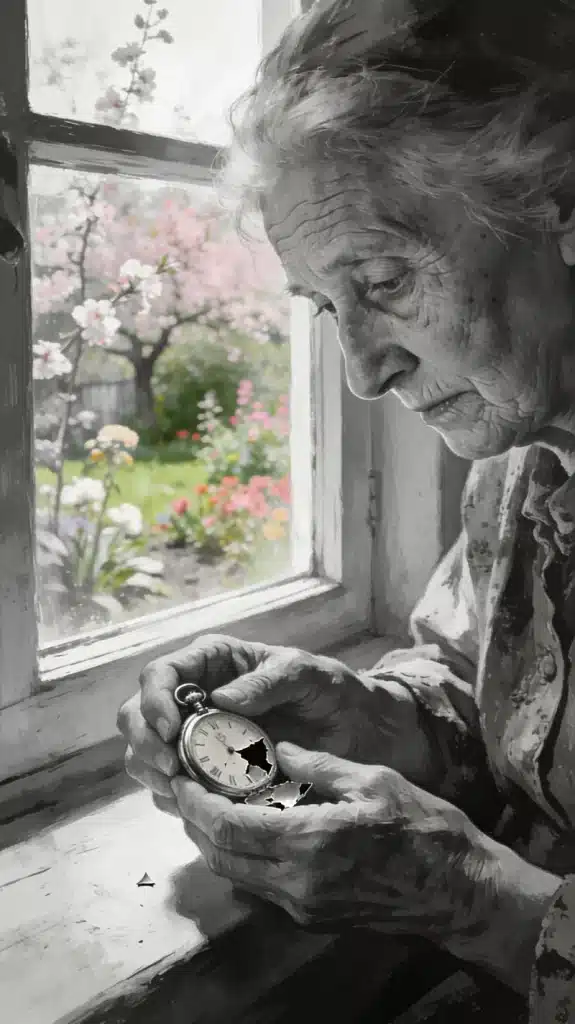
A person I used to know had a minor stroke that impaired the function of her right arm and leg somewhat. Like many Norwegian women of her generation, she had a favourite hobby: crafts such as knitting and crocheting. After the stroke, pursuing such activities became challenging for her.
Sadly, the difficulties with certain tasks made her stop doing everything she could actually do. Including cooking meals for herself, cleaning her flat, going out to meet friends and acquaintances, or any attempt to rebuild the functionality and strength of her right arm and leg.
The problems became all she could see. Possibilities were ignored or rejected. She spent the rest of her life sitting in a chair, watching TV while growing increasingly bitter.
The logic behind fear
For those of us suffering from anxiety or depression, overfocusing on problems has its reasons and origins. Anxiety and depression themselves have their built-in logic.
Anxiety and depression are the dark versions of fear, an entirely healthy and necessary emotion in a threatening situation. Fear is the danger response our brains trigger to prepare both mind and body for fight or flight. It’s a natural survival mechanism.
Sometimes, however, fight-or-flight isn’t what gives us the best chance of survival. At times, it’s more rational to hide, wait, hardly breathe, and save our energy until the situation improves.
This freeze state, along with its fight-or-flight siblings, is supposed to lift when the danger passes, returning us to a normal, relaxed state. Sometimes, they don’t lift. They become a chronic state of mind.
That’s when we talk about anxiety and depression.
A life organised around self-protection
But seen from the distorted perspective of your anxiety- or depression-ridden mind, it makes perfect sense to zoom in exclusively on real or perceived problems and flaws.
Being stuck in a danger-handling alarm state, it’s entirely rational for your brain to only look at the presumed problems at hand. This is what your life and security depend on! This is what matters, and any proof you might see of a world that isn’t too bad after all is quickly suppressed and forgotten.
Let alone talk about abstract things like your “strengths”.
The problem is that your coping strategies in these situations are mostly about avoidance and self-protection. Which, in the right circumstances, may be necessary, and sometimes crucial.
But they don’t leave you with much of a life.

Survival isn’t your only goal
A problem-oriented, defensive, worst-case coping strategy will include:
- Trigger avoidance: doing everything you can to keep away from things that may make you feel worse, which usually will involve isolating yourself.
- Symptom management: for instance, taking antidepressants to (hopefully) lift your mood, but not addressing the underlying causes.
- Stress reduction: often in the form of distraction, such as online scrolling, binge-watching TV series, or the use of recreational drugs.
Are trigger avoidance, symptom management, and stress reduction a positive thing? Yes! Definitely! Sometimes life-saving! Even though healthier ways to do these things exist than the ones mentioned.
Is a life organised around these things a good one? No!
Lift your eyes from your feet
A problem-oriented view of life will slowly reduce you to being your problems. And nothing else.
Getting to know and use your strengths can be an effective counterweight to this. If a problem-oriented view is like watching your feet as you walk, a strengths-based outlook is like lifting your gaze to see the road ahead and deciding where to go.
You’ll be able to ask yourself:
- What am I still capable of doing?
- What do I need to function at my best?
- How can I make choices in alignment with my nature and values?
- How can I help myself and contribute to others?
This opens up possibilities of a much more spacious and fulfilling life.
What’s strong with you?
Anxiety and depression can deceive you into believing that your weaknesses are your identity. They’re lying.
And yes, your wounds deserve attention. Your symptoms deserve treatment. Your pain deserves compassion.
You also deserve more than merely surviving. This is where you can rediscover and use your strengths to help you.
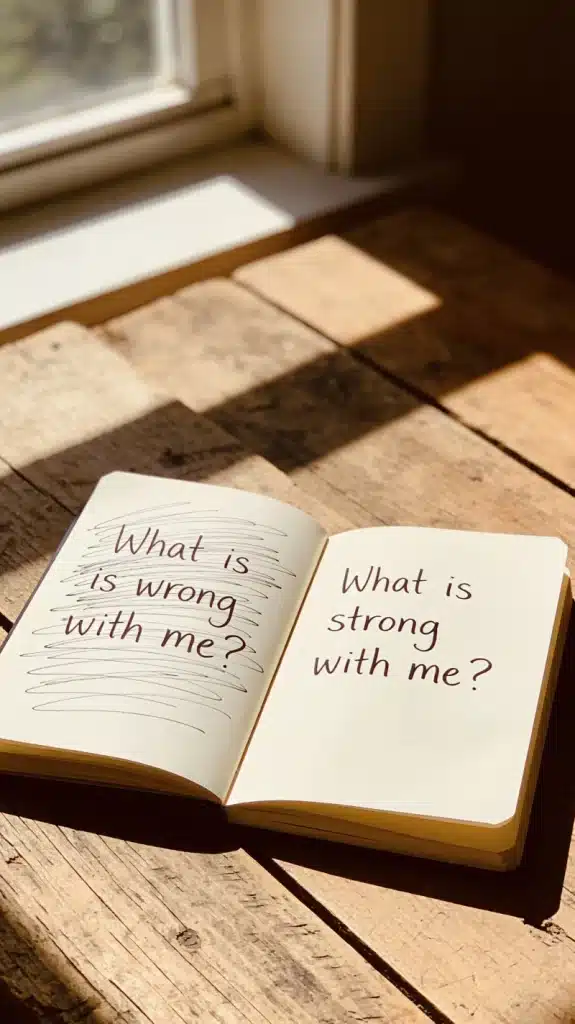
Perhaps it’s time to stop asking only “What’s wrong with me?”
And sometimes start asking, “What’s strong with me?”
The answers may start a new chapter in the book of your life.
All pictures used in this article are AI-generated illustrations.











Post Comment
You must be logged in to post a comment.