Meaning: How purpose helps you survive anxiety and depression
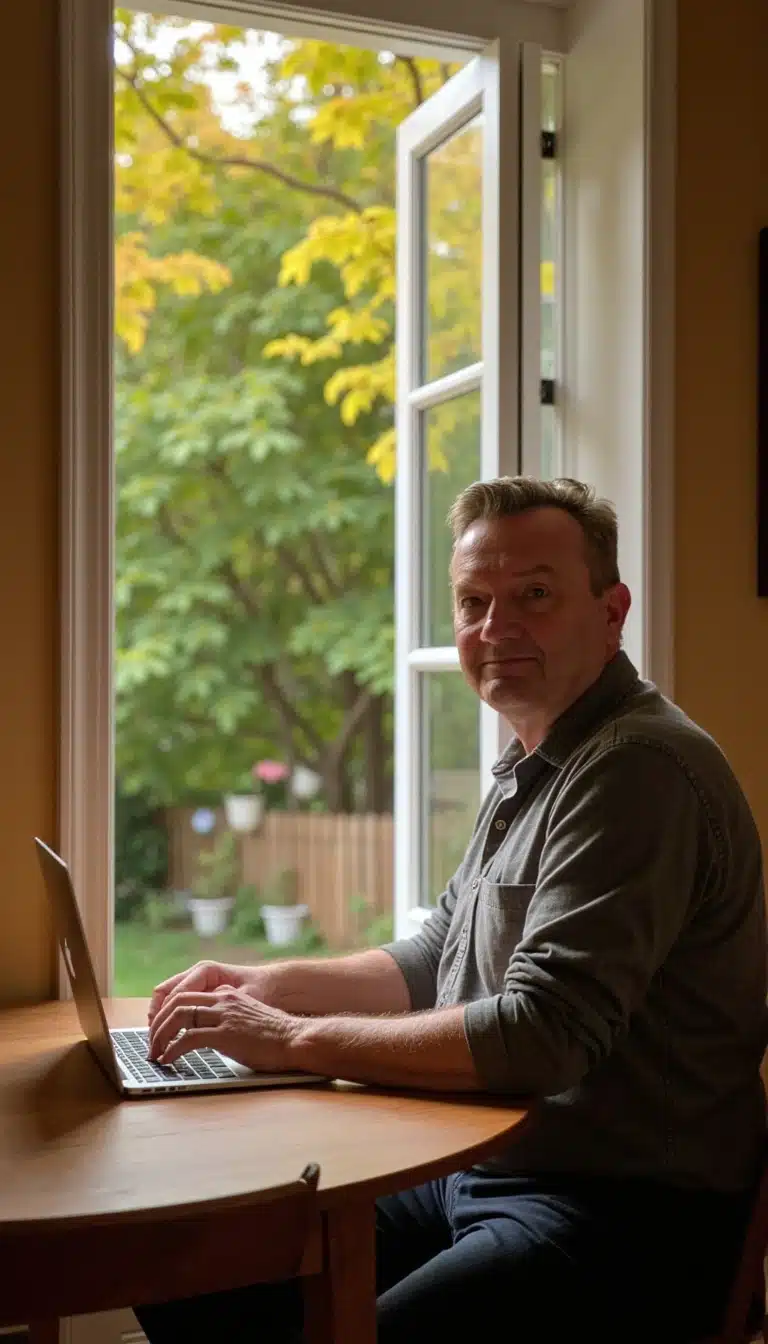
It’s a warm, sunny afternoon in Northern England.
Through the open window, I hear light-hearted bantering and laughter from somewhere in the neighbourhood. Probably some young people having a garden party. I bet the outdoor seats are pretty full outside the pubs down in Market Street, too.
I’m too busy for such things.
I spend a significant part of my spare time, rain or shine, creating articles and social media posts about mental health, neurodiversity, self-esteem, self-respect, self-development, and…hope, I think.
Why?
Because I feel that if I don’t do this, something important remains undone.
Why I can’t stop writing
Perhaps I have an extreme need for attention, which is why I expose myself on the Internet in this way?
On the contrary, it felt like a high threshold to cross to start doing it. In the culture that shaped my early life, self-exposure would immediately trigger condemnation, ridicule, and, most likely, bullying. Memories that easily stay in your body for 50 years or more.
What’s certain is that I do it partly for the joy of writing. And the work engages me deeply. Time just flies by while I’m sitting here “in the flow”. But I could have attempted to write a novel instead. That would have had exactly the same effect.
No, there’s something more to it than this.
I’m not a religious person. But if I had been, I might have said that my writing is some kind of calling. To share my experience and knowledge, in case someone, sometime, somewhere out there can be helped by it.
I find it profoundly meaningful.
Depression’s cruelest theft
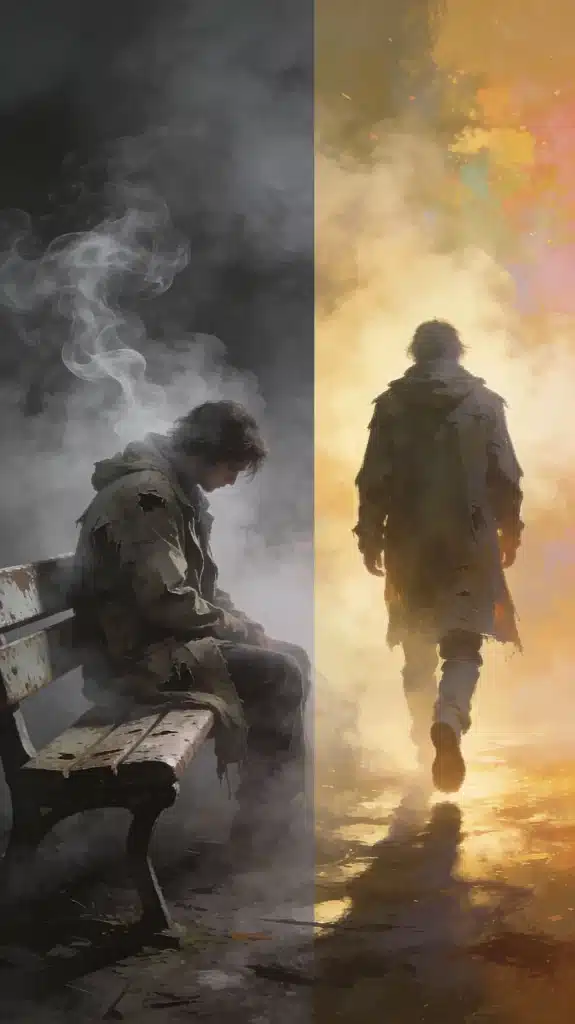
Perhaps this is especially important to me because I know how entirely meaningless existence feels when suffering from severe depression.
Even now, more than a decade after my last significant depressive period, the memories of it alone are enough to flood my mind with this sick, paralysing, death-like feeling of meaninglessness.
Depression doesn’t only steal happiness. It steals the feeling that anything matters. Nothing is worth doing. Oh, I recall the effort it took to do what needed to be done anyway. I had a family and a job to look after. When all I wanted was to disappear.
Soaked in these memories, I know (deep in my guts!) how pointless it must feel for some readers who are submerged in depression right now to receive the main message of this article:
That meaning can be sought, even now, and may become the most valuable support on your journey out of anxiety and depression.
I know it isn’t easy to believe.
Meaning in humanity’s darkest place
But meaning can prove to be valuable, maybe life-saving, under the most horrible circumstances.
Viktor Frankl, a holocaust survivor, observed that those of his fellow Auschwitz prisoners who found some kind of meaning even in this most dreadful of situations actually had a better chance of surviving.
His famous book, Man’s search for meaning, first published in 1946, has been extensively discussed and cited in psychology for decades, and its central insight has been replicated again and again:
“Man’s main concern is not to gain pleasure or to avoid pain but rather to see a meaning in his life.”
– Victor Frankl
What does “meaning” actually mean?
The significance of meaning has also been confirmed by Positive Psychology research. Meaning is the M in their PERMA model, the five elements they have shown help humans thrive.
In the context of Positive Psychology, meaning is described as having a sense of value or worth, belonging and serving something bigger than ourselves, having a purpose.
It’s self-evident that meaning isn’t one single thing that applies to everyone.
In Viktor Frankl’s Auschwitz hell, meaning may have been to support their fellow prisoners in every way they could. For me, right now, it’s meaningful to share my life experiences through writing, hoping it will be helpful to someone. For you, it might be raising your children, doing National Service to defend your country, or even supporting a football club.
So, if your existence feels meaningless right now, how can you rediscover meaning?
The demands and rewards of meaning
I believe it may be helpful to dispel one common misunderstanding about meaning. Meaningful activities don’t necessarily feel exciting or pleasant. They often demand sacrifices. Sometimes, they’re exhausting. Sometimes, they hurt.
Still, they enrich our lives.
Meaning will interact with the other PERMA elements, but shouldn’t be confused with them.
Positive emotions: “This feels good!”
Meaning: “This matters!”
Engagement: “I’m in the flow!”
Meaning: “I’ll keep going!”
Positive relationships: “I belong!”
Meaning: “I’m a part of something bigger!”
Achievement: “I succeeded!”
Meaning: “It was worth doing!”

Beware of borrowed meaning
It is even more important not to borrow meaning.
So many people and organisations want to inject what they find meaningful into us. Or what they will benefit from making us believe is meaningful.
Sometimes they try to plant beliefs, traditions, and ideologies in us using guilt, shame, and fear. Or they may use charismatic speakers, entertainment, rituals, and tribal unity to convince you, as both religious organisations and companies often do.
Advertisers will try to create a mirage of unattained meaning by stimulating your low self-esteem, envy, and general dissatisfaction, leading you to believe the answer lies in shopping and consumption.
Borrowed meaning will also usually demand sacrifices and inflict pain on you, but without giving you authentic meaning back.
Because meaning isn’t meaning if it isn’t genuinely yours.
Many people reach a breaking point where they discover they have borrowed and lived other people’s meaning. What is often perceived as a midlife crisis is, in reality, an authenticity crisis.
Grow your meaning from your values
Meaning can’t be given to you or imposed on you.
Neither is it a treasure hidden somewhere that you can dig up and use once you find the right spot.
Meaning is already rooted inside you, and must be grown. Cultivated. Because the seeds of meaning lie in your core values. Growing meaning is building a life in accordance with these values.
So, this is where you can start looking if everything seems meaningless right now.
I know, sometimes we feel so lost that we also lose sight of our core values. If this is you, try looking at what genuinely and deeply resonates with you emotionally.
- What causes moral pain in you (shame, regret, anger)?
- What causes moral pride in you (what do you respect in yourself)?
- What are your moral boundaries (what you will not tolerate or betray, whatever happens)?
Meaning changes because you change
An honest exploration of these questions may surprise you, and it’s possible that you’ll find values you didn’t know you possessed, and definitely not had at an earlier age.
Value formation is a complex and highly individual thing. You are born with some predispositions. The culture of the family you are born into will undoubtedly have a major impact. But from then on, everything you experience in life will influence how your values develop.
For instance, you may have been brought up in a highly competitive family culture, but personal experiences with anxiety and depression might have turned your values in a much more empathetic and selfless direction.
It’s too simplistic, almost a cliché, to say that suffering refines and ennobles you. But you will learn some things along the way, and your experiences will hone and develop your core values. Understanding and compassion for other people’s suffering will hopefully be among them.
Meaning changes because you change.

You can’t choose someone else’s purpose
As you have limited control over what happens to you and how incidents affect you emotionally, you will also have limited control over how your core values develop. It’s more or less like they just “happen to us”.
Meaning often reveals itself through circumstances rather than choice.
Oh, but wouldn’t it be glorious if we could choose our core values and meaning? If we could choose something we really admire? You may have wanted to be a new Mother Theresa, finding meaning in helping the poor in the slums of India. I think I would become a new Nelson Mandela.
The problem is, being Nelson Mandela isn’t for everyone. I wouldn’t have survived 27 years in a South African prison. And even if I decided to just adopt all his core values, they wouldn’t be mine. At some point, it would have felt inauthentic.
I would have found chosen, but still borrowed meaning.
Meaning rarely looks heroic
I don’t know how you would have fared as a Mother Theresa in the slum, but the point here is that meaning doesn’t need to be something big, dramatic, or highly admirable. Remember, we are seeking meaning here, not people’s adoration.
Some people find meaning in performing heroic, high-risk acts, such as flying a rescue helicopter through a storm to pick up shipwrecked fishermen from the ocean.
These rescuers might be true heroes, and I’m not trying to belittle their courage. However, the question is whether the internal reward they obtain through their valiant actions is meaning, or whether it’s more about Achievement (the A in the PERMA model). Or maybe it’s just the adrenaline rush.
Most of us find meaning in the small and quiet things, such as everyday acts of kindness and contribution.
What distinguishes meaning from heroism is not scale, but persistence and consistency.
Meaning makes suffering survivable
Viktor Frankl tells about finding meaning even among the horrors of the death camp Auschwitz. This couldn’t possibly have removed the hunger and illness, the extreme violence, or the bottomless humiliation they had to endure.
Most of us live very uneventful lives in comparison, but meaning cannot eliminate our relatively minute suffering either. However, as Frankl discovered, meaning can still support us even when everything else fails.
Meaning can make suffering survivable.
Even if we cannot choose meaning, and often not our circumstances, Frankl still learned that we may achieve some control over how we respond to life’s incidents. This is our freedom, he says.
“Man does not simply exist but always decides what his existence will be, what he will become the next moment. By the same token, every human being has the freedom to change at any instant.”
– Viktor Frankl
What matters enough to keep going?
I believe it takes a very strong person, honed by hard circumstances, to arrive at this conclusion. For most of us, it’s difficult to see how we can change at any instant. Sometimes, the best we can do is to keep going while making the healing journey step by step.
While we’re out there, finding and cultivating meaning is probably the most reliable and lasting tool we have.
Even when it hurts. Some of the articles I publish on deliberate.one are hard work to write. Sometimes, they bring memories and flashbacks I could manage without. Still, it feels deeply meaningful, and it’s probably good self-therapy as well.
I’m just an ordinary, middle-aged man scribbling down his experiences. It’s not very spectacular or glorious. No heroism and probably not much admiration awaiting. But this is how meaning is:
It arrives quietly. It doesn’t announce itself. It grows slowly and beautifully while you are writing, raising children, volunteering, or repairing the neighbour’s bike. You don’t have to save the whole world!
One day, most of your life will be behind you. What would be more satisfying than this:
Knowing you’ve lived a meaningful life.
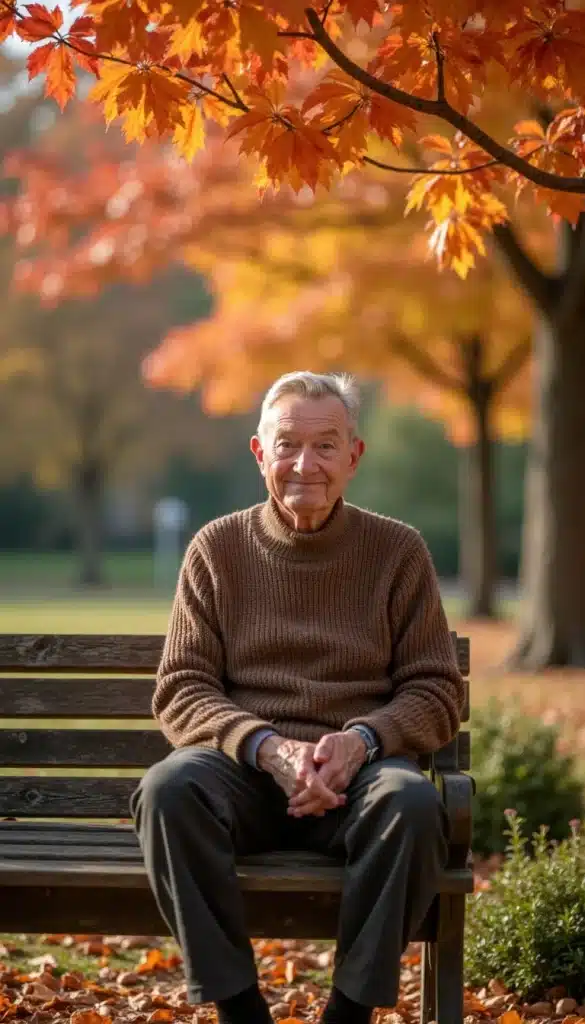
All pictures used in this article are AI-generated illustrations. Two of them resemble me, or will probably resemble me, at different ages, but they aren’t real pictures.
Feel free to use the buttons below if you want to share this article with someone.











Post Comment
You must be logged in to post a comment.