Positive relationships: Why the right people help you heal

On 9 July 2020, I incidentally began exchanging messages with someone online. This moment led to more changes in my life than any other incident since the day I was born.
When I woke up on 10 July 2020, I had already begun to think of this “someone” as my friend. And I knew, beyond any doubt, that as long as this “someone” felt the same, I would never give up on our friendship, whatever happened.
What happened was that I told my then-wife what was going on, probably around 15 July 2020. I knew it wouldn’t go down well, but I did it anyway, mostly because I felt I had nothing to hide. At this point, I was just “talking” (messaging) to someone 800 miles away about shared life experiences. But perhaps I also wanted to make a statement:
“This is something of value to me. I won’t let it go!”
I didn’t let it go. A little more than two years later, I was married to the “someone” and was soon ready to emigrate and start an entirely new life.
When survival becomes more important than convention
What on Earth happened?
Some people would say I had a severe midlife crisis. Some would say I was insane and immoral.
Midlife crisis? Crisis, yes, but not a midlife crisis as you normally think of it. However, at 55, any reasonably enlightened person will have realised that their days are numbered. And this will, of course, influence their choices.
Insane? I disagree entirely. I’d say I’d never been more sane. The crisis made me remember and understand what had happened up to then far more clearly than I ever had before, and for the very first time in my life, I made my own choices.
Immoral? Morality is a difficult thing to define. Some people think it’s about following rules and traditions, whatever the cost. In my mind, it’s about choosing what causes the least suffering. True, my “insane” choices did cause some suffering. Changes usually do. But for the very first time, I included my own long-term welfare in my moral calculations. And I knew that if I didn’t do what I did, there would be no long-term.
I would die.
It would mean death, whether I had continued breathing or not.
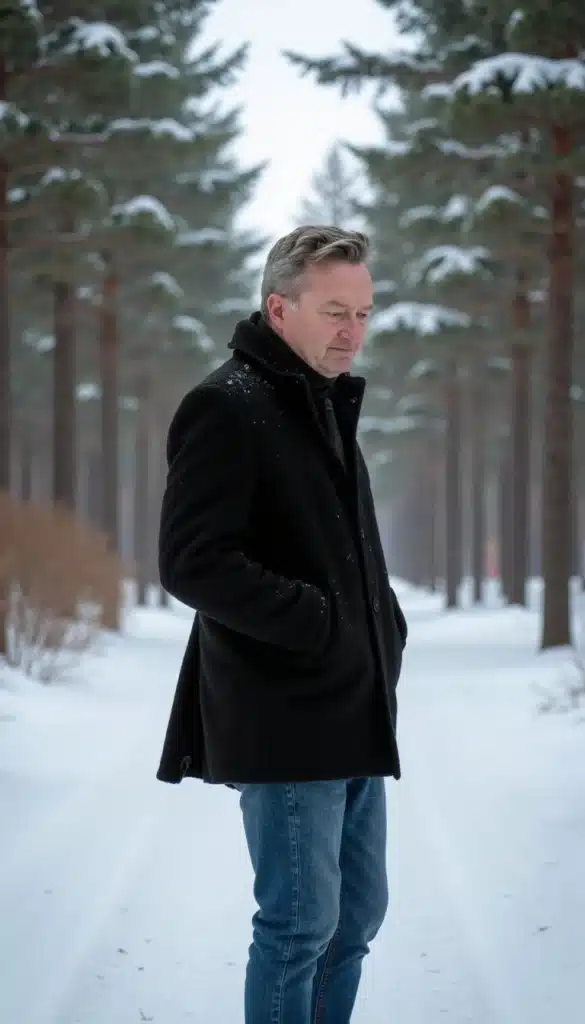
The relationship that changed everything
So, what was it about this friendship, and later the deeper relationship, that made me leave behind a whole life lived, a marriage, a job, and a country, in my late fifties? What was so different from what I’d experienced before?
It was freedom.
Not freedom from obligations. But freedom to be myself.
The freedom of not having to guard my personality, my ideas, my opinions, and my personal needs behind a mask every moment to avoid other people’s judgement, spite, and anger. The freedom of being respected, liked, and especially loved for exactly who I am, without playing roles to fit others’ expectations.
Did you ever travel to distant locations under COVID-19 regulations? I did. Sometimes I had to keep the facemask on for 12 hours straight, on buses, trains, and taxis, in airports, and on planes. Can you imagine how it felt to take the mask off and breathe freely after 12 hours?
Can you imagine what it was like to take off a different, but just as suffocating, type of mask after more than 55 years?
Lonely and alone are two different things
But there’s more to this.
Another earthquake-like realisation I had in July 2020 was that I had been lonely all my life. I didn’t say alone. That’s something different. I had rarely been alone for extended periods. I said lonely.
To me, loneliness means a lack of sufficient quantity and quality of connections with other people.
Of course, what constitutes a sufficient quantity and quality will differ from one person to another. Some people crave many connections but don’t mind too much about the quality of the connections. Others need only a few, but deep connections.
The connections themselves will also, therefore, take many forms. From brief but regular encounters (sharing jokes and pints at the pub), to having common interests (supporting a football club), to solving problems together to reach a common goal (workmates), to caring deeply about each other (close friends), to finding it unbearable to be apart for even short periods (real soulmates).
Loneliness, in the sense of having too few or too poor connections, if any at all, is a known health risk.
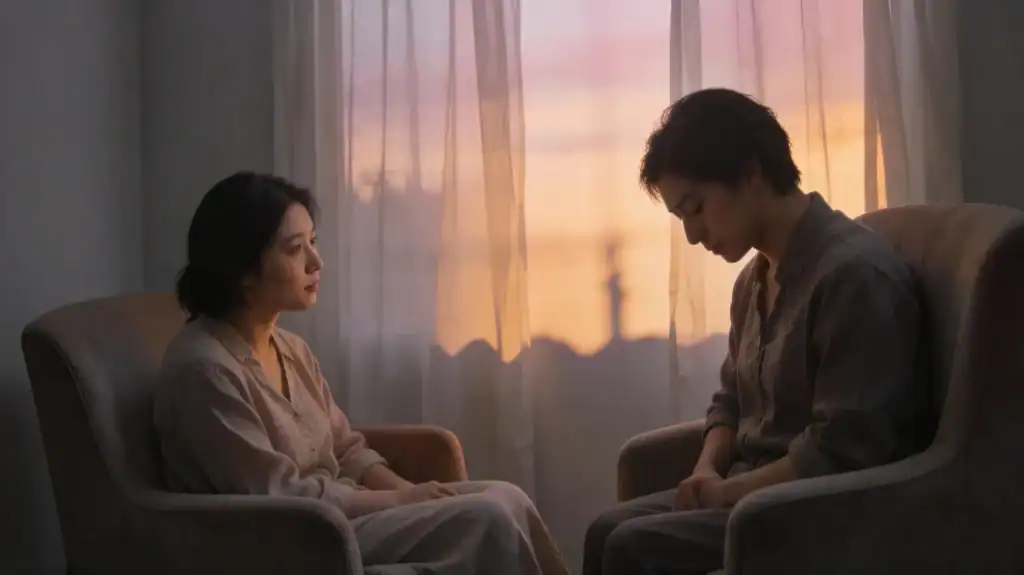
Relationships shape our mental health
And that’s not strange at all.
We are highly social animals. The need to belong is deeply ingrained in our genes and cultures. Throughout most of human history, not belonging anywhere meant vulnerability and a high risk of death, which readily explains the anxiety triggered by loneliness in most of us.
However, feeling safe is about more than being safe from sabre-toothed tigers and rival tribes, or their modern counterparts.
Feeling safe is knowing that someone has your back emotionally. It’s knowing that whatever happens out in the big world, you have someone to return to. Someone to share your fears and your laughter with. Someone to hold you if that’s what’s needed.
There is, in fact, a wireless connection between human nervous systems. It’s called co-regulation. We don’t regulate our stress entirely on our own. For instance, a calm friend can help you get your anxiety under control simply by sitting quietly with you.
This also explains why healing can be so difficult in the wrong environment. If you’re constantly surrounded by criticism, unpredictability, or contempt, your nervous system rarely has the chance to settle, let alone heal. Your mind is continually reminded that the world isn’t safe.
In this situation, the wireless connection doesn’t work at all. You are constantly harmed by simply being around critical, unpredictable, manipulative, and emotionally neglectful people.
Not every relationship heals
This is why not every relationship is a positive one.
It’s all too easy to stay stuck in harmful relationships because we never really assess their impact on us. It may help to put some simple labels on them:
Purely functional relationships are practical and transactional. Most of my work relationships over the decades have been of this type. They are okay as long as they are balanced, but they are neutral when it comes to your mental health and healing. A purely functional relationship won’t be the place you go for support on the roughest days.
That’s what you need a positive relationship for. A positive relationship isn’t necessarily an eternal bed of roses. You don’t need to always agree with the other person. Still, this is where you find freedom from fear, disrespect, and humiliation. This is where you don’t feel ignored or diminished. This is where you’re not afraid of being betrayed.
On the other hand, you know you’re in a toxic relationship if it consistently leaves you feeling drained, guilty, fearful, worthless, and small. You may also feel manipulated, and you’re always the loser in any conflict. The relationship is an arena of never-ending unpredictability and stress. Your self-esteem is constantly shrinking, and one day it’s entirely gone.
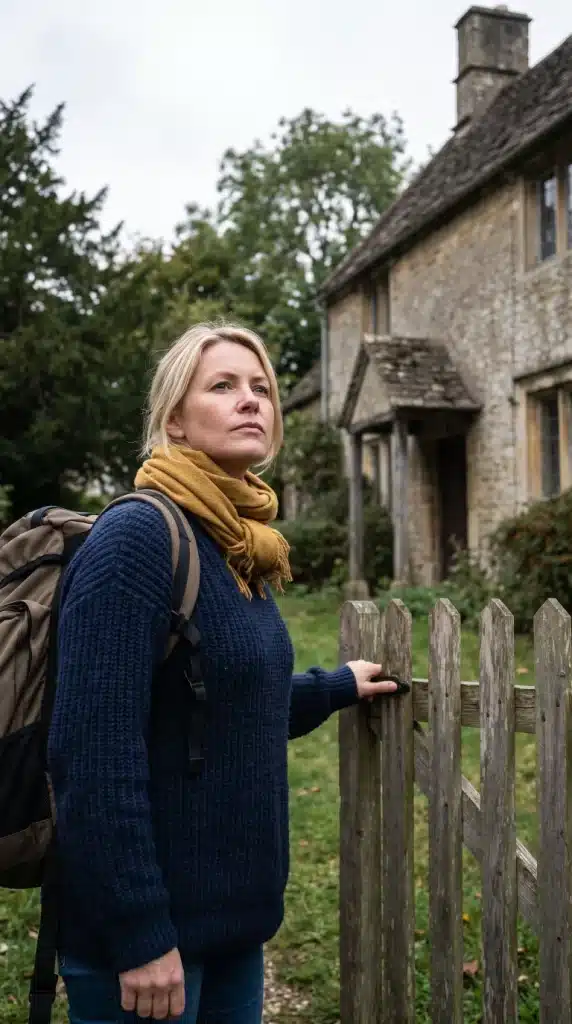
Sometimes healing means changing your environment
So, I was in my mid-fifties when I finally realised (or admitted to myself) that most of my close relationships had been toxic. All my life.
And I understood that a relationship isn’t necessarily positive just because you are genetically related to the other person, or because you’ve known them for a long time, or because your family or friends say you should stay, or because tradition says so, or because you entered the relationship before you had enough self-esteem to know what’s good for you and enough self-confidence to speak up.
A relationship is positive if and only if it gives you a safe, supporting connection with another person.
You can’t grow if you don’t find healthy, nourishing soil. Sometimes, toxic soil was the reason we got into trouble in the first place. This might mean that healing requires changing your environment.
Quality beats quantity anytime
Of course, it’s not possible to live a life without enduring some negative or even toxic relationships. We can’t always choose who we work with, and we can’t choose our genetic family.
It’s important, however, that we maintain enough positive relationships, and we should never accept that our closest relationships remain toxic. It’s a matter of (mental) health and safety!
Now, if you have read my many articles on deliberate.one exploring my own introversion and, more recently, possible autism, you might think that my opinion isn’t representative of the population as a whole.
Well, I’d say they are.
Although the number of positive relationships that feels enough may mean something slightly different to you than to me, it will still be true that too few positive relationships and too many toxic ones will tip the scales of your life experiences and slow down or prevent your healing.
And if you ask me, quality will beat quantity any time. This applies to most things, including relationships.
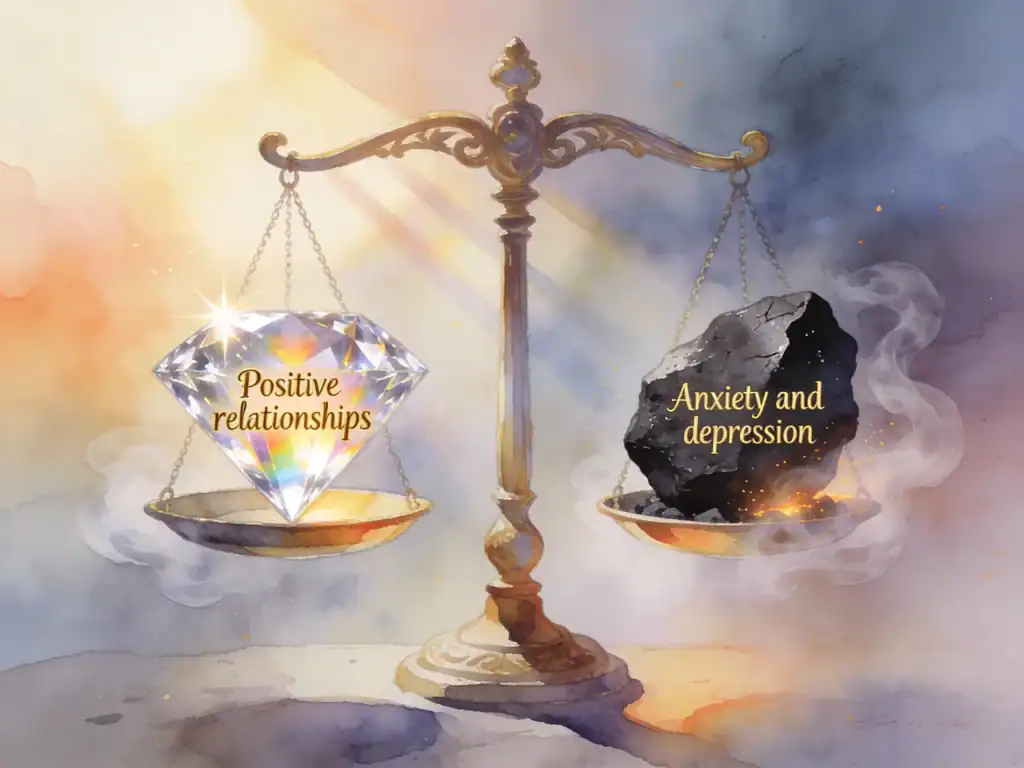
The PERMA interactions
As with the other PERMA elements of Positive Psychology, seeking positive relationships is something you actually can do to aid your healing from anxiety or depression. Another useful tool in your toolbox.
They won’t remove your life’s difficulties, but they’ll help you cope and see adversity from a better perspective.
And as mentioned before, the PERMA elements interact and amplify each other.
For instance, in positive relationships, a trusted friend may spark positive emotions in you; you and your partner can share quiet engagement for something; a mentor can show you how to find meaning; and a good colleague can help you achieve something.
Choose the people who set you free
In July 2020, I found what would later prove to be, for me, the invaluable jewel of positive relationships: my soulmate, my best friend ever, my sense-maker, and my excellent colleague in the business of living the rest of our lives together.
For the first time, I could simply be myself, without fear of not being good enough or of having to fake or hide anything. After almost six decades, I finally found a home.
I know I’m lucky.
But I wouldn’t be here without waking up, making deliberate decisions, and doing what’s necessary to drive change.
It might be time for you to wake up as well.
Look for the people who make it safe to come home.
All pictures used in this article are AI-generated illustrations. One of the resemble me, but isn’t a real picture.
Feel free to use one of the buttons below if you want to share this article with someone.











Post Comment
You must be logged in to post a comment.