Don’t waste your time: Doing the work in therapy (and what the real work is)

In my article Leaving anxiety and depression behind: How to get started, my advice #30 out of 40 was: “Getting used to therapy takes some time.”
Oh yeah? And now I’m writing, “Don’t waste your time”. Doesn’t add up, right?
Well, I’m now talking about things to be aware of after you have settled reasonably well into the therapy situation itself. Remember, however, when therapy finally begins to feel safe, it’s easy to believe the hardest part is behind us. Unfortunately, comfort can become one of the biggest obstacles to progress.
The trap of passive therapy
Let’s be clear about one thing: Settling into the therapy situation isn’t the goal here. What’s essential is to settle in enough not to be overwhelmed by fear and shame just because you are there. You must get past this to do what you’ve come for.
Next, let’s get rid of a common misconception: Just being there isn’t ‘doing the work’. The therapy process isn’t like a surgical procedure. You can’t just show up, lie down on a bed, be anesthesised, and wake up ‘fixed’.
‘Doing the work’ doesn’t mean treating yourself with cruelty. However, it means being honest with yourself and being emotionally present. And this hurts sometimes. Which was probably why I experienced…
The comfort zone problem
…and wasted a lot of my time in therapy 15-20 years ago.
We have so many built-in defence mechanisms to keep us ‘safe’. That is, staying well within our comfort zone and away from pain.
My two favourite ways of remaining within my comfort zone were intellectualisation and denial.
Intellectualisation
Using facts and logic to avoid uncomfortable feelings. This defence uses excessive thinking to replace painful or uncomfortable feelings.
I had read my share of psychology textbooks by then and had convinced myself that the sources of all my anxiety and depression were to be found in my childhood.
So, I set out analysing my childhood. That’s right, analysing. Because I’m good at analysis, I’m comfortable with it. And by keeping it all on an analytical, logical level, I protected myself from feeling the pain that was unbreakably linked to many childhood memories.
Denial
Behaving as if an aspect of reality does not exist.
Also, by focusing solely on my childhood and youth in the 1970s and 80s, I protected myself from facing the realities of my life in 2005-2010.
Old memories can hurt, but they can’t get much worse than they already are. And we can’t change what happened in the past. If I had tried to face what happened in my here-and-now, it would have been necessary to stand up for myself. And this was definitely not my strongest side.
How defence mechanisms keep us stuck
Your defence mechanisms may be something completely different from mine. However, all these avoidance strategies are natural. We once started using them to keep ourselves safe from emotional distress. They were survival strategies, not personality flaws. But survival strategies can become prisons when we no longer need them.
Now they may be the one thing that keeps us stuck in distress.
When the comfort zone becomes a padded cell
Many people are so afraid of any kind of discomfort that they would rather suffer for the rest of their lives than do something about it now, if this could bring a heightened but temporary pain.
Some would rather have bad teeth for years than spend an hour in the dentist’s chair. Others would choose to continue suffering from anxiety and depression for decades instead of starting ‘doing the work’.
Yes, I’ve done both, so I know it’s not easy.
It takes courage to break out of this cell. However, not doing anything about your suffering is a betrayal. First of all, you let your future self down. Sometimes, also people around you. A better future is always worth fighting for.
Avoidance may offer short-term relief, but it guarantees long-term suffering.

Emotional honesty: the turning point
So, where does real healing begin?
For me, it started when I moved from analysing to feeling. Most of my analytical conclusions were correct, which helped me understand. Understanding is good, but it’s not enough. The solution lies in feeling what needs to be felt, often what should have been allowed to be felt long ago.
Some people talk about “facing our demons”, but there are no demons inside most of us. Mostly, it’s about bad memories, sometimes trauma, and the fear, shame, humiliation, anger, and other emotions trapped in the cage of those memories. When a bad memory is triggered, it feels as if what once happened is still happening.
Emotionally charged memories are stored differently from ordinary ones. They don’t fade. They wait.
The turning point is to accept that these emotions are there, which isn’t the same as saying it was okay whatever happened, or that you forgive what’s been done to you. It just means to be emotionally honest with yourself.
That’s when you can start ‘doing the work’.
What ‘doing the work’ really means
It may be helpful to imagine that a younger version of yourself is trapped in the bad memory, along with all the fear, rage, grief, shame, and humiliation you felt in the situation where the memory was created.
The ‘work’ will be to tolerate staying with this version of yourself until both versions have managed to deal with the emotions that have probably been suppressed for way too long.
This isn’t a comfortable process. Sometimes, it’s really hard because you may dislike, despise, and even hate the earlier version of yourself. You will need courage. You will need a good measure of self-compassion and patience.
Because you suppressed the painful emotions, they have tortured the earlier version of yourself for a long time, and this is likely precisely the reason why you suffer from anxiety or depression today.
The role of the therapist
‘Doing the work’ will mean not shying away from the bad memories, the earlier versions of yourself locked inside them, the suppressed emotions, and your own possible aversions towards it all.
It means:
- Being honest even when you feel pain and shame.
- Tolerating the discomfort this brings you.
- Allowing the emotions to be there instead of suppressing them.
The therapist is there to:
- Provide a safe environment and support to help you face what may be unbearable alone.
- Show you the way when you feel lost and confused.
- Listen without judgment and help you understand when the experiences inside you feel incomprehensible.

Remember, the therapist is there to guide you, like a pilot on a ship going through dire straits, not to “fix you”. A good therapist will neither push you too fast nor allow you to hide forever. However, only one person can fix you: you.
Avoid the self-punishment trap
‘Fixing’ yourself isn’t meant to be self-torture.
I want to make a point out of this because self-loathing is often a part of anxiety, and especially depression.
Yes, the road to healing often goes through discomfort and sometimes pain. However, it’s not like maximum pain ensures the quickest healing. On the contrary, a therapist will help you approach painful memories and emotions gradually and reasonably.
Unfortunately, some people may be so self-hating that they desperately seek to achieve catharsis by completely immersing themselves in the pain. Self-punishment isn’t the way to healing. Self-compassion and patience are.
Healing doesn’t include fireworks
As you’ve seen by now, talk therapy isn’t really about the talking. Talking is the means, the tool. It’s not the objective. ‘The work’ is to unlock, untangle, release, and let go of emotions stuck inside your bad memories.
This isn’t saying that what happened to you was okay. And it’s definitely not forgetting what happened. On the contrary, it’s remembering without being overwhelmed anymore, without being controlled by what happened. Healing means the past stops interrupting the present.
So, healing sometimes feels a bit anticlimactic. Usually, there are no fanfares or fireworks —just a quiet sense of relief. Sometimes, it even feels like the painful emotions leave an emptiness in their wake. Please remember that achieving an absence of pain is a vast and essential step towards a happy life. However, the lack of pain doesn’t equal happiness.
Now that you’ve made room for them, you must fill your life with things that make you truly happy.

Filling the void safely
I’ve written earlier about using the dam-busting method in self-therapy.
Yes, I did that. It wasn’t responsible at all, and I wouldn’t recommend it to anyone. However, I survived, and I achieved some results. A lot of my old anxiety was gone. And what did I feel?
Nothing.
Of course, feeling nothing is better than agony. But it isn’t happiness. Not that I knew. I had never been truly happy. But I did know something was missing.
An emotional void will always be filled with something. If we don’t choose wisely, the void will choose for us. If you end up in this situation, be aware of the risk of filling the emptiness with the wrong things, for instance, alcohol, drugs, or high-risk and irresponsible behaviour.
At an earlier stage of my life, I would undoubtedly have tried to fill any emptiness with alcohol, because this had always been my go-to ‘solution’ for any feeling of distress or loss.
Instead, this time, I miraculously found my current wife.
Lucky me, because I hadn’t yet understood the importance of balance and positive psychology. And this will be the theme in some of my coming articles on deliberate.one.
I’m not a doctor, therapist, or other healthcare professional. Please remember that my advice is never meant to replace any healthcare professional’s treatment or advice.
I’m just an ordinary man who wants to make my own experiences count by helping others in similar circumstances understand their situation and never lose hope. There is almost always something we can do, and there are reasons to be hopeful.
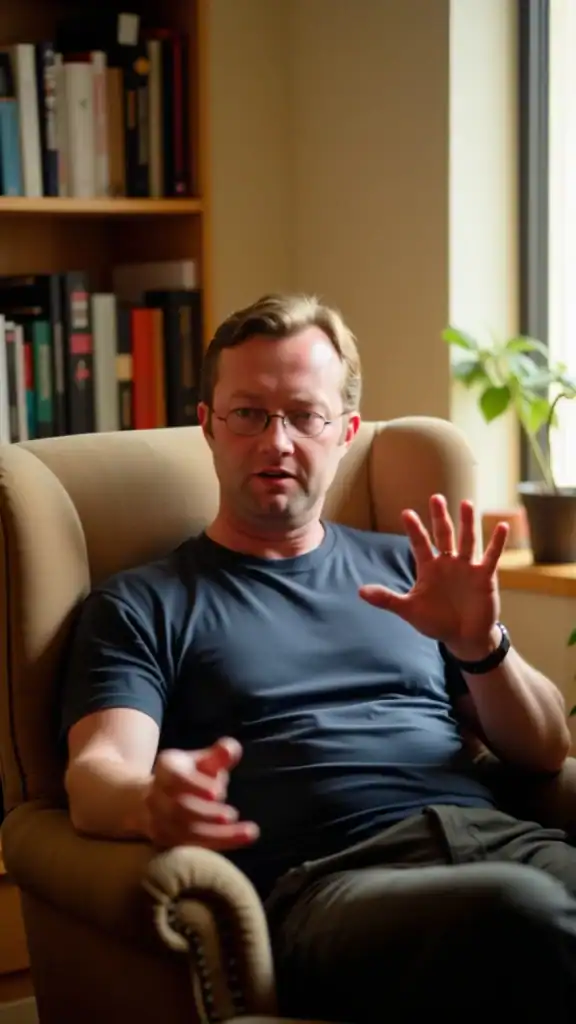
All pictures used in this article are AI-generated illustrations. One of them resembles me at an earlier age, but it’s not a real picture.











Post Comment
You must be logged in to post a comment.