How to do responsible self-therapy: Emptying a dam without breaking it
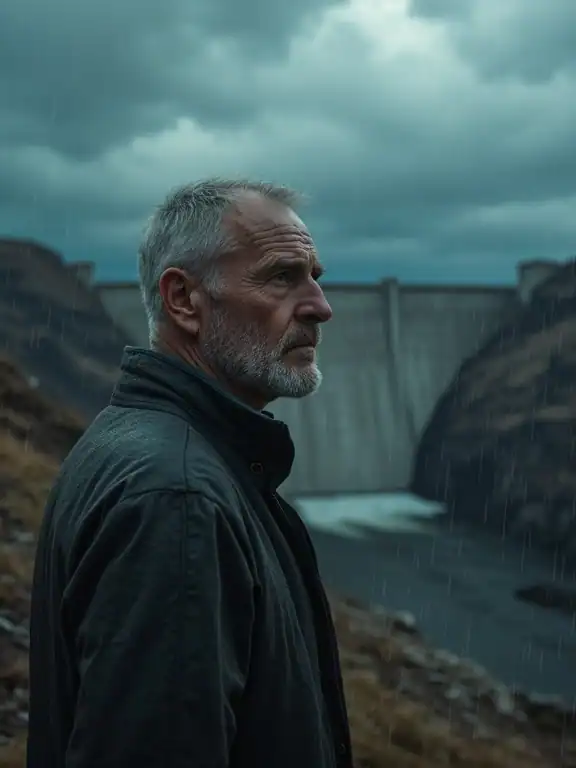
2005. I was about to start therapy, and I was petrified. I knew I had to talk about what was going on inside my mind once the therapy sessions began. But how could I? How could I open this Pandora’s box without being ripped apart by the blast? And I would never be able to shut it again. For sure!
2019. I realised I hadn’t made the most out of therapy all those years ago. I knew I had spent most of my therapy time analysing. You see, I’m good at analysing. And this kept me from facing the emotional side of it, from taking on the full force of my bad memories.
So, I decided it was time to have the work done. I aimed to bust that bl**dy dam and take the flood, hoping it wouldn’t drown me.
And I was going to do it all on my own.
There’s no doubt I was brave. But wise? Absolutely not!
In this article, we will explore:
- The risk of re-traumatisation.
- An excellent example of how not to do self-therapy.
- The lessons learned from this example.
- The fine art of emptying a dam without breaking it.
Seven summers and fifteen winters
In one of the Norwegian folk tales, there is a character who has seven summers and fifteen winters trapped inside his body. And he says, “If I let them all out in one go, it would be the end of the world.”
And it feels this way when the emotional pressure has built up and up for too long. It’s terrifying to think of opening up only a tiny bit; it may push us totally out of control.
Usually, this doesn’t happen.
Still, we should never underestimate the risks and dangers of dam-busting.
The first word of caution
If you are severely traumatised, my sincere advice is to seek professional help if this is available to you.
When I say ‘severely traumatised’, I first of all mean you have experienced situations where you felt helpless while horrible (often life-threatening) things happened to you or others.
There is a risk of re-traumatisation if you approach the memories of such situations unprepared and unsupported. A professional therapist will help you to be emotionally prepared, teach and assist you with regulation ‘tools’ to deal with your memories, and help you to process the emotions you’re left with after approaching the traumatic events.
They say it’s not about reliving the pain, it’s about transforming it.
And if you get stuck in reliving it without the tools to transform, you may be in for a significant setback.
The second word of caution
Trauma isn’t always the result of dramatic, life-threatening situations.
‘Big T Trauma’ is what we usually come up with when we’re thinking about traumatic experiences, such as severe car accidents, terrorist attacks, and sexual assaults. It’s something terrifying, most likely life-threatening. We understand well that people suffer injuries like anxiety, depression and even Post-Traumatic Stress Disorder (PTSD) after experiencing things like this.
‘Little t trauma’ might not be life-threatening. Still, it’s something that goes on and on and adds up over time—for instance, growing up in a toxic environment, living with bullying, criticism and sarcasm, and people making you feel worthless non-stop.
– From my article Anxiety and depression: Why you shouldn’t compare yourself to others.
Please don’t think that the trauma we carry after living under ‘little t’ conditions for a long time is an easy-peasy thing to process. That would be a mistake.
How do I know? Well, er.., okay, because I made that mistake myself.
The battle of 2019
So, I decided to confront my painful memories. Mistakenly, I limited this to bad childhood memories, being (unconsciously) too afraid of questioning my more recent past.
As I have written elsewhere, I commenced this work with the same delicacy and elegance as my ancestors, the Vikings, when they went to battle. That is, charging straight into the enemy lines while screaming at the top of my voice, just hoping I would be strong enough to survive it. Metaphorically spoken.

What I did was to search systematically for ‘the enemy’, my bad memories, and just submerge myself in every one of them to feel what was necessary to feel, what I should have been allowed to feel long ago. All the while, I was trying to be my own responsible adult, reassuring myself, “It’s okay, I understand you feel this way, it will all be okay in the end.”
To ensure I didn’t miss anything, I imagined myself visiting every room of the house I grew up in, as well as the school I attended and every other building I could remember. I even walked the roads and lanes in the area, all inside my mind.
I would say it was a very efficient strategy.
An excellent example of how not to do self-therapy
Yes, efficient in the sense that I uncovered many unpleasant memories.
However, was I emotionally prepared? I was highly motivated to address my problems. But hardly emotionally prepared.
Did I have any ‘tools’ for regulating myself when the fear, rage, shame, and feeling of helplessness from my past washed over me like a tsunami, repeatedly? Nope. Nothing but my well-exercised ability to endure.
Did anyone assist me in processing all of this? Well, you know, I had decided to do the rough work myself, and I’m rather stubborn sometimes. Besides, I didn’t have anyone to talk to anyway. Not until about one year later.
Did I even approach the matter with the caution and sensitivity we should expect from a responsible adult? At least, I was old enough to act like one. But no. I didn’t.
I recklessly broke the dam
At least one of my dams, as I understand by the time I write this.
And the flood was much more ferocious than I could imagine.
At the end of it all, I found myself bruised and broken, but alive and in a different place than I started.
Lessons learned from dam-busting
#1 We can easily overestimate our capabilities
I had been in therapy years earlier, although somewhat half-heartedly. I had read tons of psychology textbooks and self-help books. I believed I knew myself well enough. Back in 2019, I felt qualified for the job of clearing out the baggage stored in the cobwebbed, dusty basement of my mind.
I had worked as a project manager for years by then. As a project manager, I should have known better than to start a project without a clear understanding of its full scope.
#2 And just as easily underestimate what we’re up against
The dusty basement of my mind contained more baggage than I expected. And in the darkest corners, I stumbled upon terrors so old that I didn’t have words to describe them. I know words, and I master them quite well. Words are my playground.
But how could I handle something I couldn’t express?
And how could I handle the webs of deception my brain spun around it all in a misguided attempt to protect me from myself?
#3 All this calls for a careful, gradual approach
Which, sadly, is the exact opposite of what I did.
My 2019 procedure isn’t for everyone. Not even for me, and I won’t repeat it.
The trick is to empty the dam without breaking it
So, have a tap fitted. Let out only as much water as you can handle at any given time. Shut the tap and take a break whenever it gets too much. Metaphorically spoken again, of course.
This approach takes a little bit longer. However, as I wrote in my article Leaving anxiety and depression behind: How to get started:
It’s like driving a car. The most important thing is to reach your destination. It matters less how long it takes. Stay safe.
Admittedly, starting to drain out a lifetime of dammed-up emotions is a little bit trickier than keeping my humble Vauxhall on the road. There may be tremendous pressure behind this dam, so how can we control the tap?
Based on my experiences from 2019, you might say I’m not the best person to ask. However, I learn from every mistake I make, and here are my suggestions:
#1 Limit the exposure
I don’t think it’s a coincidence that therapists usually book us in for a weekly appointment. Or perhaps two appointments each week at the start, if we are in a particularly challenging situation. And then gradually more infrequent as we get better.
We need to avoid overexposing ourselves to the challenges we seek to remove, and allow space in between to recover and process.
This is equally important if we’re trying to help ourselves, regardless of our approach. If we, for instance, use writing for self-therapy, we should decide beforehand how often and for how long to write. The limits we set can be a certain number of hours each week or a certain number of pages.
Then, we should respect the limits we have decided until we have experienced how much exposure to our past experiences affects us.

#2 Have an emergency exit
Back in 2019, I put myself in a highly mindful state when I sought out my bad memories. I wanted to make sure I felt what I needed to feel instead of analysing it. Usually, I was lying down with my eyes closed.
When I felt overwhelmed, opening my eyes and reorienting myself in the room was usually enough.
I’ve seen a lot of advice about other solutions if this isn’t enough. For instance, to focus on the sensations in our hands, because this is usually not where we ‘feel our emotions’.
I’ve also seen recommendations about creating an internal safe place to switch the focus to when things get rough. For instance, the memories of places or people that once made us feel secure.
The main thing is to have a way to escape to the outer world if what’s going on inside is too overwhelming, and this is individual. We need to know what can work as an emergency exit for each of us, and (as we are told every time we travel by plane), knowing exactly where our emergency exit is when we need it.
#3 Build a toolbox for self-regulation
This is closely related to finding an emergency exit, but it is more about how to take care of ourselves and calm down after we have escaped through it.
Again, it’s highly individual what works for us. For instance:
- Going for a walk.
- Looking around us in the room and naming physical objects.
- Breathing in a specific way.
I’ve noticed that breathing slowly, with longer exhalations than inhalations, actually calms me down. This is not something I just feel. My smartwatch shows me that the method slows down my heartbeat.
This may or may not be the right thing for you. You’ll have to find your way, and it’s wisest to figure out which tools you need before you start the hard work.

#4 Look out for red flags
Therapy (including self-therapy) can be uncomfortable enough, and little can be gained without some discomfort and pain. However, feeling out of control is a clear danger signal. We must be acutely aware of red flags like these:
- Panic attacks.
- What they call dissociation–feeling disconnected from your body or your surroundings.
- An overwhelming feeling of numbness.
- Thoughts of harming yourself or others.
Which likely means you need help. Now! So:
#5 Know your limitations and seek help if necessary
As I wrote in my article Anxiety and depression: How to know when self-therapy isn’t enough:
If we are going to look after ourselves, we also must know the limits of our capabilities. This goes for everything from surviving in the wilderness to exploring past trauma. When we’re out there alone, we must put safety first. That’s unnegotiable.
If you are doing DYI therapy, you must know when to stop before you’re past the point where you should have stopped. If you can’t perform this level of self-monitoring, you should seek professional help.
#5 Ensure sufficient processing in between
This is about ensuring that what you release from your dam of trapped emotions can safely be absorbed by the ground before you let out more.
It’s about making sense of what you let out, and this is important!
The problem with trauma is that it’s usually stored as sharp pieces of scattered memories buried in our minds, along with the feelings we had when the traumatic events happened. Every time we trigger the memories, we relive them as if they are happening now and as if we were the people we were back then, which often means helpless and scared.
However, for most of us, these things aren’t happening now. They occurred in the past. And perhaps we were children when they occurred, but we aren’t now.
It takes time, patience, and sometimes considerable effort to truly realise this is the truth, and we must give ourselves what we need to do the necessary mental processing. For some of us, this means time on our own for quiet reflection, for others to talk it through with people we trust, or for you, perhaps something entirely different.

#7 Create a balance with positive experiences
This was something I totally ignored when I tried to improve my situation earlier in my life. I guess I believed that if I fixed my anxiety and depression problems, then I would ‘automatically’ become happy.
The truth is, however, that the absence of pain doesn’t equal happiness. True, it’s hard to be happy if we’re in a lot of physical or mental pain, but it’s essential to understand that removing the pain just brings us to ’neutral ground’, and not to a state of happiness.
In fact, there’s no reason to wait until we’re physically or mentally pain-free before we start looking at what makes us happy. If we put enough meaningful, positive experiences on the scales, the (at least temporarily) added stress of facing our bad memories will be much easier to carry.
Be wiser than I was in 2019. Empty your dam gradually without breaking it, and seek help if necessary. Look after yourself.
I’m not a doctor, therapist, or other healthcare professional. Please remember that my advice is never meant to replace any healthcare professional’s treatment or advice.
I’m just an ordinary man who wants to make my own experiences count by helping others in similar circumstances understand their situation and never lose hope. There is almost always something we can do, and there are reasons to be hopeful.
All pictures used in this article are AI-generated illustrations. One of them resembles me, but isn’t a real picture.











Post Comment
You must be logged in to post a comment.