How good is life if tolerable pain equals happiness?

I follow some profiles on social media that quote what wise people have said or written. And sometimes, the quotes give my brain good nourishment for reflection. Here’s one example:
People settle for a level of despair they can tolerate and call it happiness.
– Søren Kierkegaard.
By the way, Søren Kierkegaard (1813 – 1855) was a Danish philosopher and theologian.
That said, these were the questions the quote ignited in my brain:
How many of us confuse tolerable pain with happiness?
How many of us stay in this pain because we don’t think anything else is possible?
How many of us remain in this pain because we don’t believe we deserve better?
I ask because I’ve been there. And I’m not talking about my chronic shoulder and back pain. I’m talking about the pain of never being good enough. The pain of not ever having received or given genuine, unconditional love.
I rhetorically ask “how many of us” because I know the answer is “way too many”.
A tale of tolerable misery
I must admit that two people come to my mind at this point: my parents, who were married for almost 70 years. Perhaps they loved each other in some way I never understood? I can’t know.
What I do know about is their constant bickering, quarrelling, and sarcasms. I remember hearing them through the wall when I was a small boy, hearing them shout at each other when I tried to sleep. I remember biting my knuckles until they bled, praying to an unknown and indifferent God for my parents to stop.
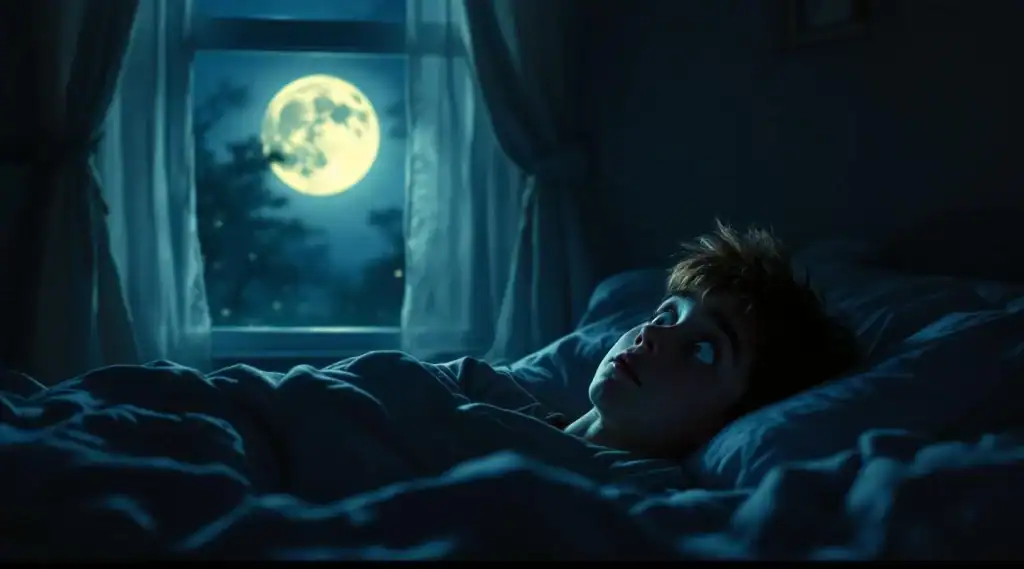
I remember sometimes feeling the same when visiting them 50 years later. Even though their voices weren’t as loud, they were still expressing the same bitterness and resentment.
I never ever saw my parents show any recognisable affection for each other, either in actions or in words. Perhaps their way of being friendly to each other was to deliver their sarcasms with a smile? I saw that happen occasionally.
So, I grew up believing this was a normal relationship. I didn’t know of anything else, and this belief was probably the main reason why I stayed in my first marriage for decades.
What is happiness anyway?
Well, who am I to define happiness when the finest minds all over the world have tried to figure it out for thousands of years? And it is, of course, highly individual.
However, modern scientific research has been done on what makes us happy, what makes us thrive. Martin Seligman, who is considered the father of the Positive Psychology movement, defined one way to describe it: the PERMA model:
- Positive Emotions.
- Engagement.
- Positive relationships.
- Meaning.
- Accomplishment/Achievement
These are the ingredients of a happy life, as Seligman sees it, based on his research. He also claims that, on average, we must have three times more positive experiences than negative ones to stay happy.
A tale of tolerable misery continued
Were my parents happy?
My mother is still alive. I could ask her, but I won’t. We never talk about such things in my family.
I don’t recall any signs of them having (what I would call) a positive relationship. Not with each other. Perhaps they found more positive connections with others, I don’t know.
I believe they both found engagement, meaning, and accomplishment through practical work. No one I knew could do crafts like knitting, crochet, and embroidery like my mother. And my father could repair any broken old thing, as long as it ran on petrol, diesel, or electricity.
Was this enough to be happy? I don’t know. I can’t answer on their behalf.
However, I tried long enough myself to live in a relationship based only on dealing with practicalities, without any deep connection, without receiving and giving unconditional love. And I was never happy. I know this much.

Learning to fly
One thing is for sure: To establish a tolerable level of pain doesn’t equal happiness. Even the absence of pain, although better than suffering, doesn’t equal happiness. It’s just a neutral state, a ground floor. Happiness is what makes you fly.
I learned to fly when I found my present wife. I was 56 when I met her in real life for the first time. I would be a liar if I claimed that breaking out of my old life at that age and establishing a new one in a different country has been easy.
Still, after having tasted happiness, I would rather have died immediately than have chosen not to take this path. When my day comes to leave this world, I will know I have flown.
(This is a reference to my poem Albatross, which you will find in this article if you wish to read it:)
One day, it’s too late. Before that, it’s never too late.
My current wife and I will never get 70 years together, like my parents did. This is our great sorrow, the fact that so much of our lives were spent apart. Which means we have no time to lose now; we must make each day count.
However, thinking about it, does anyone have any time to lose? No, I don’t think so. We all have limited time on Earth, and none of us knows how limited our time is.
We don’t have the time to settle for tolerable misery if something, anything, can be done about it. We don’t have the time to stay in pain just because of unjustified fear of the unknown, the alluring safety of habit, or the unrewarded ‘goodness’ of living up to other people’s expectations.
Because none of this is happiness, and we all deserve happiness.
One day, it will be too late. This is the day we no longer exist. But before that, even on the day before, it’s never too late to try.
I can promise you, if you have never felt true happiness, if you have never truly loved or been loved, if you have never felt good enough just as you are, if you have never dared to be… just you, then just one small taste of it will make the rest of your life worth the wait.
I’ve never read much of Søren Kierkegaard’s original works, but what I’ve read about him sadly indicates that he didn’t achieve profound happiness himself. He seems to have had his fair share of anxiety and depression, and perhaps he was more tormented than supported by his deep religiousity.
Søren Kierkegaard never married and died at the age of 42.
All pictures used so far in this article are AI-generated illustrations. One of them resembles me, but it’s not a real picture. However, this is real life, real happiness:












Post Comment
You must be logged in to post a comment.