Samples from 40 years of self-therapy writing
I recently posted an article about using writing as self-therapy when suffering from anxiety and depression.
I’ve been writing all my life. Admittedly, there was rarely a conscious decision to engage in self-therapy behind it. It was more an urge to express something, often something slightly beyond my awareness, a pressure inside I had to find a release for.
From this perspective, I think it’s fair to say that the majority of my writing has been unconscious self-therapy.
I’ve decided to share some examples with you. Most of it is far from high-quality material. But that’s okay. Perhaps it will help you to see that you can write as self-therapy without aiming for a Nobel Prize in literature.
Some of the examples I present address challenging themes. If you’re in a particularly bad place right now, I recommend saving this article for later. Reading some text pieces may trigger things that make you feel worse.
And this would be the absolute opposite of what I want.
Translating the following poems, and especially the song lyrics written initially in my rather peculiar Norwegian dialect, is virtually impossible without losing the (hopefully existent) poetry and flow of the words. For the song lyrics, I would also lose rhythm and rhyme unless I entirely rewrote the lyrics, which likely will change the meaning of the texts.
For the use of this article, I’ve chosen to translate only with the meaning of the texts in mind. Which, unfortunately, renders them somewhat clumsy and crude.
Prehistoric times
I believe I started attempting creative writing when I was around fifteen years old. I remember writing a couple of songs with lyrics that were about as sophisticated as the Beatles’ breakthrough hit, ‘Love me do.’ After all, I was already a massive fan of the Beatles. Sadly, I didn’t have the same exponential development curve as a songwriter as Lennon and McCartney.
I also remember a pile of prose fragments living in a drawer, never to be taken out and finished. There were many ideas, but my pen was always struck numb after the first words were down on the paper. I didn’t know back then that the only way to make it flow was to continue writing—a lot—and not to be bothered if most of it was crap.
Anyway, this was the prehistoric time of my writing because none of it exists anymore.
The age of loneliness
However, when I was in college, I started writing lots of short, free-form poems. Furthermore, I typed them and put them in a binder! Decades later, I scanned them because I wanted to get rid of my too-many-too-old binders. This means I still have my now electronically stored old poems despite the carnage of giving away, selling, recycling, and binning most of my earthly belongings before I emigrated a couple of years ago.
What strikes me most of all when I read those old poems now is the looming darkness in all of them. And the most prominent theme of all is loneliness.
I can’t remember how much relief I felt at the moments I wrote those poems. In any case, it gives me a lot of insight now. Even though it’s a shocking read for the present me, I can clearly see the younger me and empathise with him.
Alone in the darkness
This is one of the earliest poems of mine I have access to now. It was written just before Christmas in 1982, and I was still seventeen years old.
ALONE IN THE DARKNESS
It’s dark now
The night was victorious in the end
Not a sound, not an image
Only empty spacesAm I the only one left sitting here?
Are there no others?
In the darkness?
Outside the darkness?
HEY, IS THERE ANYBODY OUT THERE?Echoes hurled between cold walls
No one replies
No comforting hand on my shoulderI bow my head
Darkness descends on me
The original poem in Norwegian:
ALENE I MØRKET
Nå er det mørkt
Natten seiret til slutt
Ikke en lyd, ikke et bilde
Bare tomromSitter jeg alene tilbake?
Finnes det ingen andre?
I mørket?
Utenfor mørket?
HEY, IS THERE ANYBODY OUT THERE?Ekko kastes mellom kalde vegger
Ingen svarer
Ingen trøstende hånd på min skulderJeg bøyer mitt hode
Mørket senker seg over meg
Come back
In the spring of 1983, I wrote the lyrics of a song, and my then-friend Arne Erling Astad wrote the melody. He also played in a local rock band. Hearing my words sung from the stage was quite a boost. It didn’t give the now eighteen-year-old me more luck with the girls, though 🙂
The lyrics are written and sung in the Norwegian Trønder accent. The video has English subtitles.
The bright nights
In the northernmost parts of Norway, the sun never sets in the middle of the summer. Where I used to live, it does dip under the horizon for a short while around midnight, but it’s never dark.
Of course, with the short summer season and the long and dark winter waiting, this was a period of frenetic growth in nature and sometimes frenetic socialising among humans. This means it’s one of the hardest times of the year to feel trapped in loneliness.
I wrote this piece on the 23rd of June 1985, one of the brightest nights of the year.
THE BRIGHT NIGHTS
It’s hardest to be alone
On the bright nightsAnd sit on a stone
With room for only one
Only IFeel the first raindrops
On the cheekI feel the pain
So, I’m alive
Still
This is the original Norwegian version:
DE LYSE NETTENE
Det er verst å være alene
I de lyse netteneOg sitte på en sten
Med plass for bare en
Bare jegKjenner de første regndråpene
Mot kinnetJeg føler smerten
Så jeg lever
Ennå
It takes two to tango
Yes, so they say. And sometimes, two people are too different to engage in the dance of life together.
My poem-writing seemed to stop sometime in the spring of 1986. Well, I’d guess writing was generally put on hold, full stop. A lot of things were happening. I had recently met the girl who was to become my first wife. I did my National Service and finished my education. My career had to be kicked off. Children came along and needed attention. That’s life.
However, something new happened after almost twenty years, in the early 2000s. I started combining my interests in writing and music by reviving the hobby I briefly tried and left as a teenager: songwriting.
It would be wrong to say I was into light-hearted cotton candy pop music. The darkness of my teenage poetry was still lingering in my writing. Looking through the lyrics of all the songs from the period, I can see I was working on acknowledging and accepting a range of emotions I had suppressed until then, including anger.
And still, all this loneliness… Which shouldn’t add up. I was married and had two children. I had a good job. I owned a car, a house, and, from 2005, a second house. What an excellent, average Norwegian life! What on Earth could be wrong with me, feeling lonely and all?
Tango
This first song was written in 2004, about a year before I started therapy. There is such a dazzling difference between the raw, hurtful honesty of the song and the total denial I exhibited in therapy.
While I didn’t dare to touch my then-marriage at all in the therapy sessions (even though I remember my therapist gently probed about it), the truth about how I really felt in the relationship is shockingly evident in the song lyrics.
It’s difficult to understand how I could simultaneously juggle two entirely different worldviews. It’s like the creative parts of my brain just needed to get the truth out while the logical parts fought to bar it from entering my consciousness. Because this, this! was too dangerous to think about.
However, I remember my then-wife hearing me singing the song and asking me what it was about. Oh, I remember the bitter, aggressive edge of her voice. Of course, she sensed it; at some level, she knew what it was about. And I can still recall, no, I can still feel it, the sinking feeling in my stomach as I lied:
“It’s just fiction. Something I made up.”
The lyrics are written and sung in the Norwegian Trønder accent. However, the video has English subtitles.
All weapons down
If ‘Tango’ had been the only occurrence of a song like that, perhaps we could have assumed I had had a bad day (or night). However, the same theme surfaces again and again in my old songs.
All weapons down is a song I apparently wrote while being thoroughly fed up with conflict of every kind. Here, I’ve used an old recording I made with very primitive tools back in 2011, and I’ve created some footage to illustrate it using the AI tools I’ve access to now.
Again, the original lyrics are written in my rather peculiar Norwegian accent, but the video is subtitled in English.
The days are not evil
For me today, this is perhaps the hardest piece to revisit.
Yes, I wrote a novel once. Of course, the publishers didn’t want it, which was okay because it wasn’t exactly terrific.
Looking at the text now, it was, most of all, a marathon self-exploration with a lot of ‘what ifs’. I examined how insignificant things can make us choose one way or the other at the junctions of life, evolving into three parallel versions of the protagonist’s life. The protagonist was me, basically, only slightly disguised.
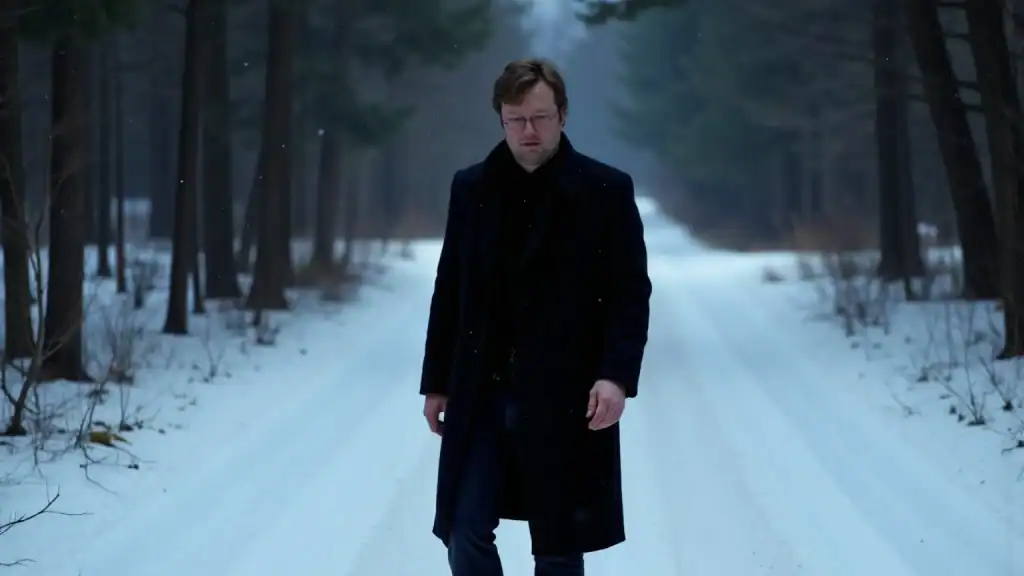
None of the three versions of ‘me’ had much luck in life. Whatever choices these ‘mes’ made, they ended terribly wrong. The last one of them standing woke up in hospital after a suicide attempt. This excerpt shows his total resignation when even death had failed him as a viable alternative.
FROM ‘THE DAYS ARE NOT EVIL’ (2016)
When no one has any strength left to fight, is this when the war is over? Is this what defines the end? When absolutely everyone is killed or marked by wounds to carry for the rest of their life? Is peace when no one has anything to return to but ruins and when the landscape doesn’t even look like what they once left behind? When the last survivors struggle homewards, fearing what lies behind the road’s last turn. Is this peace?
I think the war is over. There’s only me now. All the wiggling paths of what has been and could have become have ended. Everyone I could have been is gone; all the alternative outcomes of millions of choices and opportunities are void. I’m here. Only one road goes on, and I must follow it. When a new day comes, I must enter it and step into its blinding light, even though I can’t see where I’m heading. Because I’m not alone. I believed I was, but it’s not true. No one’s entirely alone. There’s always someone. Choosing not to carry on is to leave them, to steal something from them. I don’t know if this something is big or small. I’ve given so little, but it may have been bigger for those who received than for him who gave. Can I carry such a theft, such a guilt, on top of everything else? No, I can’t. I cannot do more harm.
The original excerpt in Norwegian:
FRA ‘DAGANE ER IKKJE VONDE’ (2016)
Når ingen lenger maktar å kjempe, er det da krigen er over? Er det det som definerer slutten? Er det når absolutt alle er drepne, eller har fått sår som vil merke dei resten av livet? Er det fred når ingen har noko anna å komme heim til enn ruinar, når landskapet ikkje lenger liknar det dei ein gong drog frå? Når dei siste overlevande slit seg langsamt heimover, redde for kva som ventar når dei rundar siste svingen? Er det fred?
Eg trur krigen er slutt. Det er berre meg no. Alle dei vinglande spora av det som har vore og det som kunne ha blitt, dei går ikkje lenger. Alle dei eg kunne ha vore, er ikkje lenger, alle dei alternative utfalla av millionar val og moglegheiter, dei gjeld ikkje. Eg er her. Det går ein veg vidare, og han må eg følgje. Når ein ny dag kjem, så må eg gå inn i han, eg må gå inn i det motlyset, sjølv om eg ikkje ser kvar det ber. For eg er ikkje aleine. Eg har trudd det, men det er ikkje sant. Ingen er heilt aleine. Det er alltid nokon. Å velje å ikkje gå vidare er å forlate dei, å stele noko frå dei. Om det er lite eller stort veit eg ikkje. Eg har gitt så lite, men det kan ha vore større for dei som fekk enn for han som gav. Kan eg ta på meg eit slikt tjuveri, ei slik skuld, i tillegg til alt det andre? Det kan eg ikkje. Eg vil ikkje gjere meir vondt.
The easiest way out
However, not all songs from this era are about my then-marriage.
Back in 1987, a friend of mine chose to end his life. This was a massive shock for everyone. Usually, we aren’t prepared to accept death as a reality at the age of 22. Perhaps this is why the grief lingered and lingered for me. And maybe there was something more: some kind of envy.
Looking at the lyrics now, it seems I have merged two songs (and this is also how I remember it): one trying to see what happened from my friend’s perspective and one from my own enraged and grief-stricken point of view. He had taken the easy way out and left me behind to carry on.
Finishing this song in 2004 gave me emotional closure. It took me 17 years, though.
I’ve recorded using the original Norwegian lyrics and added English subtitles.
The long way out
Things started to change in my writing around 2018. This year, I wrote a song titled ‘Bra som du e’ (‘Good enough as you are’). I believe I wrote that song to comfort a younger Tom inside me, but nothing like this had been said before in my writing.
The tricolour of the night
Early in 2020, I wrote ’Nattas tricolor’ (‘The tricolour of the night’). Beyond doubt, this song shows an unprecedented degree of optimism.
The recording and most of the ‘video’ were made in 2020, the lyrics are sung in my Norwegian accent, and the video is subtitled in English.
‘Everything is possible if I can just let go of the safety of the chains.’ It’s like a prophecy, thinking of what would happen in my life in the following months and years.
Albatross
Around this time, in early 2020, I also started to write small, free-form poems again. One of them is A forgotten child, which I have written about before.
Another is this one, which also seems like a prophecy to me now:
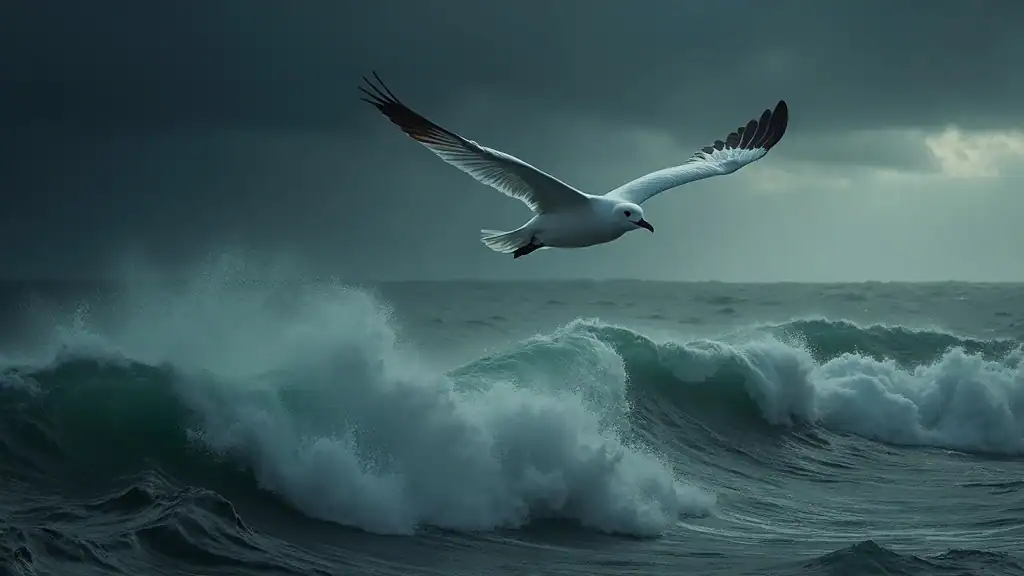
ALBATROSS
Trapped in a grey plumage
I inherited
An emu’s mind
A colourless prisonUntil I, in the twilight of life, took
One last chance
And spread my wings
Mostly in defianceThen I found
For the first time
My albatross heartAnd it struck me that
Now
Will I never again landI will sail over the foam
Where the world’s waves break
Until the day my albatross heart bursts
And I crashWith my last second filled
By the joy
Of actually having flown
The original Norwegian version:
ALBATROSS
Fanget i en grå fjærdrakt
Jeg arvet
Et emu-sinn
Et fargeløst fengselHelt til jeg i livets skumring tok
En siste sjanse
Og spredte vingene
Mest på trassDa fant jeg
For første gang
Mitt albatross-hjerteDet slo meg at
Nå
Skal jeg aldri mer landeJeg skal seile over skummet
Der verdens bølger bryter
Til dagen da albatross-hjertet brister
Og jeg styrterOg mitt siste sekund skal bli fylt
Av gleden
Over faktisk å ha fløyet
Pandemic changes
The writing from early 2020 clearly shows fundamental changes in my thinking. Little did I know which changes were waiting in the outer world.
In March 2020, the world went into lockdown because of the Covid-19 pandemic. In July, I incidentally started communicating with a person online, and the universe shifted on its foundations. I have written more about what happened in the article The distant song of a forgotten child:
Neither my online pen pal nor I were looking for anything but someone to talk to, but the connection and safety I felt while communicating with this person opened a flood of realisation about my then-current situation. It was like eating an apple from the biblical Tree of Knowledge. Once it was done, it couldn’t be turned back.
Melodies of need
I left my first marriage in May 2021 and lived on my own for the first time since 1989. Because seemingly abrupt changes like this one can be hard to comprehend for others, I was literally isolated—except for my online friend hundreds of miles away, who was my only support during this period. Still, I couldn’t meet her because of the Covid restrictions on travel.
While sharing my writing with anyone had previously made me extremely stressed, as I was always afraid of saying or doing something wrong, I now worked on the lyrics of a new song with my online English friend. This was also my first song written originally in English.
I believe this writing was also a type of self-therapy. The words don’t leave much doubt about what was developing between the co-writers in the summer of 2021, and this needed to be expressed.
I’d had my second Covid jab in August, which meant I could travel without being quarantined in early September. And I did. The rest is history, as they say.
Self-therapy or not?
It’s fair to say that I didn’t consciously know I was doing self-therapy while I was writing most of the examples above. I also believe I would have benefited more from the writing if it had been a conscious and deliberate effort.
However, doing something is usually much better than doing nothing. Had I had someone I could safely talk to all those years, I would also have spoken to them without thinking of it as self-therapy. Still, it would have been therapeutic. So was my writing. Sometimes, I believe, it was what kept me alive.
Furthermore, looking back at it now gives me so much insight into how I was thinking and feeling all the way back to my teenage years. This helps me immensely when I’m trying to piece together the big picture of my life.
This is especially helpful when I’m engaging in really conscious and deliberate self-therapy, which I’m doing right now, even while writing this article.
And in doing so, and doing it this way, perhaps I will open some eyes and spread some hope among those who want to leave their anxiety or depression behind.
Maybe one of them is you?
I’m not a doctor, therapist, or other healthcare professional. Please remember that my advice is never meant to replace any healthcare professional’s treatment or advice.
I’m just an ordinary man who wants to make my own experiences count by helping others in similar circumstances understand their situation and never lose hope. There is almost always something we can do, and there are reasons to be hopeful.
All pictures used in this article, except the one of me from 1985, are AI-generated illustrations. Some of them resemble me at different ages, but aren’t real pictures.











Post Comment
You must be logged in to post a comment.