Am I autistic? #5: How is my face behind the mask?
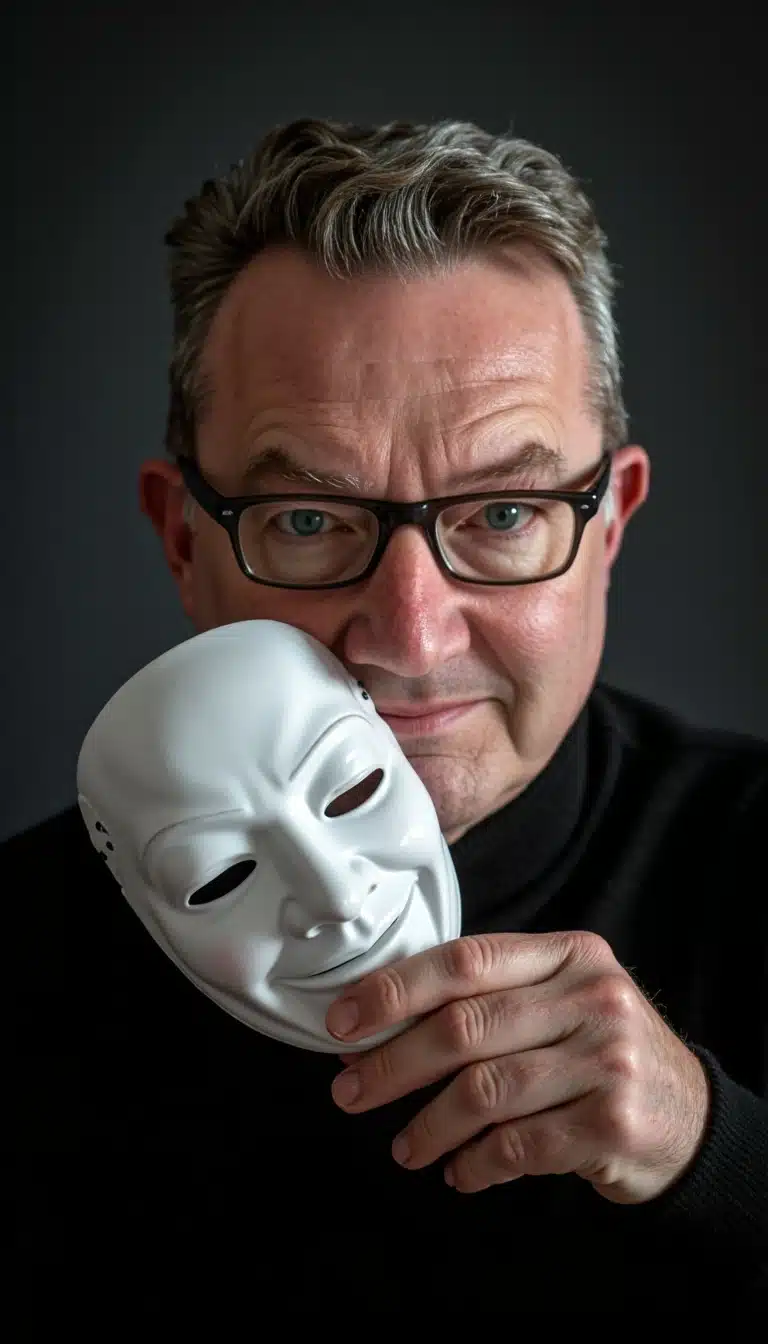
Am I autistic?
Well, this would have been much easier to know if I could only go back and study who I was from the start.
But I can’t, can I? I’m 61, and it’s hard to even remember much from the first five years of my life.
But wouldn’t I still be the same person?
Am I? This is the question: how much of my personality today is genuinely me and how much is the masks I’ve got used to wearing to adapt and conform?
What if my personality is partly a performance?
What is masking?
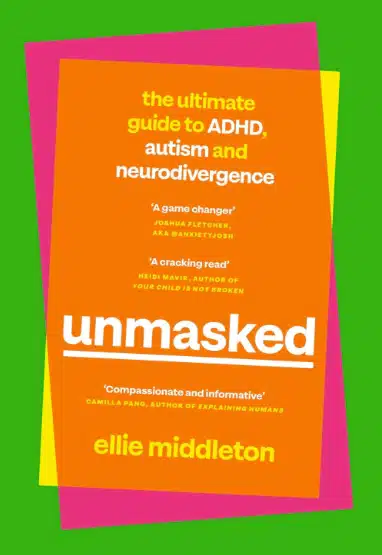
In her book Unmasked, Ellie Middleton defines masking this way:
Masking is when an autistic (or otherwise neurodivergent) person attempts to appear non-autistic (or neurotypical) by covering up their autistic (or neurodivergent) traits.
And she continues by specifying that masking can show up in several ways:
- Camouflaging: Covering up or obscuring autistic traits, tendencies or characteristics in order to ‘blend in’ to a neurotypical social environment.
- Mimicking: Copying the behaviours of those around you.
- Over-compensating: Actively counterbalancing your natural traits/behaviours by using specific strategies to maintain the appearance of functioning the same way as everyone else.
Is masking necessarily about autism?
Of course not.
The word ‘masking’ is perhaps now used primarily in relation to autism and other neurodivergencies, but we do camouflage, mimic, and compensate for many other reasons.
Take it from someone who grew up in a culture where the “window of normality” was extremely narrow, and any deviation was promptly punished with ostracisation, ridicule, or even violence.
Furthermore, take it from someone who spent most of his life in relationships where any failure to live up to expectations was met with anger, contempt, and humiliation.
I can promise you that you will learn to mask under such circumstances, whether you’re autistic or not.
But is adapting to the environment necessarily “masking”
Not at all.
We all adapt to different social environments, and most of us do so subconsciously and effortlessly.
Think about it. Are you really exactly the same person in interaction with your partner, your children, your colleagues at work, your friends, and your acquaintances at the gym?
I don’t think so. Because you will face different expectations, you will have different responsibilities, and there will be different rules and norms in each social domain.
So, you will automatically play different roles.
Is it a bad thing to adapt to the circumstances?
No. It’s mostly necessary and beneficial if you’re able to.
If the group is sufficiently open to diversity, allowing all participants to adapt as much as possible to the situation, social interaction will flow more smoothly, and the group (whatever it is) will function better.
So, where does adaptation turn into masking?
I believe this is when you feel you have no choice. You need to appear to be different to avoid negative consequences. You end up playing a role you don’t fit into, not because you want to, but because you must.
Everyone who has tried living like this knows it’s extremely draining.
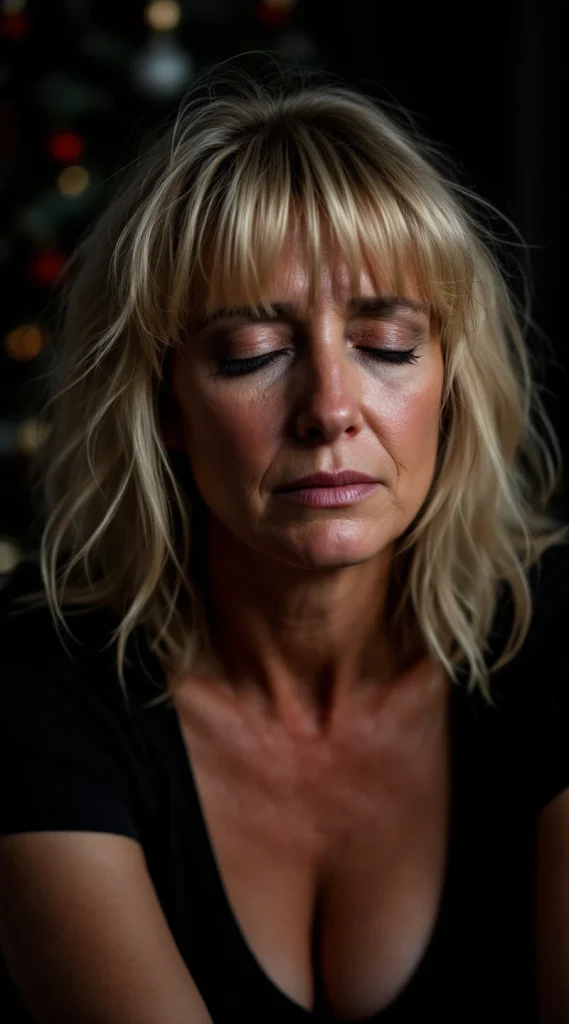
Are you deceiving people when you’re masking?
Well, you’re not choosing to mask, are you?
You start masking because you quickly learn that certain behaviour is punished in your social circles. So, you try to figure out how to avoid being rejected, bullied, or otherwise punished. You may, for example:
- Plan and silently rehearse what to say in specific situations.
- Pretend that the bombardment of your senses (e.g. the background noise in a cafe) doesn’t bother you.
- Train yourself to endure prolonged eye contact, even though it’s extremely stressful.
- Keep smiling because you know you should, even when you’re entirely overwhelmed and exhausted.
This isn’t deceiving anyone. These are things you do to survive in environments that don’t accept you as you are.
This starts to sound rather autistic
True, the examples of masking behaviour above are heavily inspired by what I’ve read in sources written by autistic authors. But are they really exclusively autistic?
Planning future conversations and situations, and having problems with sensory overload and prolonged eye contact can easily be a part of severe social anxiety. And who has ever been depressed without having to fake smiles in many situations?
I could have mentioned plenty of masking behaviour examples that can be seen as typically autistic, and many that don’t.
When masking becomes unconscious
So, now we return to my initial problem. For my part, there’s no doubt that I’ve been masking in most social situations for most of my life. The root causes of my masking remain to be discussed. And how can I know what they are unless I can uncover who I was in the dawn of my life, before I started masking?
Because at some point, persistent masking will become a part of your personality. What you once decided to do to protect yourself will become a habit, and soon enough, a part of who you believe you are.
When did you lose track of who you were? When did you start seeing one of your masks instead of your face every time you look in the mirror?
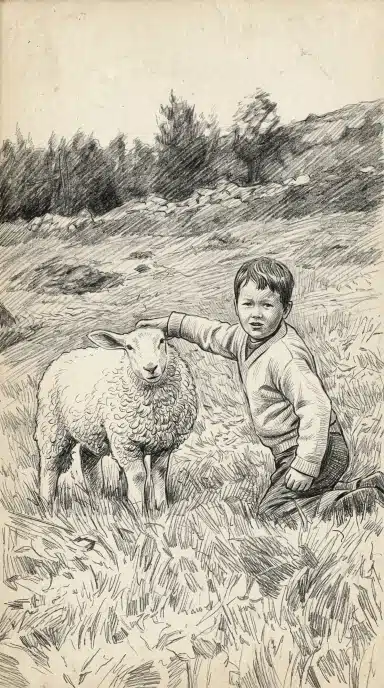
Who was Little Tom?
So, who was Little Tom, more than 55 years ago?
If I could see him now, would I discover anything that could help me understand what happened to him and why? Would I see any autistic traits, for instance?
This will be a theme in future articles here on deliberate.one.
To get there, I guess, will be comparable to a careful, archaeological excavation. I’ll have to collect small pieces of memory, shards of inexplicable behaviour, splinters of pain, almost-forgotten joys, and piece them together into a coherent picture.
I hope you will join me on the dig.
Deliberate 1 is my independent channel for expression and creation.
At the time of writing this article, I have not asked for, been promised, or received payment, services, or any other compensation for mentioning other people’s products or points of view in the article.
This includes Ellie Middleton’s book Unmasked.
All pictures used in this article are AI-generated illustrations. Some of them resemble me at different ages, but they aren’t real pictures.











Post Comment
You must be logged in to post a comment.