From Tarzan to thinking: pulp fiction and growing up as a reader
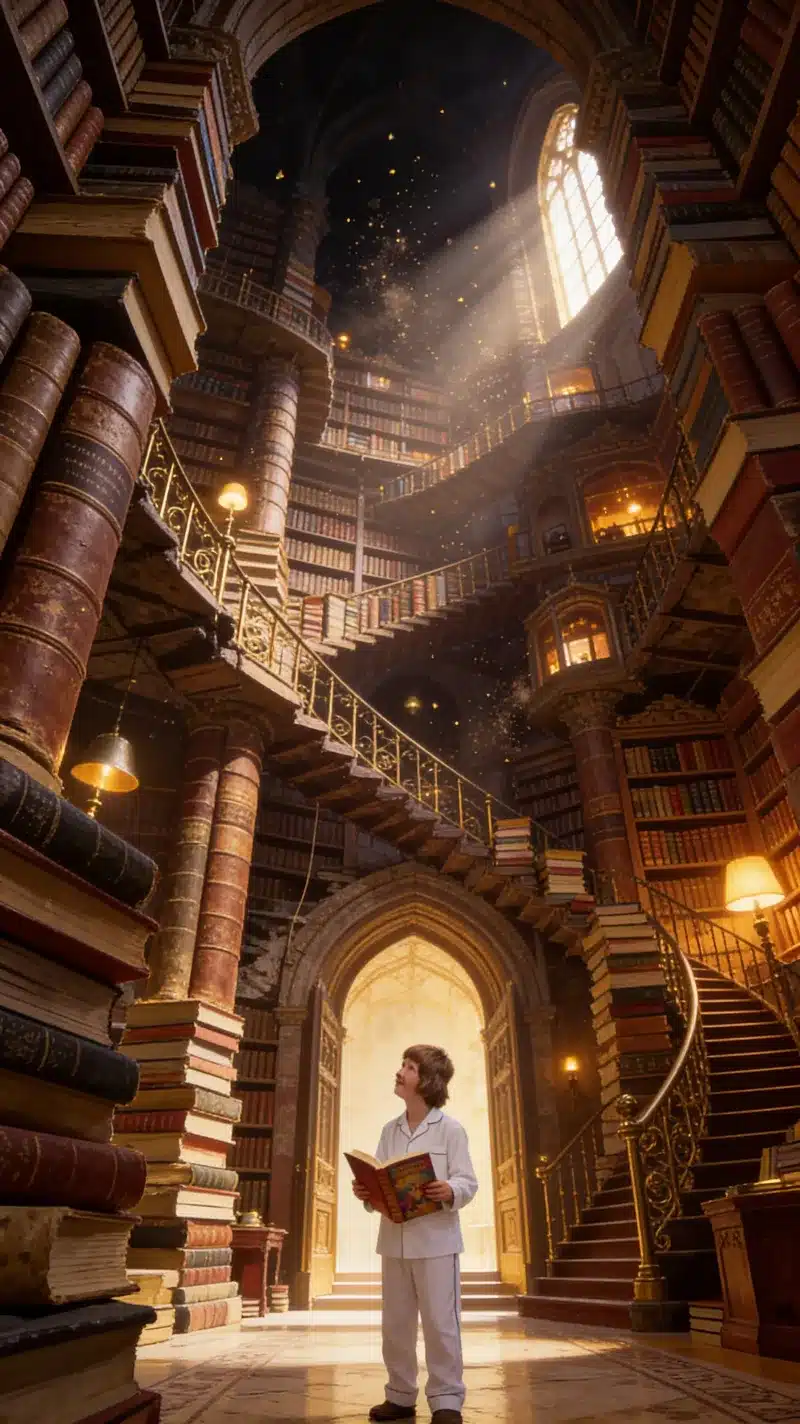
I found Tarzan of the Apes by Edgar Rice Burroughs in a second-hand bookshop. Although I did read a few Tarzan comics back in the early 1970s, I had never read the novel itself–or any of its many sequels.
I decided to buy the book, planning that this could be a part of my “influencers project”, in which I revisit things (people, books, music, films, incidents, etc.) that had an impact on me and try to understand why and how they influenced me.
Of course, since I hadn’t read Tarzan of the Apes, this book hadn’t influenced me directly. However, I chose it as a representative of what we in Norway used to call “kiosk literature”, or “pulp fiction” in English.
Oh yes, I read my fair share of those.
I read anything with words on it
To be precise, from the moment I learned to read, probably sometime in 1970, I devoured absolutely everything in print I could get my hands on.
Comics; ladies’ magazines; men’s magazines (there were often some interesting pictures there); books my seven-year-older brother had bought, read, and left behind; what my father subscribed to from Readers’ Digest to fill up the bookcase, but never read himself; the relatively small encyclopedia we had; and just about everything available in the tiny library at school.
A lot of this was pulp, and some of it things a boy between the ages of 5 and 15 probably shouldn’t read.
When pulp fiction stopped being enough
When I was around 15, I generally stopped reading the worst mass-produced, mass-market, trashy types of fiction–without really knowing why. I believe I understand it now, and I will return to this below.
I won’t claim that I read only high-brow, stiff-little-finger literature from then on. Far from it. For instance, I had my bouts with publications typically aimed at men, like Alistair McLean’s books around 1980 and some of Tom Clancy’s brick novels in the 1990s.
But the endless series of ultra-macho Western paperbacks and similar conveyor-belt productions just didn’t feel “filling” anymore.
The problem with one-dimensional heroes
After reading it now, I feel that Tarzan of the Apes fits really well as a representative of the literary category I left behind sometime in 1978.
And, yes, I understand why.
What I felt was unsatisfactory, but without the language and experience to express it, was the entirely one-dimensional characters. People who, although fictional, never developed as persons and were, therefore, sterile and impossible to relate to for a human with a multi-dimensional mind.
It’s like expecting and needing to read about characters as complex and as sophisticatedly portrayed as Da Vinci’s Mona Lisa, and then being served caricatures as simplified and shallow as the sign on a ladies’ room door. This doesn’t feel sufficient in the long run.
Superman without Kryptonite
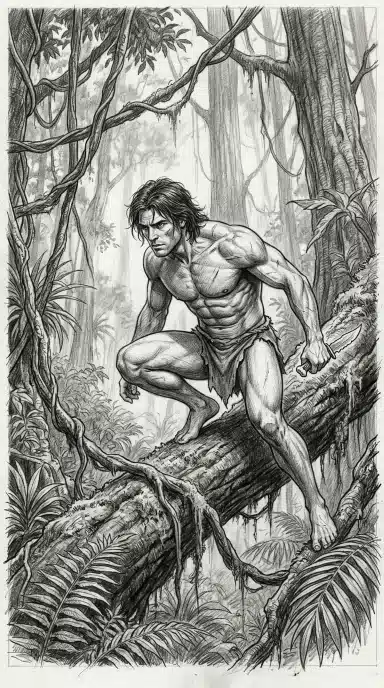
And this is where Tarzan is such an excellent example. Rice Burroughs is constantly drooling all over his protagonist. Tarzan has no Kryptonite weakness like Superman. No brooding darkness of mind like Batman.
Tarzan’s intelligence enables him to learn to read and write English without ever having heard the language spoken. Physically, he can climb and move through the trees just as well, perhaps better, than the apes he grew up among.
Both are quite incredible and would only be possible for a superhero with absolutely no flaws.
The man before him was the embodiment of physical perfection and giant strength, yet it was not upon these he depended in his battle with the great cat, for, mighty as were his muscles, they were as nothing in comparison with Numa’s. To his agility, to his brain and to his long keen knife he owed his supremacy.
– Tarzan of the Apes
The face above her was one of extraordinary beauty.
A perfect type of the strongly masculine, unmarred by dissipitation, or brutal or degrading passions. For, though Tarzan of the Apes was a killer of men and of beasts, he killed as the hunter kills, dispassionately, except on those rare occasions when he had killed for hate–though not the brooding, malevolent hate which marks the features of its own with hideous lines.
When Tarzan killed he more often smiled than scowled, and smiles are the foundation of beauty.
– Tarzan of the Apes
It’s reassuring to hear that all Tarzan’s killing didn’t ruin his exquisitely good looks.
However, a character so completely lacking contrasts and colours soon turns utterly boring.
Edgar Rice Burroughs’ human ranking system
What is more sickening than boring is the way Edgar Rice Burroughs organises humanity in a hierarchy.
Rich white people are way ahead of poor white people, intellectually, physically, morally, and in every other way. An aristocrat is still much further ahead, even if he’s never known his noble heritage himself.
Black people, on the other hand, are equally far behind them all. In fact, there is not much difference between how Rice Burroughs describes black people and apes.
And the women? Well, they tended to faint when things got a bit stressful.
But wait a minute! We need to remember that this book was published in 1914.
Can we excuse it because it was 1914?
True, that’s 122 years ago!
Also, I’m not a fan of rewriting historical books to fit today’s political climate, and I don’t support censorship and book bannings.
However, the problem with Tarzan of the Apes isn’t on the level of a few accidental uses of the “N word” (“because that was how they all spoke back then”) or opposition against gender equality.
The problem is the all-encompassing segregation of humans in categories with labelling so degrading (unless they were rich and white) that no people with a basic IQ and EQ could have felt entirely comfortable with it, even in 1914. Except, perhaps in the southern states of the USA.
Should young people read books like this?
I’m still not saying the book should be banned.
I just want to call it by its real name: racist crap, and it’s not even well-written racist crap. I wouldn’t recommend anyone read it, except perhaps for historical interest.
However, there is a bigger question behind this, a relevant question for today’s world indeed. Perhaps it’s also a question someone should have asked while I read loads of pulp as a child and teenager:
Should young people be allowed, let alone encouraged, to read “low-quality literature”?
The gateway into the House of Reading
If you ask me, I’d say: “Yes! Definitely!”
And even more so now than back in the early 1970s.
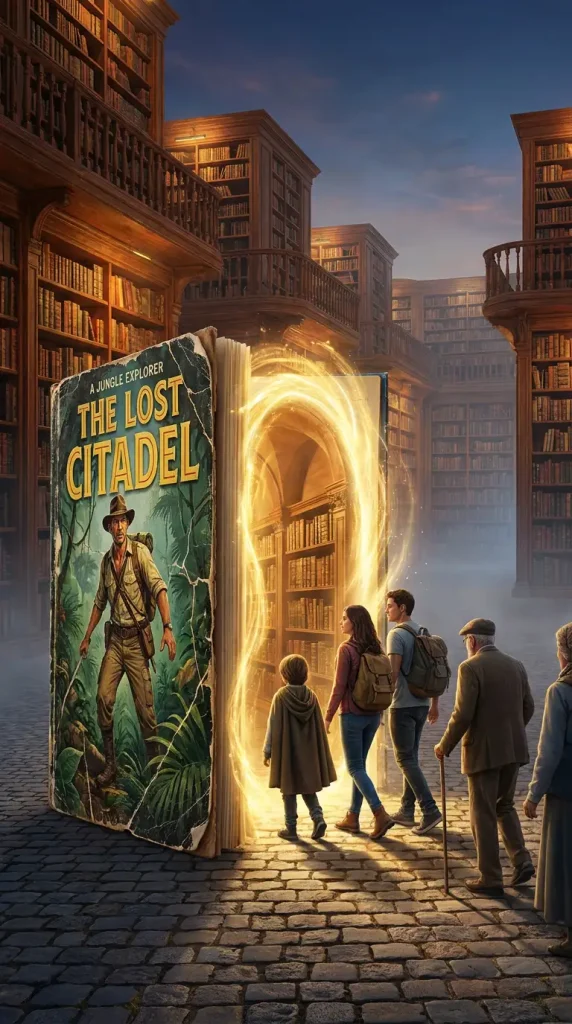
Pulp has always (since the invention of book printing) been many people’s gateway into the big house of reading.
Some are satisfied with staying in the hallway of this house, enjoying their books about tough cowboys and soldiers, clever detectives and stupid bandits (or vice versa), or perhaps passionate doctors and nurses in the hospital.
Others will be more adventurous and start exploring all the rooms of this house, perhaps hiding in its dusty attic or dark basement. Everyone can find a room where they feel at home in the house of reading.
Provided they start reading at all. But that’s not a certainty these days.

Reading has never had more competition
This is what makes the question above more relevant than ever.
Because reading long-form text is always a bit of work until we get into it. And why should people of today even do a slice of tedious work when ready-made, well-lubricated, friction-free, and absolutely brainless and effortless entertainment can slide directly into our brains from a myriad of streaming, gaming, and social media platforms?
Do you think I’m starting to sound like a grumpy old man? No way!
There’s nothing wrong with watching TV or scrolling on Instagram for a while. I do it myself. Perhaps too much.
But reading a book is something completely different.
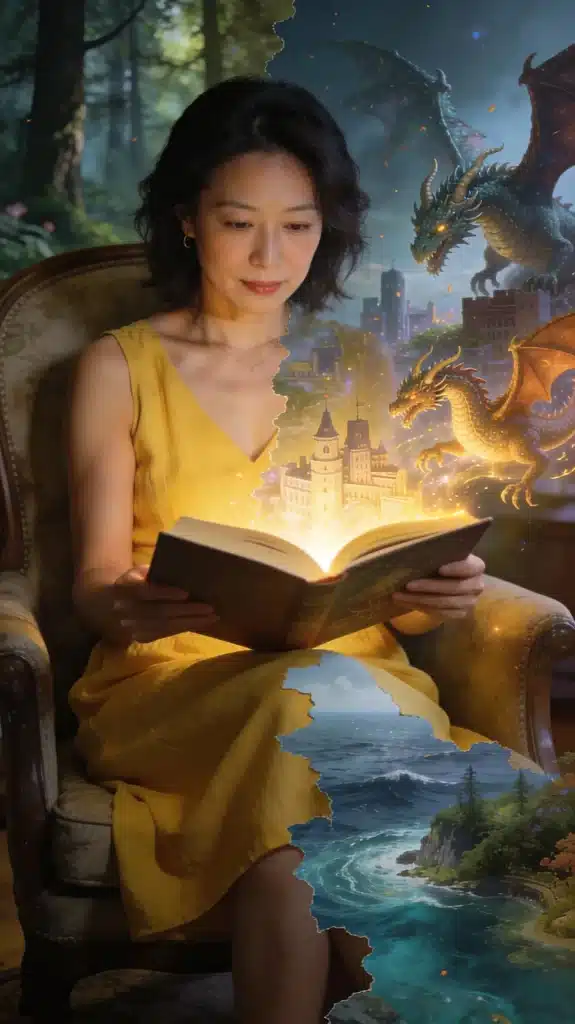
Reading makes you build worlds of your own
Reading is continuously creating worlds in your own mind, with all their sounds, fragrances, colours, people, forests, rivers, and cities, and makes you experience the whole rainbow of emotions: anger and joy, triumph and defeat, hate, and eternal love.
Yes, the author guides you, a narrative voice whispering in your ear, but you must still paint the pictures and feel the feelings yourself.
This is something that develops the brain, in contrast to lazily absorbing pre-cooked and pre-digested entertainment like a goose being force-fed to produce a fat liver.
Teach critical thinking, not censorship
So, please don’t discourage young people from “easy reads”, even if the quality is low. Let them read Captain Underpants. Let them even read Tarzan of the Apes, if they want to.
Encourage them instead to discuss what they read, to seek second opinions and alternative perspectives, and please volunteer to do these things with them.
Because these skills are needed in our modern world. The moment your young ones turn away from you and pick up their mobiles and laptops, they will find much worse things than Tarzan of the Apes.
The real danger isn’t what young people read, but that they may not develop an active, critical mind.
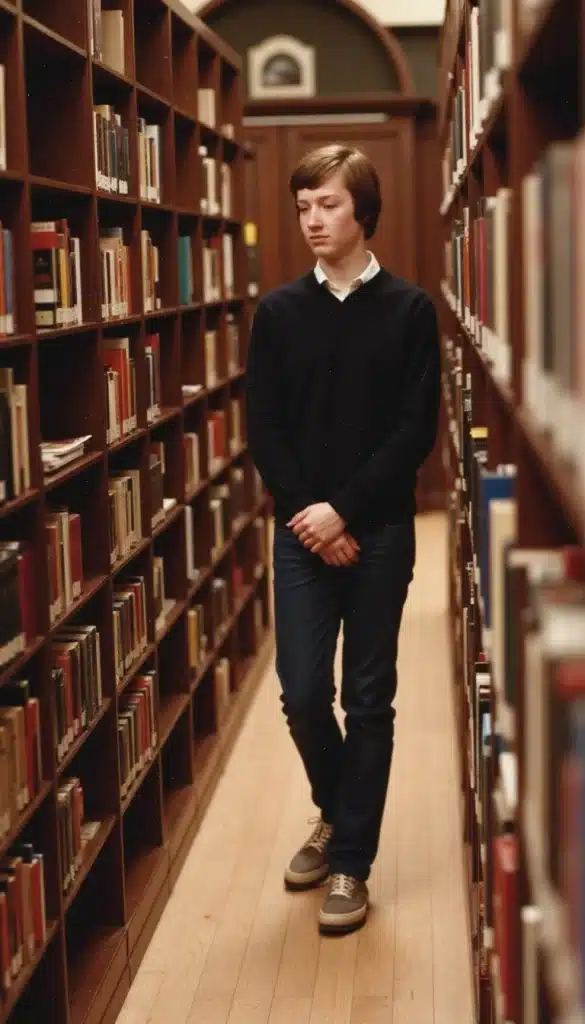
All pictures used in this article are AI-generated illustrations. Two of them resemble me as a child and a young man, but they aren’t real pictures.











Post Comment
You must be logged in to post a comment.