The importance of doing something “pointless”: A personal account
“People like you find this harder than quitting cigarettes.”
This was said by a therapist, with whom I have regular conversations.
What was this about? And who are “people like me”?
I had just told her about my realisation of the necessity to set aside time to do “pointless” things. Pointless things, in this context, are activities with no goals or measurable outcomes.
“People like me” are driven, results-oriented people who believe they always need to do something “useful”.
In this article, I will explore how I found myself in a situation where I had to make the conscious choice to do pointless things. Strange as it may sound.
This isn’t a short-and-sweet collection of advice about why it’s necessary to do pointless things now and then, and how to handle it if you’re driven enough to make it difficult. The article is a personal story about my own long path from childhood to this realisation.
However, the practical advice side of it is to be found in this article:
“If I can’t create, learn, or earn something…”
“…by what I’m doing, then it’s just wasted time.”
This was what I was saying, to myself and others, for a long while. This was the rule I tried to live by.
Whenever I failed to live by this rule, it felt like moral negligence.
I always had a voice in my head pushing me to make something “useful” out of my time, and to be honest, I felt like a valiant defender of good moral standards when I did.
Until I recently realised two things:
- The constant pressure I put on myself was a health risk.
- The voice in my head that always pushed me onwards may not have been my voice at all.
Concerning the origins of this voice, let’s start with a trip back to 17 May 1975.
An invisible boy on Constitution Day
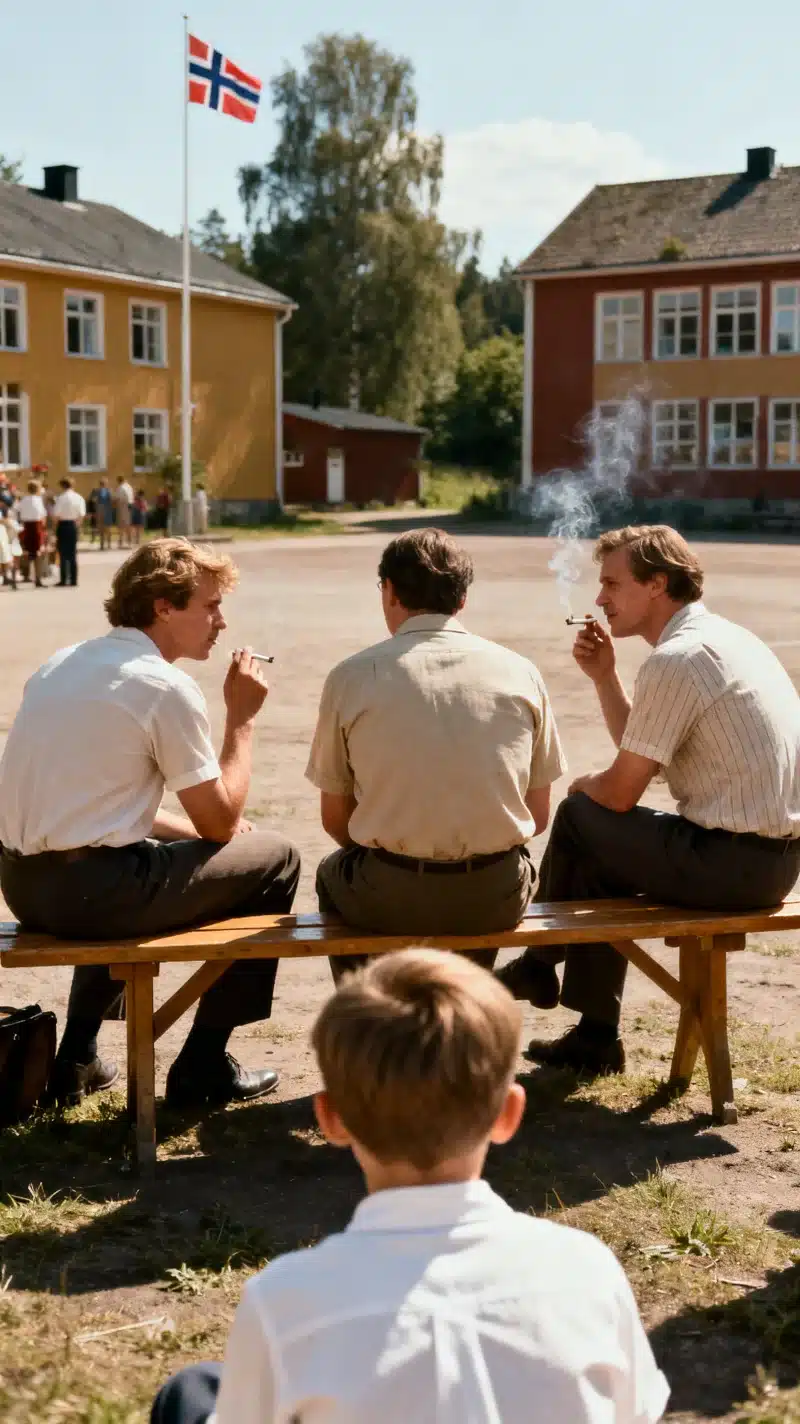
Well, it may have been 1974 or 1976; I can’t be entirely sure 50 years later. But I clearly remember this 17 May, Norway’s Constitution Day, a public holiday when the whole village gathered at the local school to celebrate. It was an unusually hot May day.
The men sitting on benches brought out from the school or on the grass were sweating through their nylon shirts, while conversing calmly and smoking their roll-your-own cigarettes.
I remember the butterflies in the around-ten-years-old stomach of mine as I sat among them, near my father, listening. This was acceptable as long as I stayed invisible and inaudible, as good children were expected to be.
The stories fathers tell and the ones they don’t
The men told stories, as men have always done, around the campfire, in the trenches between the battles of a war, in the pub after a long day on the factory floor, or while smoking tobacco together on a hot May day.
Men tell stories about how to manage or even survive. About how they have outsmarted the sergeant, the factory supervisor, or the tax authorities. Stories about people they admire. And stories about those who shall inherit the Earth: their sons.
Perhaps I remember this particular day and the butterflies in my stomach because I needed my father to tell stories about me, too. Or at least throw me a glance to acknowledge my presence, my existence.
However, I remained not only invisible and inaudible, but also unnoticed and unmentioned.
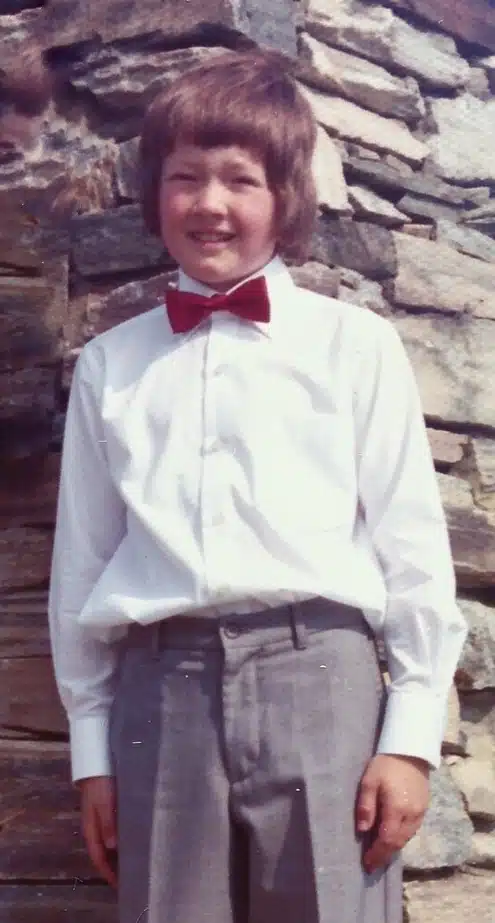
When you are the son not worth bragging about
Years later, I started to understand why.
Thinking back, what were they talking about, the men who were proud enough to speak positively about their sons in a culture where too much bragging about yourself or your own would soon be considered a mortal sin?
Oh, one of the sons, only slightly older than me, had already started working on a moped to make it roadworthy before his 16th birthday. Another had already gone out fishing for herring on his own last autumn. And so it went on, the practical skills prodigies of the village were, one after one, briefly spotlighted by their fathers’ carefully modest pride.
My poor father, however, had no such story to tell. His youngest son usually sat hunched over a book. I would guess this made him somewhat embarrassed. Provided he remembered I was there at all, of which I’m not too sure.
Talents that didn’t count
As life has passed by, I’ve seen that absolutely nothing that has been necessary to learn, or that I’ve found desirable to learn, has been impossible for me to learn.
I’m certain I could have learned to repair moped engines, or where the best fishing grounds were, or even to hunt moose. I just wasn’t attracted to it at any age. Because inside my books, there were worlds so big, so fantastic, and there was so much to learn that was completely different from our tiny life in that tiny village on the Atlantic coast of Norway.
The problem was that the things I eagerly learned weren’t useful. Not there, not then. What may have been useful outside that life, outside that culture, outside the village, wasn’t worth thinking about.
Usefulness as a measure of human worth
Usefulness was the measurement of your value as a human being.
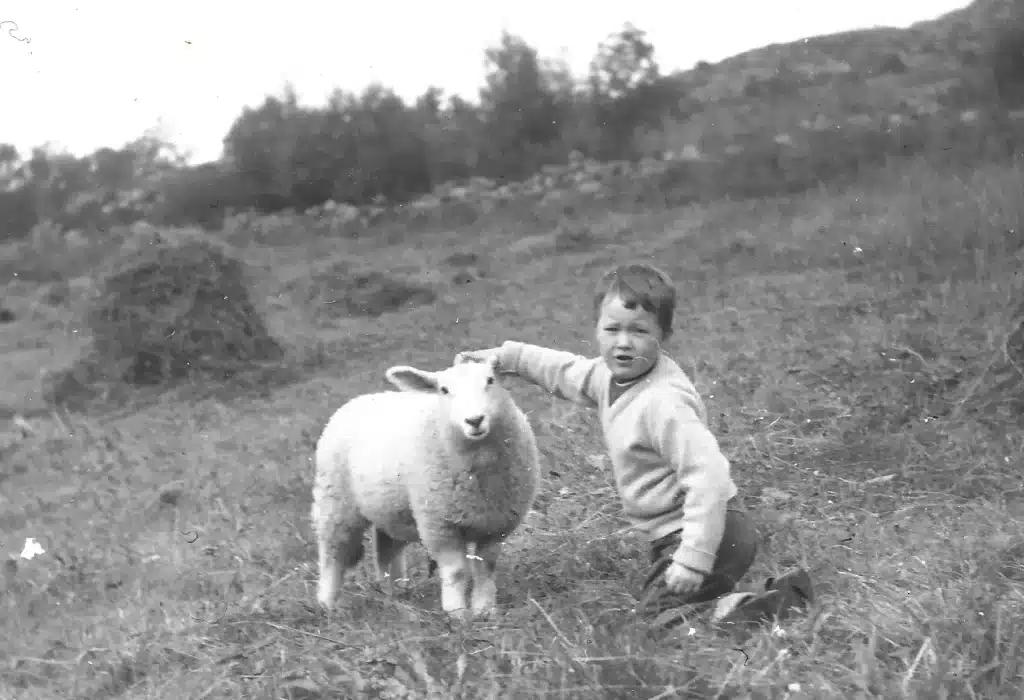
I grew up on a farm too small to earn a living from. My father was an electrician and my mother a cleaner. The farm work had to be done in everyone’s spare time. Participation from the children was expected and taken for granted as far back as I can remember.
I suppose I was reasonably useful most of the time. Picking stones after the ploughing and harrowing of the small fields every spring. Hanging grass on the hay drying racks and later get the dry hay into the barn. Weeding the vegetable and potato fields. Helping slaughter a pig before every Christmas.
However, if I didn’t meet the expected standards, judgment was passed instantly, as I’ve written about elsewhere on deliberate.one:
“Not too bad”: Praise that never landed
To be fair, maybe I didn’t always put my heart into the farmwork. Perhaps I didn’t listen as intently as I should have if my father briefly explained why the centrifuge motor of a 20-year-old AEG Turnamat washing machine had stopped working.
But I put my heart into my schoolwork. And I did pretty well at school. My grades were excellent.
I understood that my mother was proud of me. Not that she said much, but I could see she lit up when she saw my gradebook. Maybe my father was proud as well. But how can I know? Nothing was ever shown or said.
Except “not too bad,” which was his standard comment when he saw the gradebook.
Learning the conditions of worth
What I knew as I passed from childhood into adolescence was that just being myself brought no appreciation. Neither did doing merely what was expected of me bring any acknowledgement.
I had to do something useful to be recognised, and preferably excel at it to be worth something.
The problem was that I didn’t do the ‘right’ things even when I excelled at what I did.
I had learned there were conditions of worth.
And I had learned that I couldn’t satisfy those conditions without stopping being myself.
When the moral ground collapsed
The transition from school to college brought some significant changes. I got some new friends, my very first real friends. They were also the first role models of my own age I’d had.
At the same time, it became known that my father had done things that rendered him unfit to be a role model or a moral authority in my eyes.
The structures of good and bad, right and wrong, as I had known them, collapsed. Even though these structures had been oppressive and had effectively stripped most of my self esteem off me, they had been the only moral structures I’d known.
I was lost. I had my first significant collapse myself.
Everybody needs to be someone
What could I do when I understood I’d never be good enough? What could I do when it wasn’t even clear what good was anymore?
Who was I?
Everybody needs to be someone.
It’s a teenager’s job to figure out their identity. It’s also a teenager’s job, to some extent, to revolt against the norms of the generation before, or else the development of the human species would have stopped tens of thousands of years ago.
My ways of revolting were not of the most constructive kind.
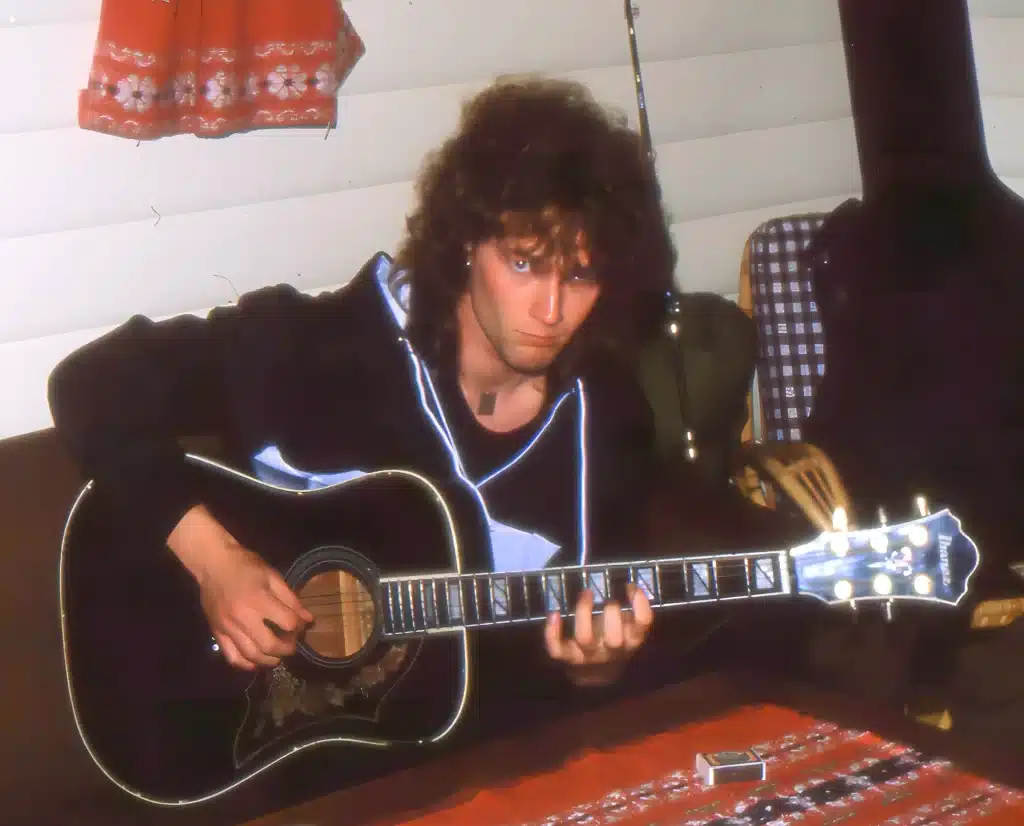
Becoming the worst instead of never being good enough
While plummeting into a major depression, I somehow made a decision about who to be. It wasn’t a conscious decision; it took me years to understand the causes and effects of what happened.
Understanding I could never be good enough, I “decided” to become much worse than anyone had ever expected me to be.
I grew my hair long, started wearing an earring, listened only to hard rock, and soon wore black clothes only. All of which is okay, a totally legitimate expression of a search for identity.
However, I also smoked and drenched myself in alcohol, as often and as much as possible. I was blessed, or cursed, with a relatively high tolerance for spirits. And this allowed me to be better, or worse, than most people at something that was recognised in the culture where I lived.
For better or worse, I didn’t care which. Finally, I was something. That is, a drunken clown, a lot of the time.
The split identity: rebel and perfectionist
Was my revolt liberating? Not at all.
It left me in an impossibly wide-legged stance with one foot planted in my partyboy role, trying to be as bad as possible, and the other in the part of me that still desperately strived to be good enough, to be useful.
Why? Why did I care? Wasn’t I indifferent to what my father said at this point?
The problem was, he didn’t need to say anything. There was a voice inside me now, always flogging me on.
Pull your weight — or be despised
There was one thing I knew, even long before that 17 May in 1975: Whatever you do, you must pull your weight. Never ever be a burden to anyone. At the end of the day, this was the reason why it was necessary to always be useful.
In this culture, many things could elicit distaste and ridicule. Not being entirely “normal” was the most usual one. Not having the same skills and interests as everyone else, for instance.
Next, the things that really could evoke anger, bullying and, sometimes, violence. Suspicion of someone being gay, for instance. But even worse if someone was (rightly or not) perceived to believe they knew better than others, maybe even thought they were better altogether.
The worst thing, however, was not to pull your weight. No one was more despised than those who skived off, neglected their tasks, moaned and complained, made up excuses and perhaps “faked” illness so that more of the burden was put on their workmates or friends.
Sissy! Weakling! Loser!
The internal bully takes over
Oh, the voice inside my head used those words, and many more.
As I knew perfectly, I could be as rebellious as I wanted, drinking and smoking all night if necessary. Or more often, I would lie awake, rotting on the inside from depression and anxiety.
But I’d better get up in the morning and play my part.
My grades plunged, which further fuelled my general decline. My academic abilities were the only thing that had let me retain a small slice of self-esteem until then.

I, Sisyphus
But I couldn’t give up, could I?
I couldn’t even admit I struggled. It took me some decades to realise I needed to do something about my situation. Asking for help would be admitting weakness, to not be able to cope, to pull my weight. Oh, the shame!
I was the real-world Sisyphus, whom you may know from Greek mythology. The one the Gods condemned to roll a massive stone up a hill, only to lose his grip on it every time he neared the top. Start again, Sisyphus.
I did everything I could to become…something. Someone.
Because it clearly wasn’t enough to be…me.
I rolled my self-esteem stone up the hill through better periods, university studies first, later IT certifications, and more university courses. Only to lose it near the top every time my mental fragility and life’s obstacles made me trip.
No escape — the past repeated
The vicious circle could have, should have, stopped when I entered adult life. I had moved away from the area where I grew up. I met someone who became my partner, later my wife. This could have been a restart, a new life, a time of recreation and healing.
Except that we tend to “marry our parents”, don’t we? We find someone who reminds us of something familiar, even though this is the last thing we need.
I lived for almost 30 years with a person who, in so many ways, big and small, continued and reinforced what was already deeply ingrained in me: I wasn’t good enough. I didn’t live up to her expectations.
Achievement without relief
What I achieved at work could never make up for the constant feeling of being a failure at home.
Even at my best, when I had studied job-related subjects up to a knowledge level only a minority of people could match, even when I “worked around the clock”, even when I over-prepared and double-checked absolutely everything, I was always terrified of being disclosed as a fraud the next moment.
And dear hobbies, like music and writing, were never about enjoying the experience. Even though they never could bring food to the table, at least I could produce something.

Still performing for a silent audience
I even brought some of it back to those I once desperately wanted approval from, my father, the family, and the small rural society I came from.
In 1985, I converted a small collection of my poems into a booklet and gave it to selected people as a Christmas present. This was hardly mentioned by anyone, and not a word was uttered about it by my father.
At the party I threw for my 40th, I sang some of my songs before an audience for the first time. Some people responded positively. My father said merely, “You’re full of surprises.”
It must have been embarrassing for him to watch his youngest stick his neck out like that, pulling people’s attention towards himself. People just didn’t do that where I came from.
However, as you know by now, I no longer needed my father’s or anyone else’s approval. I could perfectly well be my own slave-driver.
Unexpected proof of worth
15 years later, while the world was under the heel of the Covid-19 pandemic, I happened to start communicating with someone online. This messaging with a person I’d never met completely demolished the self-image I’d built through 55 years of life.
It turned out I could be good enough for someone.
A realisation that not only changed my self-image, but the whole paradigm my worldview was built on.
I wasn’t worthless. And there were things in the world worth fighting for. So I did.
Two and a half years later, I was married to the English woman I’d started communicating with in the summer of 2020. And, as a consequence, I had emigrated from Norway to England.
Rebuilding a life at fifty-five
My life until then had been rather stressful. Not only because I always tried to live up to expectations I could never meet, but also because I often didn’t understand where and why I failed.
All the way from my childhood to the mature age of 55, I found it entirely unpredictable what would trigger negative reactions from my environment, including rage, bullying, shaming, silent treatment, and the rest of the emotional blackmail toolbox.
However, I had no idea how demanding it would be to break out of established life and build a new one in another country.
All the way from condemnation from people who believed they knew better than me how my old life had been, to the practicalities of getting married across borders, applying for a visa, emigrating, finding a job as an immigrant, and settling into my new life.
But I made it. We made it, the soulmate I found against all odds and I.

The hamster wheel I carried across borders
So why did I still find it so difficult to relax? Why was it so hard to get my blood pressure, which had been too high for years, down to an acceptable level? Why did I always feel tired?
It struck me just a few weeks ago. I finally realised I was still running on the hamster wheel of trying to be useful all the time. Even this, yes, this, writing this text right now, is done in the hope that someone, sometimes, will recognise themselves in it, and be helped by reading it.
I love doing this; it gives meaning to my life.
But this doesn’t necessarily mean I must do it every available hour of my life, either through direct writing or through research and idea hunting.
Nearly 61 years old, I ordered myself, for the first time, to start doing pointless things. For the sake of my health and well-being.
Recognising the voice that was never mine
This was when the therapist said, “People like you find this harder than quitting cigarettes.”
I understand what she meant; it is hard to break 60-year-old habits. But I quit cigarettes in 1999, and I later quit nicotine pouches (called “snus” in the Nordic languages). Both these occasions were harder than what I’m doing now.
Because I’ve understood, really understood now, that the voice inside me that was always pushing me on and on and on wasn’t my voice at all.
It was my father’s voice, a hundred other voices from my childhood and youth (well represented by the men I listened in on 17 May 1975), my brother’s voice, my first wife’s voice, and many other belittling, spiteful voices, fused together and masquerading themselves as my voice.
I’ve seen through you now. I know who you are. I don’t need to listen anymore.
Epilogue
As I thought about this a couple of weeks ago, I looked inward and felt a vast sadness wash over me.
Often, when such things happen, I find myself in a position to identify an earlier version of myself who needs to share something with me, to release something that has been bottled up for too long. This time, the earlier me wasn’t very communicative.
I could feel he was rather young, younger than the 10-year-old me from 1975. Perhaps only half that age. Assuming that he wanted to share something about not feeling good enough, I gently asked if this was the case.
Silence.
“Is it perhaps something you would have wanted to say to your father if he had been alive still?” I asked.
I felt an unspoken “Yes”.
“Would you have asked him why he didn’t find you good enough?”
A new silence before he whispered:
“I would have asked him why he didn’t love me.”
Two pictures used in this article are AI-generated illustrations: the one of me with a pint of beer and the one of me in front of computer screens.











Post Comment
You must be logged in to post a comment.