How your greatest strength becomes your greatest weakness
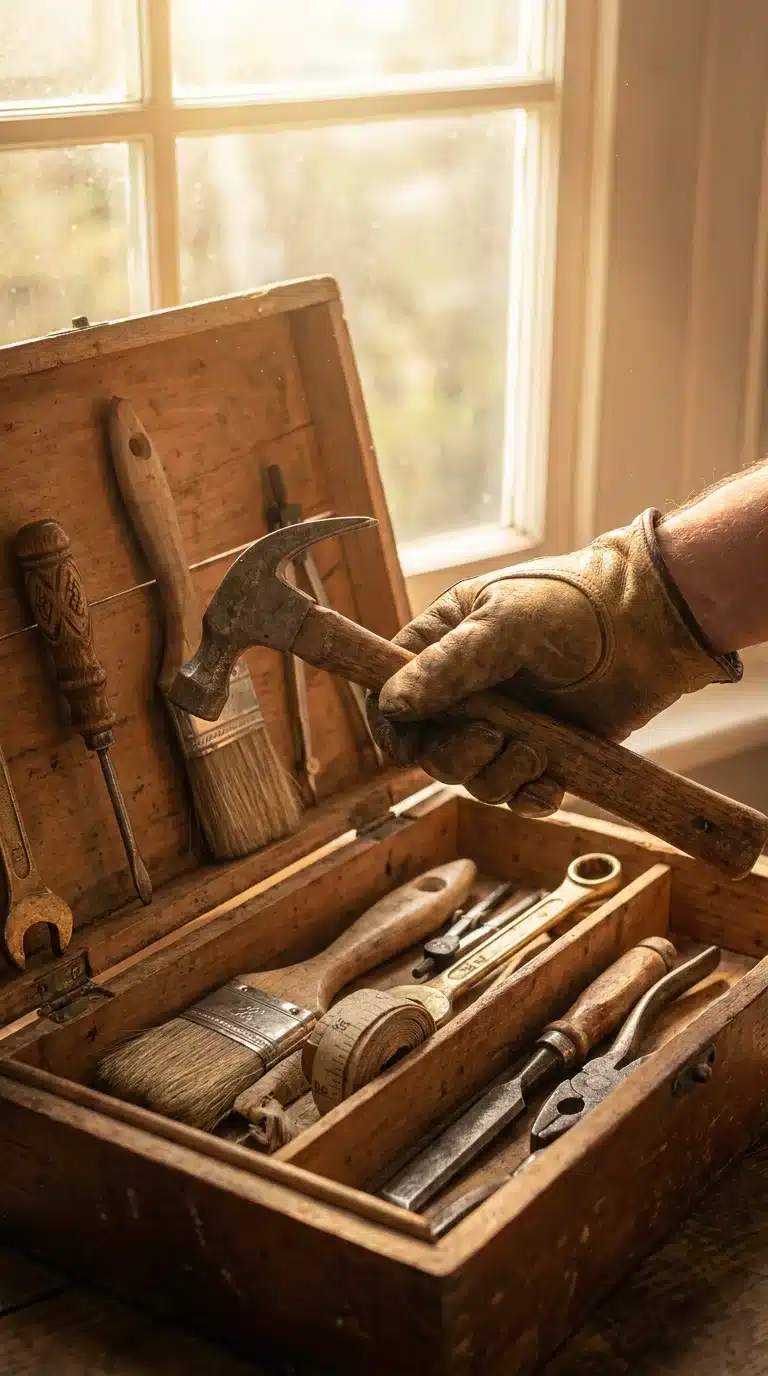
I suppose it is tempting, if the only tool you have is a hammer, to treat everything as if it were a nail.
– Abraham Maslow
And sometimes it’s tempting to rely too heavily on our strengths or use them in the wrong situations. It’s natural. If we know our strengths, we know what we’re good at and what has helped us before.
The problem is that “before” was a different time and circumstances.
When analytical thinking becomes overthinking
Already as a small child, I had a pretty good capacity for analytical thinking. I guess this must have been one of the reasons why reading and basic mathematics just “clicked” into my brain long before I started school, without any educational support whatsoever.
I also grew up in a home with a high level of conflict. At some point, while walking on eggshells to avoid triggering another avalanche of strife, I must have started analysing all the present, potential, and past danger signals. Even a child wants to find ways to control the uncontrollable when it’s constantly scared and will try to use its best tools to do so.
Worrying and ruminating are common among people suffering from anxiety and depression. Well, I quickly advanced all the way up to the Champions League of worrying and rumination. Constantly. For decades. Trying to predict every possible outcome of every social encounter in advance, and then analysing again afterwards to figure out what I should have done better.
When strengths become habits
No one should claim our brains are lazy. On the contrary, some of us have brains that could benefit from a bit more relaxation. Mine was constantly using 100% of its processing power for 50-ish years, desperately trying to create order amid both real and perceived chaos.
The fantastic machinery inside our skulls is quick to decide that a certain behaviour that worked wonderfully once, in one situation, is the way to continue. Behaviour scripts are established. Habits.
And this makes sense. It saves energy. It saves us from inventing the wheel every time. That’s not about laziness! It’s an adaptation! And it works!
Until it doesn’t anymore.
For instance, when a knack for analytical thinking becomes relentless, pathological overthinking.
We quickly grab our favourite hammer from the toolbox and start pounding. But wait, the problem isn’t a nail anymore. It’s a screw. Oh, the frustration!

When perseverance keeps you stuck
But we aren’t quitters, are we?
I dare say another of my strengths is perseverance. I’ve never been a sprinter. But I can keep going for a very, very long time if I have to. Both on physical and mental distances.
I lived with relatively severe anxiety and depression for forty years before I even allowed myself to ask for help. Why? Most of all because of shame. Shame of not being “normal”.
But I kept going, didn’t I? Through those forty years, and then all the years afterwards, while trying to sort myself out. Through education, work-life, and raising children. That’s not too bad. Or is it?
What if my shame hadn’t been backed up by my ultra-marathon-capable perseverance? Would I have sought help earlier? Or would I just have perished?
A good tool is still the wrong tool sometimes
As you can learn from my examples, there is a risk that your strengths can turn against you. If they are overused. If you don’t use them mindfully.
I’m not saying your strengths stop being strengths. I’m saying they can be used in inappropriate situations and to an inappropriate degree. Your favourite hammer isn’t the problem. It’s just not always the right tool.
When a way of reacting and behaving becomes a habit, it’s self-amplifying. We tend to find safety in familiarity, even in habits that are harmful to us in the long run.
Breaking bad habits requires deliberate thought and action, starting with awareness of our own patterns of thinking and reacting.

When strengths go too far
So, let’s look at a few more examples of strengths that may go awry if overused:
- Caution >>> Paralysis
- Compassion for others >>> Self neglect
- Confidence >>> Arrogance
- Courage >>> Recklessness
- Empathy >>> Taking on everyone else’s stress and problems
- Flexibility >>> Unorganised/aimless
- Honesty >>> Bluntness in a cruel way
- Optimism >>> Ignoring risks
- Organisation >>> Become controlling
- Patience >>> Overindulging in others
- Responsible/high achiever >>> Burnout
If you can notice things like this happening, you stand a good chance of adjusting the use of your favourite strength before serious harm is done. And if you can’t see it yourself, perhaps you have a partner or good friend who has given you signals about what’s going on?
Let your strengths balance each other
Apart from reducing the frequency and intensity of your use of strengths a little, there is one more thing you can do to avoid negative side effects from strengths.
You can see how your strengths fit together. No one has only one personal strength. And sometimes, two or more of them can balance each other wonderfully.
Flexibility can be a perfect sidekick for your perseverance. Confidence can be smoothed by humility. Empathy and compassion may need some backup from sound assertiveness.
Wisdom is choosing the right tool
The point isn’t to fear your strengths or to use them less. The point is to use them wisely.
Every strength has its moment. Courage is invaluable—until caution is needed. Perseverance can save your life—until flexibility becomes the wiser choice. Compassion is beautiful—until its price is yourself.
Wisdom isn’t about having more strengths than other people. It’s about knowing which tool to pick up, when to use it, and when to put it down.
Don’t become the person who solves every problem with a hammer simply because the hammer feels familiar. Become the person who knows their toolbox.
That is how strengths stop being automatic habits and become deliberate choices.
And deliberate choices are what change lives.
All pictures used in this article are AI-generated illustrations.











Post Comment
You must be logged in to post a comment.