Learning flexibility to survive in rough times: A personal account

Flexibility is what keeps you alive in the terra incognita, the unknown land, of healing.
I wrote this in an article a while ago. And it’s true. If you want to survive in uncharted territories, flexibility will always matter more than strength.
But it’s not as simple and easy as it sounds!
Here are some of the proposals I made for learning to embrace flexibility:
Create some room for manoeuvring.
Accept that you cannot control everything.
Accept that the world isn’t out to get you.
Don’t let setbacks defeat you.
Yeah, but what if you are locked in a situation you can’t get out of and feel constantly pushed way past your limits?
What if you feel you’re not in control of anything?
Whatever I say, it surely feels like the world is after you all the time.
And you’re so bloody tired, and can’t take a single setback any more.
When everything is too much: Focus on one detail at a time
Believe me, I’ve been there.
I’m perfectly aware of how hard it can be if you suffer from anxiety or depression.
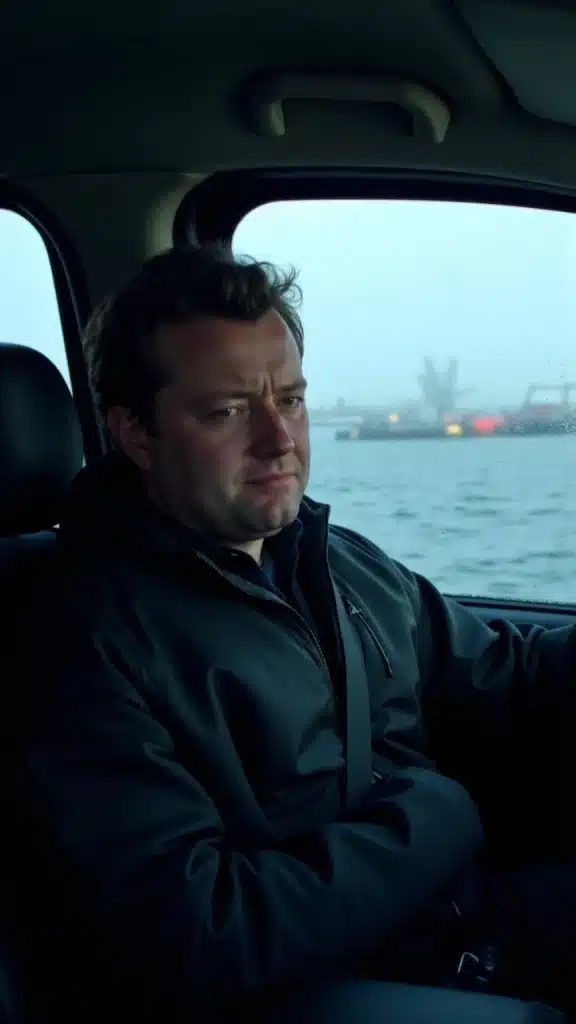
I remember one dark day, about 15 years ago. I was sitting in my car on the ferry across the Trondheim Fjord. I was on my way to a house I owned out on the coast, where I’d heard the drain pipes had frozen. When the ferry reached the other shore, I’d have more than an hour to drive on horrible winter roads before I could try to figure out how I could thaw the frozen drains.
Back at home, one of my daughters was severely ill. My own mental health had deteriorated rapidly in the later months, my life generally sucked big time, and I was so tired that I felt I could vomit at any time.
I just couldn’t take any more. Not a single thing.
Turning a mountain into pebbles
As strange as it may sound, I think what saved me that day from doing something stupid was my experience as a project manager.
How do project managers do things if they have been commissioned to build a new hospital or develop a big IT system? The scope would be daunting and the complexity unimaginable.
Answer: They break the work up into small, manageable pieces.
One step, one task, one breath at a time
My decision that day on the ferry: Focus laser-sharp on one thing at a time. One thing only. Block everything else out as much as possible.
This was my plan (strictly one thing at a time):
- Get off the ferry.
- Drive to the house (carefully).
- Have a quick look at the drains.
- Go to bed and get some sleep.
- Make a new plan in the morning.
This was enough, under the circumstances. And it kept me going. Task 4 was the most important. Often, manageable things seem impossible just because we’re way too tired.
The next day, I found a way to unblock the drains, thereby avoiding the basement from flooding with rainwater.
When a lifetime is too much: Shrinking time itself
Chopping goals and tasks up into manageable pieces is one thing. Sometimes, we need to do the same with time.
In my darkest decades, I don’t know how many times I thought, “I just can’t take another day of this.” Let alone the rest of a lifetime. God, no!
So, I focused on coping with another hour at a time. Then another one. And another one. Until I had coped with another day.
I agree if you think, “This isn’t much of a life.” It isn’t. But not having much of a life is better than not having one at all.
And you never know what tomorrow brings.

You never know what tomorrow brings: Looking for opportunities
Tomorrow, I would perhaps see something beautiful I hadn’t noticed before. Tomorrow, I may learn something new. Tomorrow, a door that was closed to me earlier could open.
Tomorrow, I might meet someone who will change my life.
Tomorrow…
Even on the darkest days, I had this tiny little spark of hope inside me. The hope that something good could happen. And how could I give up before I knew?
This probably saved my life more than once.
Luck? It’s openness
I’ve heard people say it isn’t so that some people are luckier than others. However, some of us are more open to seeing opportunities and acting on them. That’s what makes the difference.
Most of my life, I didn’t feel particularly lucky. Perhaps I didn’t see what was possible because of my limited worldview, the traditions and culture I grew up with, my disastrous self-esteem, and all my fears.
However, my boundless curiosity always worked in the background. And when I decided I wanted to improve my life around age 40, I started looking everywhere for understanding, answers, and ways to improve.
This takes a lot of time if you do it on your own, and the journey still goes on for me.
Searching widely without getting lost
I’ve constantly searched for opportunities, answers, guidance, and applicable wisdom in books, on the Internet, and through self-observation. Some things have worked, some things have been wasted time.
I believe an important part of cultivating flexibility is learning to balance openness to opportunities with avoiding being led astray by charlatans selling oversimplified solutions. As they say, if it’s too good to be true, then it usually isn’t.
But often, we don’t know the truth before we’ve tried. We will find a dead end now and then. Flexibility is also about understanding that failing once, twice, or a hundred times doesn’t mean there’s no point in trying again.
There’s only one guaranteed way to fail. To never try. To walk past every opportunity.

The flexibility to put yourself first
I had tried all my life to live up to other people’s expectations. In fact, as a chronic people-pleaser, I tried so hard it almost exterminated me as a person.
From there, it’s a long jump to even think in terms of prioritising myself and “creating some room for manoeuvring”. With way-below-zero self-esteem, I didn’t believe I had the right. And there are so many others who have it worse, right?
The day I realised I was worth protecting
I had a significant revelation while studying Buddhism (one of my explorations of opportunities). In Buddhism, you are expected to minimise the harm you inflict on any living being. Then it struck me:
“I’m also a living being.”
I realised I would never treat others as harshly as I always treated myself. I would never push others as hard. Never speak to them so cruelly.
Understanding I needed to lower my standards to look after myself, the next revelation struck me: were they even my own standards? Or were they cultural norms enforced on me, constraints beaten into me by bullies, or unreachable goals I’ve set for myself to please others?
Letting go of standards that were never yours
Flexibility means letting go of cultural norms, traditions (including family traditions), and expectations from others or yourself when necessary.
You are not morally obligated to obliterate yourself for others, to meet their expectations (real or imagined), or to be good enough for them.
You are, on the other hand, morally obligated to look after yourself just as much as you look after others.

What flexibility really required of me
Yes, my list of general advice for learning flexibility is well and good:
- Create a room for manoeuvring
- Accept the fuzziness of life
- Accept that you cannot control everything
- Accept that the world isn’t out to get you
- Find a reasonably quiet eye in the storm
- Look at what you can control and change
- Don’t let setbacks defeat you
- Let go of shame
- Understand when people become obstacles
- Rise up if you’re knocked down
However, as you have seen, I had to create a foundation myself before I could even start on this list. I first needed to be flexible enough:
- To let go of lofty goals, allow myself to take the time I needed, and move with baby steps when necessary.
- To let go of rigid ways, look for new ways, new opportunities, and allow myself to change course, even change direction, when necessary.
- To lower my standards, at least temporarily, and prioritise myself enough to meet my needs.
How about you? What do you need to get started?
All pictures used in this article are AI-generated illustrations. One of them resemble me at an earlier age, but it’s not a real picture.











Post Comment
You must be logged in to post a comment.