Norwegian Wood by Haruki Murakami: A personal reflection on loss, loneliness, and youth
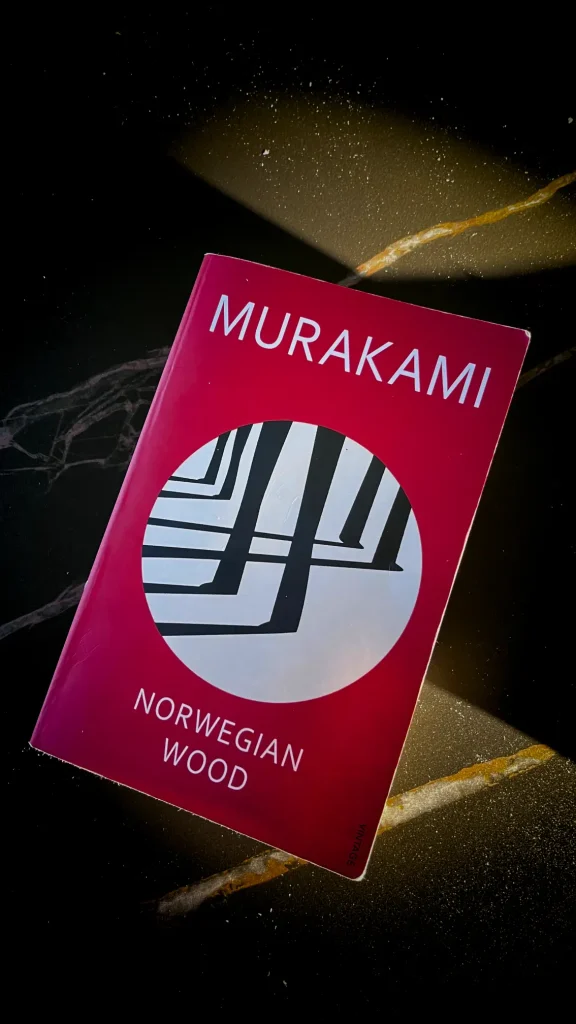
Reading Haruki Murakami’s novel ‘Norwegian Wood’ reopened a more bitter than sweet window into my own past, but gave me new perspectives on it.
Some books take us to places we haven’t been before. Others are reminders of places, times, and situations we perhaps have forgotten. So for me, ’Norwegian Wood’ was of the latter type, and an excellent one as such.
‘Norwegian Wood’ in a nutshell
The novel follows a few months in Toru Watanabe’s life. Toru turns 20 in 1969, a year that, in many ways, marked the watershed between post-war optimism and belief in progress and the more resigned and disillusioned 1970s.
Toru struggles to find purpose and meaning as a university student. He is still tangled up in grief after his friend Kizuki’s suicide a couple of years before, and confused by his developing relationship with the fragile Naoko, Kizuki’s life-long girlfriend while he lived.
As time goes by, Toru is torn between Naoko, who is constantly withering under the mourning for Kizuki despite her love for Toru, and Toru’s fellow student, Midori. Midori has had enough tragedies in her own life, but unlike Naoko, Midori has chosen to live.
An age of transition
Perhaps Murakami had other reasons for choosing 1969 as the backdrop for a story about the transition from teenager to young adult. But it suits well.
Both are eras of transition and change. We stop having a child’s blue-eyed trust that everything necessarily will be okay in the end. We learn that battles always bring pain and suffering, but rarely glorious victories. We are forced to admit that most things happen outside our control.
In a way, magic disappears from our lives, and reality can be a bleak place.
A Norwegian Watanabe
I turned 20 in early 1985, 16 years after our friend Toru. In the autumn of 1984, I moved to Trondheim to start my university studies. For years, I had waited to escape from the place I grew up. I guess I had a magical belief that removing myself geographically would remove my past. This isn’t how it works!
I found myself in the same lonely and directionless existence as Toru Watanabe.
Toru and I were both introverted, observational, and relatively quiet, and we endured life instead of conquering it. Like him, it seemed that young women found me interesting as a conversation partner, even someone to trust and confide in, but this didn’t necessarily mean they saw me as a suitable candidate for a relationship.
We both had a friend who chose to end his life.
When death comes to town
Death is a central theme in ‘Norwegian Wood’. Nothing shatters the worldview of young people more than the day they realise death is real. One thing is to lose someone dear. Even worse, to lose someone in one of the most heartbreaking ways: suicide.
But the worst blow is to realise our own mortality.
As children, few of us can grasp that our time, our lives, are limited. However, on this day in every life, when death for the first time comes to town and removes someone dear, it hits us straight in the face.
The long silence afterwards
They say everything will pass. For young people stricken by grief, abandonment, and fear of their own death, I believe this highly depends on their access to someone with whom they can share and discuss their experiences, because this is uncharted terrain for most young people in the modern world.
I wasn’t as close to the friend I lost in 1987 as Toru was to Kizuki. Still, it took me about 20 years to recover after his death. The culture where I grew up and lived didn’t allow much sharing of negative experiences at all.
In the end, I used writing as self-therapy when I created the song ‘Enklast vein ut’ (‘The easiest way out’) and finally found a kind of closure. You can find a rough ‘kitchen recording’ of the song in my article Samples from 40 years of self-therapy writing:
Final thoughts
‘Norwegian Wood’ isn’t a piece of feel-good literature.
Sometimes, the best books don’t make us feel good. Sometimes, they give us new perspectives on our own lives, new understandings.
I feel ‘Norwegian Wood’ did this for me, by gently taking me back to my own life’s 1969, which took place in Trondheim, Norway, in 1984/1985.
Haruki Murakami’s ‘Norwegian Wood’ is an excellent book. Don’t read it if you seek adventure or if hope is what you need. Read it instead to access the remembered places of your life and shed light on them.
In a way, this is how both good books and therapy work.
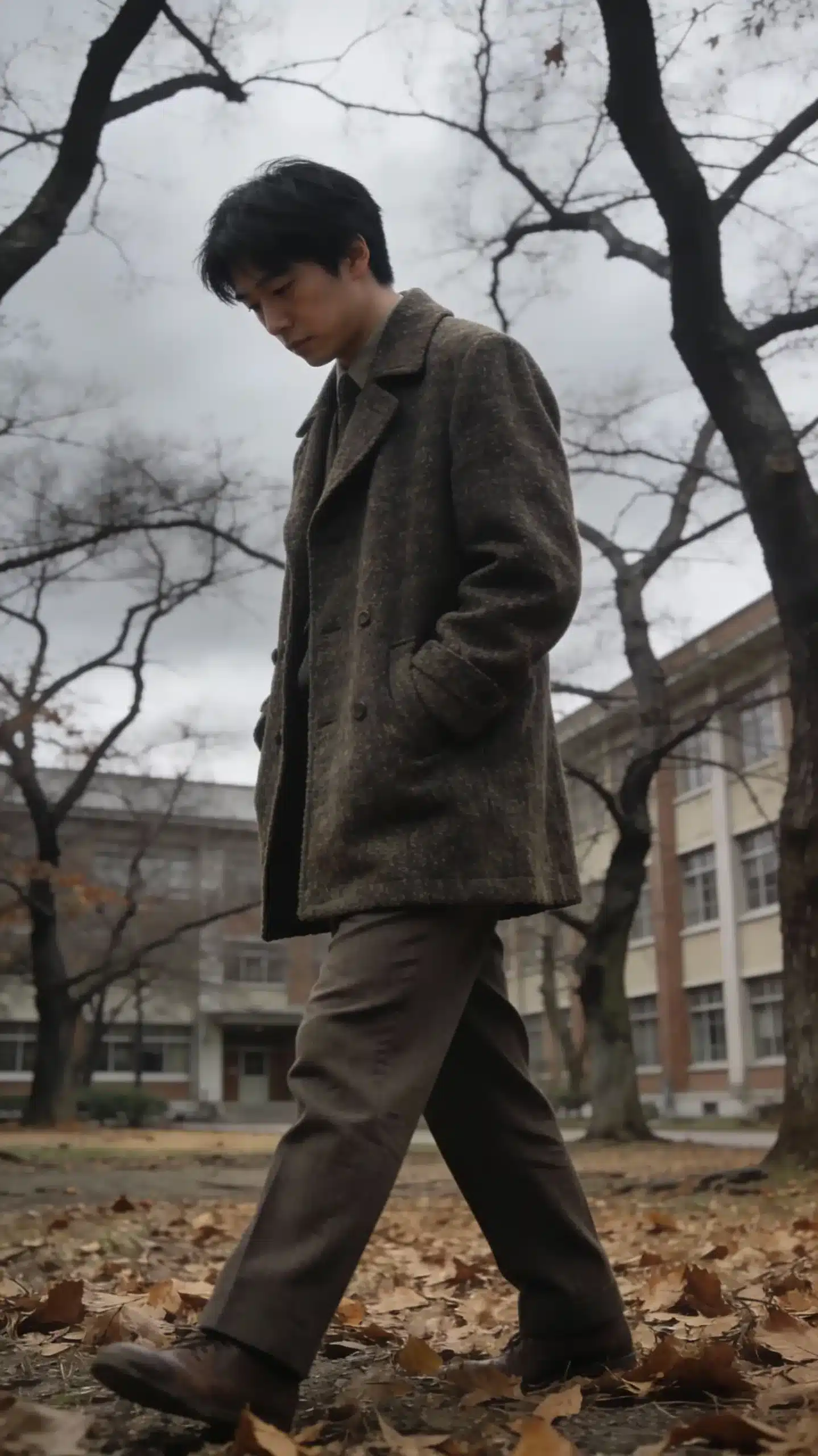
The picture of a young Japanese man used in this article is an AI-generated illustration.











Post Comment
You must be logged in to post a comment.