Am I autistic? #2 Well, what does it MEAN to be autistic?
My therapist recently asked if I had considered the possibility that I may have autistic traits.
In fact, I contemplated this question thoroughly already 10-15 years ago. And now, as back then, the first problem is: what do I have before me to consider?
What does it mean to be autistic?
Autism seen from a medical diagnosis perspective
The medical diagnostic criteria may seem like the right place to go for a definition of autism, which was what I did more than a decade ago. But is it really the right place to look?
In contrast to what I did earlier, I decided to only listen to autistic voices this time. And they tell a different story indeed.
However, let’s review the medical diagnostic criteria before we dive into their problems.
On diagnostic systems
Most books I’ve read refer to the American DSM-5 framework, even those written by European authors.
As far as I know, DSM-5 isn’t used as an official diagnostic system outside the USA. Therefore, I will quote the latest version of the World Health Organisation’s system, the ICD-11.
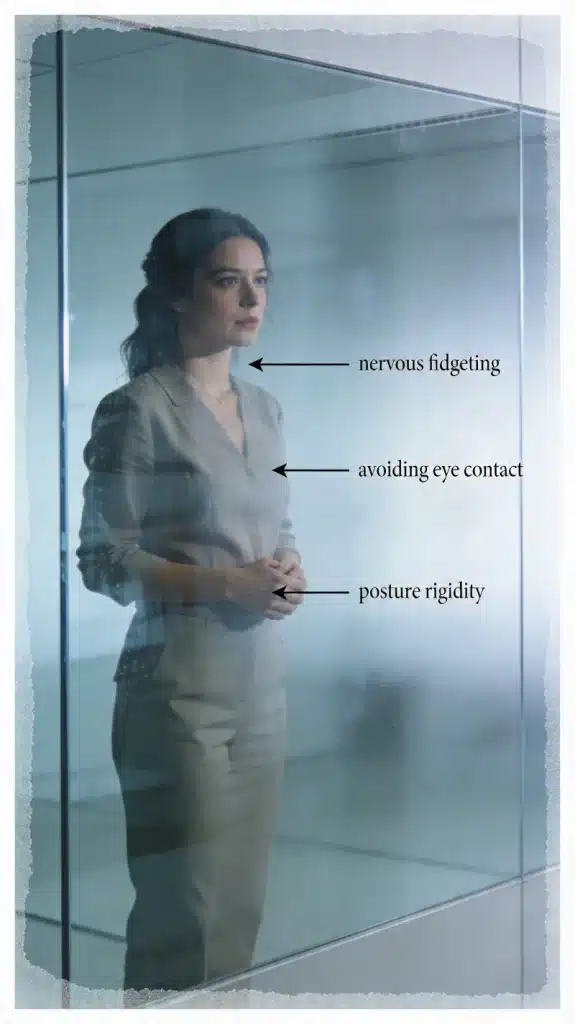
The ICD-11 diagnostic requirements for “6A02 Autism spectrum disorder”
The following are the essential (required) features as copied from the ICT-11. I have only added some headlines and formatting to improve readability.
Problems related to social functioning
Persistent deficits in initiating and sustaining social communication and reciprocal social interactions that are outside the expected range of typical functioning, given the individual’s age and level of intellectual development.
Specific manifestations of these deficits vary according to chronological age, verbal and intellectual ability, and disorder severity. Manifestations may include limitations in the following:
- Understanding of, interest in, or inappropriate responses to the verbal or non-verbal social communications of others.
- Integration of spoken language with typical complementary non-verbal cues, such as eye contact, gestures, facial expressions and body language. These non-verbal behaviours may also be reduced in frequency or intensity.
- Understanding and use of language in social contexts and the ability to initiate and sustain reciprocal social conversations.
- Social awareness, leading to behaviour that is not appropriately modulated according to the social context.
- Ability to imagine and respond to the feelings, emotional states, and attitudes of others.
- Mutual sharing of interests.
- Ability to make and sustain typical peer relationships.
Problems related to restricted, repetitive, and inflexible behaviour
Persistent restricted, repetitive, and inflexible patterns of behaviour, interests, or activities that are clearly atypical or excessive for the individual’s age and sociocultural context. These may include:
- Lack of adaptability to new experiences and circumstances, with associated distress, that can be evoked by trivial changes to a familiar environment or in response to unanticipated events.
- Inflexible adherence to particular routines; for example, these may be geographic such as following familiar routes, or may require precise timing such as mealtimes or transport.
- Excessive adherence to rules (e.g., when playing games).
- Excessive and persistent ritualized patterns of behaviour (e.g., preoccupation with lining up or sorting objects in a particular way) that serve no apparent external purpose.
- Repetitive and stereotyped motor movements, such as whole body movements (e.g., rocking), atypical gait (e.g., walking on tiptoes), unusual hand or finger movements and posturing. These behaviours are particularly common during early childhood.
- Persistent preoccupation with one or more special interests, parts of objects, or specific types of stimuli (including media) or an unusually strong attachment to particular objects (excluding typical comforters).
- Lifelong excessive and persistent hypersensitivity or hyposensitivity to sensory stimuli or unusual interest in a sensory stimulus, which may include actual or anticipated sounds, light, textures (especially clothing and food), odours and tastes, heat, cold, or pain.

Onset of the disorder in early childhood
The onset of the disorder occurs during the developmental period, typically in early childhood, but characteristic symptoms may not become fully manifest until later, when social demands exceed limited capacities.
The disorder affects a person’s life significantly
The symptoms result in significant impairment in personal, family, social, educational, occupational or other important areas of functioning.
Some individuals with Autism Spectrum Disorder are able to function adequately in many contexts through exceptional effort, such that their deficits may not be apparent to others. A diagnosis of Autism Spectrum Disorder is still appropriate in such cases.
The problem with medical diagnoses seen from autists’ perspective
At this point, I will quote Dr Devon Price’s book Unmasking Autism. Dr Price seems to be an authoritative voice among autistic writers, frequently referred to by other authors whose books I’ve read so far.
Problem 1: The effect of limited and outdated research
Until fairly recently, most people believed Autism was rare, that only young boys had it, and that it was always easy to see. Think of Dustin Hoffman’s portrayal in the film Rain Man: he’s institutionalized as a child because he’s profoundly disabled and too “difficult” to have at home, he never gives eye contact, wanders off dangerously when not closely watched, and has a preternatural talent for math that his nondisabled brother exploits for personal gain. This is how all of us were trained to view the disability: a horrible condition that renders you freakish and helpless, your life only as valuable as your savant-like skills are to other people.
– Dr Devon Price
This is largely the picture the diagnostic criteria are still painting. Why? Because the first research on autism (performed by Leo Kanner and Hans Asperger in the 1940s) only focused on a very limited selection of people:
They were all young, white, middle-class boys.
Why? Well, apart from the fact that the original researchers themselves were white, male, and presumably from the middle or higher classes, here are my assumptions:
The potential usefulness of white, middle-class boys
It’s sad but true: your perceived value as a human being has always been, and still is, tightly connected to your usefulness.
When I grew up, we would often hear sarcastic comments along the lines of “Do you think you’re here to be some kind of decoration? Get out and make yourself useful!”
Usefulness, in this context, is quite synonymous with productivity. So why study only white, middle-class boys? My guess: Because they were perceived to have the highest “potential usefulness”.
White, middle-class boys were supposed to grow up to become high-productivity engineers, managers, and army officers. If they were, in any way, disabled, this was a productivity “failure”. Which could, perhaps, be corrected if they found a way to “fix them”.
Well worth a study, then.
Wait a minute–aren’t other people useful?
How about the girls? Remember, we are talking about research from the 1940s here. The girls were primarily supposed to produce children, the future workers and soldiers. They weren’t seen as candidates for engineer or colonel positions.
How about the working class? No, please. There were so many of them that they could just be poured into the factories to work themselves to pieces, or into the battlefields to be blown to pieces.
Such tunnel vision on autism has stuck for almost a century, by keeping diagnostic criteria designed for young, white, middle-class boys. This still leads to systematic underdiagnosing of other human variations.
But many human variations are still unmentioned here
I know.
And I know how privileged I am, in many ways, by being born as a white, heterosexual, cisgender man. True, I started life as a working-class boy, but I was lucky enough to live in a country where education and social advancement were possible.
If I’m exploring and describing things from a white, heterosexual, middle-class, cisgender perspective, it’s because this is where my experience lies, not because I am in any way accepting or supporting the systematic discrimination and underdiagnosis of other human variations.
I am aware that people of colour, LGBTQIA+ people, people with co-occurring neurodivergencies (such as ADHD), and others from various positions in the full rainbow of humanity must have had, and still have, a much more painful experience with the still-excluding medical diagnostic criteria, and the dangers of being “different” in a discriminating, judgmental, and sometimes violent society, than people with a similar background as me would ever have.
Problem 2: The criteria are only defined from an external point of view
Despite what people believe, Autism is not defined by rudeness, masculinity, or having any kind of mathematical skill. In the scientific literature, it’s arguable whether the disability should even be defined by the presence of clear behavioural signs, such as trouble reading social cues or hesitating to initiate contact with other people. Instead of looking to the external signals of Autism that others might pick up on, it’s important that we instead focus on the neurobiological markers of the neurotype, and the internal experiences and challenges that Autistic people themselves report.
– Dr Devon Price
You may have noticed a glaring fact when you read the ICD-11 diagnostic criteria: it’s all seen from the outside.
Which is quite revealing, and also sad, when we are talking about a condition that affects every aspect of a human being’s experience of life, in one way or another.

A question of being a nuisance
Which leads me to another reason why I believe the earliest autism research exclusively focused on this rather limited group of white, middle-class boys.
Because they were a nuisance to their white, middle-class parents.
The working-class parents just had to cope with whatever life threw at them.
The upper-class parents had the means to hide nuisances away. Out of sight, out of mind.
But middle-class parents, particularly fathers, had to live with children who were not only unproductive but also sometimes a nuisance and a shame, while their fathers themselves had to be productive as engineers and army officers. What a pity!
Another good reason to do some research, I suppose!
The missing inner experience
So, not a word about the autistic experience in the DSM-11 diagnostic criteria. Not a word about how it actually feels, or about the confusion and anxiety always connected to being “different”, or why the autistic traits are there in the first place.
One thing is how Leo Kanner, Hans Asperger, and their peers saw the world and their patients in the 1940s or earlier, but the last time I checked my calendar, it said 2026!
Is it right that autism is still solely defined by the impact (nuisance? strangeness?) autists have on their surroundings? Is it right that an autism diagnosis can only be granted if one reaches a certain level of impact (nuisance? strangeness?) on the surroundings?
How it’s experienced from the inside obviously isn’t interesting at all–in 2026.

Searching for an alternative perspective
My aim here is to understand myself by examining whether and where I fit into the landscape of autism and neurodiversity.
As such, a medical diagnosis isn’t a necessity for me. I know it’s different for many people, because a diagnosis is the gateway to getting help and reasonable adjustments at school or at work.
For me, at my stage of life, the diagnostic criteria are only of value insofar as they help me understand myself better. This I will explore in later articles on deliberate.one.
But it’s already undeniably clear that different perspectives are needed for a clear understanding.
Why are autistic traits there in the first place?
In his book Unmasking Autism, Dr Devon Price describes the neurological basis for autism this way:
- Autistic people have differences in the development of their anterior cingulate cortex, a part of the brain that helps regulate attention, decision making, impulse control, and emotional processing.
- Autistic brains differ from allistic [non-autistic] brains in how excitable our neurons are.
- When infants are born, their brains are typically hyperconnected [more connections in the brain than we actually need]; much of human development is a process of slowly pruning unhelpful connections and becoming more efficient at responding to one’s environment. In autistic brains, however, some regions remain hyperconnected, while others may be underconnected (relatively speaking).
- Every autistic brain exhibits a different connectivity pattern, apparently more diverse than the wiring of neurotypical brains.
– Bullet points have been extracted by me from Dr Price’s chapter Defining autism, which means the text may have been slightly altered.
That’s the neurological stuff, but what are the practical consequences?
Dr Price says this means that autistic people tend to have the following qualities:
- They are hyperreactive to even small stimuli in their environment.
- They have trouble distinguishing between information or sensory data that should be ignored versus data that should be carefully considered.
- They are highly focused on details rather than “big picture” concepts.
- They are deeply and deliberately analytical.
- Their decision-making process is methodical rather than efficient; they don’t rely on mental shortcuts or “gut feelings”.
- Processing a situation takes them more time and energy than it does for a neurotypical person.
Traits that survived evolution
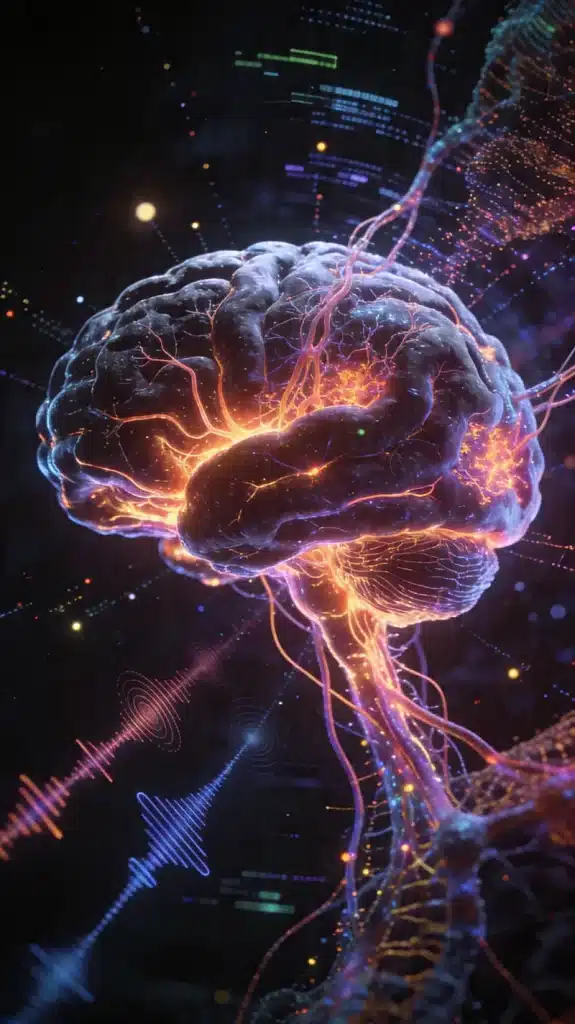
This paints a completely different picture than the medical diagnosis criteria we have discussed.
What we are talking about here is clearly a difference in (brain) wiring and, subsequently, a difference in information processing. Which makes intuitive sense to an old IT man like me.
But does this mean we’re talking about faulty wiring and information processing in autists, compared to non-autists?
I don’t think so.
If “autistic wiring” of the brain had been an error of construction, a defect that consistently was to the autists’ disadvantage and thus reduced their probability for survival, then evolution would have erased this human variation long ago.
On the contrary, I suspect that an “autistic wiring” may have been a huge advantage in some circumstances. I will examine this in later articles.
A clearer view of what to explore
So, where am I now, on my newly started expedition to explore my possible position in the landscape of autism?
That remains to be seen. However, I now have a clearer view of what I’m about to explore.
Autism can’t be defined by what people believe it looks like.
What matters is how it works and how it feels.
Stay with me on the journey.
Deliberate 1 is my independent channel for expression and creation.
At the time of writing this article, I have not asked for, been promised, or received payment, services, or any other compensation for mentioning other people’s products or points of view in the article.
This includes Dr Devon Price’s book Unmasking Autism.
All pictures used in this article are AI-generated illustrations. Some of them resemble me at different ages, but they are not real pictures.











Post Comment
You must be logged in to post a comment.