Exploring Ishiguro: Lives we choose—and lives we simply accept
Some books stay with us long after we finish reading them. This happened to me recently when I read not one, but two, books by Kazuo Ishiguro: The Remains of the Day (1989) and Never Let Me Go (2005).
Both are wonderful books, populated by characters you quickly become deeply invested in. Their drama unfolds through subtle observations, small gestures and changes in expression rather than high-octane action or intricate plotting.
I usually look for, and often find, the Big Question discussed in a book.
In The Remains of the Day, I felt this question came across loudly and clearly: can we refuse to take responsibility for our actions if we’re doing our duty, and doing it well?
The Big Question of Never Let Me Go felt more elusive as I read the book. A couple of weeks after I finished, it dawned on me. I’ll return to this and explain why the two books, although entirely different in most ways, connected well in the end.
At least in my head.
Stevens’ steadfast service
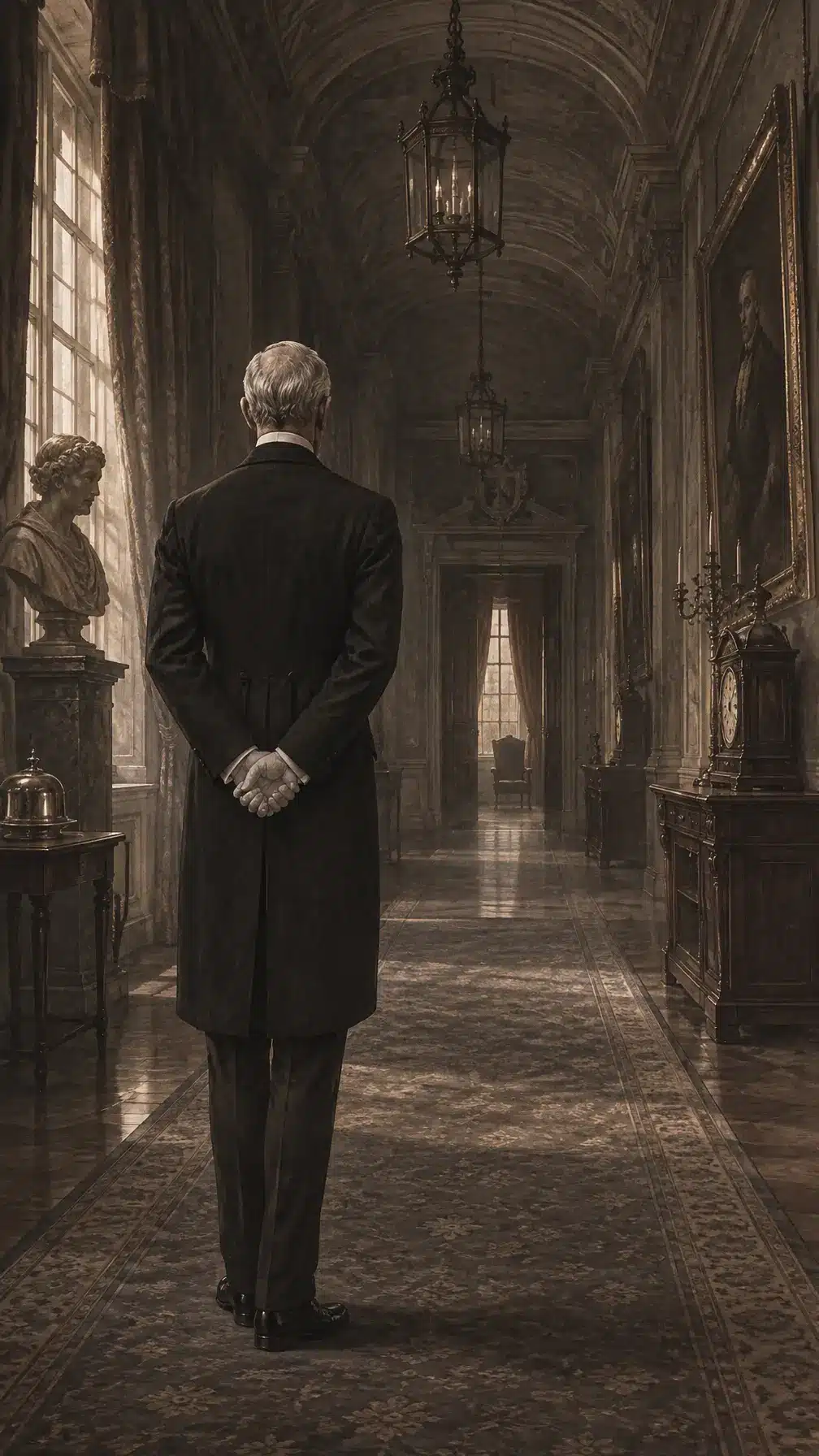
In The Remains of the Day, the narrator is Stevens, who is reflecting on his decades of service as a butler.
We get to know Stevens and how he takes pride in being exceptionally committed and professional in his role as a butler. However, being a great butler isn’t simply Stevens’ occupation. It has become his entire identity. His sense of self-worth depends entirely on how well he performs his duties, and he seems to have little room left to question their purpose or consequences.
The author discloses gradually, and very skilfully, how Stevens’ employer, Lord Darlington, had pro-German sympathies before and during the War. Nevertheless, Stevens can never bring himself to criticise Lord Darlington’s choices, even after his death.
We also learn how Stevens has sacrificed his own personal opportunities and needs in the name of duty, or, indeed, never had a personal life at all.
The price of a life devoted to duty
It’s almost heartbreaking to read how the ageing Stevens’ convictions about the success of his life are wobbling as he sets out to find the former housekeeper, Miss Kenton, who left years ago, and ask her to return and resume service at Darlington Hall.
It’s even more heartbreaking to see how Stevens, as always, appears to accept this disappointment with his customary stoicism.
Stevens’ emotional restraint was brilliantly portrayed by Anthony Hopkins in the 1993 film adaptation of The Remains of the Day, where Emma Thompson played Miss Kenton.
Can duty become an excuse?
I assume more readers than I have sympathised deeply with Stevens and wanted to shout to him, “It’s not worth it!” when he chooses work over staying with his father on his deathbed. Or, for that matter, “Tell her how you feel, for Christ’s sake!” during his many encounters with Miss Kenton while she was a housekeeper.
However, do we really have the right to criticise Stevens?
We don’t need to be a butler to have made a habit of doing our duty, and to try to justify this, whether it’s justifiable or not.
Of course, Stevens’ situation is nowhere near as extreme as the examples that immediately spring to mind when we discuss people hiding behind their duty. But the underlying mechanism can be somewhat similar.
On the extreme end, we’ve heard horror stories about soldiers torturing inmates in prison camps, not only in Nazi Germany, but also in Iraq and Guantanamo in recent decades. We’ve heard about police officers beating up suspects to get a quick confession.
When confronted, the immediate excuse is too often, “I only followed orders” or “I just did what was expected of me”.

When belonging comes at a price
But apart from these violent horrors, people may have an unhealthy level of commitment and sense of duty in many circumstances.
Teenagers may feel an overly strong commitment to their circle of friends, for instance. One of the stupidest things I’ve done was to start smoking in the early 1980s. This was partly an act of rebellion, but also a commitment to the culture of the social circle I found when I started college.
Nobody forced me to smoke. But the desire to belong had become sufficiently important that I was prepared to ignore what I knew was sensible.
And many of us stay in toxic relationships because we feel a duty not to make a fuss, and definitely not break up a family. Even when the relationship isn’t good for any of anyone involved.
We all have a little Stevens in us
Ishiguro created Stevens as a butler because, after all, a butler is supposed to do their duty.
But I believe there is some Stevens in most of us.
So, I believe we should all ask ourselves this question: whenever we say or think, “I only did my job”, “I only did my duty”, “I did what they told me to do”, “I did what was expected of me”: does this remove our responsibility for the consequences?
Think about it!
This was the loud and clear question I felt that The Remains of the Day asked. Of course, this is my interpretation. Ishiguro may have intended to explore something rather different.
The quiet acceptance of an imposed fate
I struggled slightly more with grasping the Big Question of Never Let Me Go.
In this novel, Kathy is the narrator. She grows up with her friends Tommy and Ruth at a boarding school, Hailsham. Little by little, we understand that they are clones created solely to provide organs for other people.
So, was the Big Question related to organ donation? No, this didn’t quite make sense. And another thing that didn’t make sense: why did these young people never protest? Why did they never try to run away, even though they, at some point, clearly knew that they were destined for a short life and much suffering?
Perhaps the most disturbing thing is that they have grown up in a world where their fate is presented as perfectly normal. They have never really been encouraged to imagine that another kind of life might be possible. And perhaps this is the reason why they never rebel.
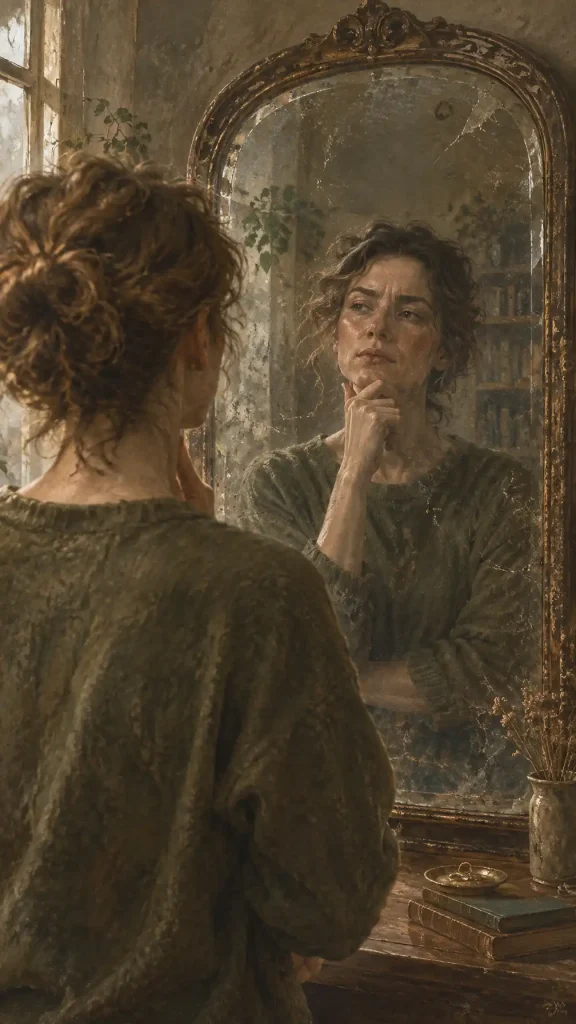
This eventually brought me to what I believe is the Big Question here: do we question our fate enough? Is it fair–to us and to others? Is it what we deserve as human beings? Or do we just accept it and float passively down the river of life?
From doing our duty to accepting our fate
With this in mind, I saw the similarities between the seemingly dissimilar novels The Remains of the Day and Never Let Me Go.
Of course, there is one fundamental difference between Stevens and the young people in Never Let Me Go. Stevens has, to a considerable extent, chosen his way of life. Kathy, Tommy and Ruth have grown up in a world where their choices have been severely restricted. Yet both stories make me wonder how easily we accept circumstances we perhaps should question.
Apart from this, I found that Never Let Me Go expanded the question raised in The Remains of the Day.
From: “Can I hide behind doing my duty and doing it well?”
To: “Can I generally hide behind blindly accepting my fate and not taking responsibility for it?”
We cannot always choose our circumstances, and we cannot always change them. Often, we cannot objectively be blamed for what happens. But we may still have some responsibility for how we respond, what we accept, and what we try to change.
There is a difference between taking the blame and taking the responsibility.
Taking responsibility without taking the blame
As excellent books often do, The Remains of the Day and Never Let Me Go made me reflect on my own life, for instance, taking responsibility for it.
In my life, there are a lot of things it’s fair that I take full blame for, whether I acted out of immaturity, fear, or a desire to fit in with cultural expectations.
There are also quite a few things that I can’t and won’t take the blame for. And in the instances where others, in different ways and for different reasons, have harmed me, I’ve had trouble finding the ability to forgive.
The problem was, what other ways could I have to “let go” of what had happened, in the sense of stopping brooding over it for eternity?
When I recently read Mark Manson’s book The Subtle Art of Not Giving a F*ck, I was reminded of the importance of taking responsibility for my fate. Without fully realising it, this is exactly what I’d been trying to do over the last twenty years. And it’s the only thing that makes sense.
Because most people who knowingly or unknowingly harmed us will never, in a million years, take any blame, let alone take responsibility for our recovery. Ultimately, we need to take responsibility for our recovery ourselves. Others may help, but the responsibility for our future is our own.
So we’d better get on with it. Mending any damage that can be repaired, moving on, and letting go. Which means there’s no need to forget or forgive.
The courage to question the life we’re given
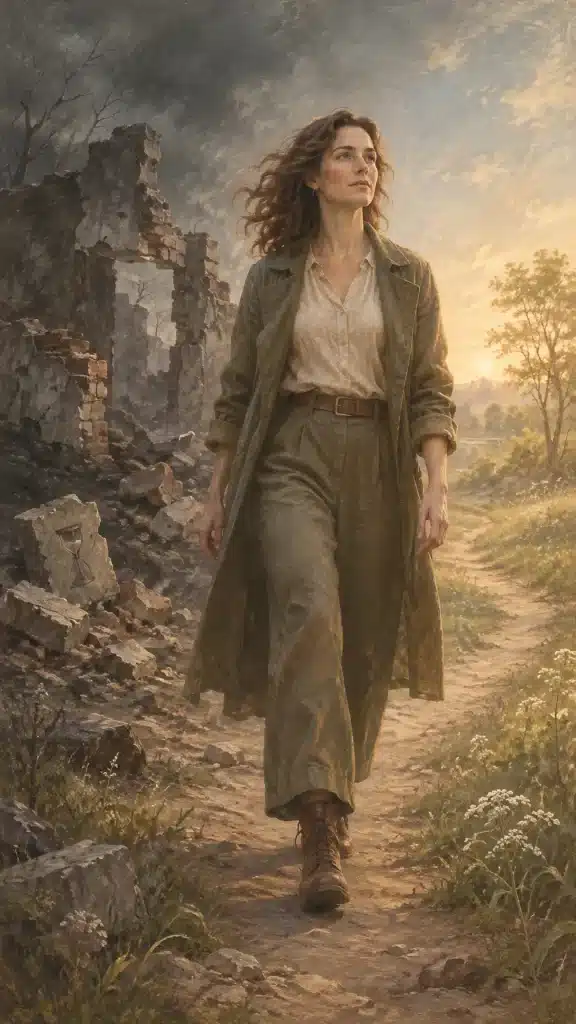
One of my mantras here on deliberate.one is that something can be done in almost any situation. So, as I read Never Let Me Go, I admit I wanted to shout to Kathy and Tommy, “Run away, now! There are no prison walls keeping you here. Surely there must be another way to live?”
All in all, I believe Kazuo Ishiguro holds up a mirror for us in both The Remains of the Day and Never Let Me Go. I think he wants us to see ourselves in Stevens, and in Kathy, Tommy, and even in Ruth.
And when we see ourselves there, to ask the Big Questions. The difficult questions. Difficult, because accepting the grim clarity of truth might require change, and change can sometimes be painful.
Sadly, too many of us would rather face lifelong suffering instead of the relatively short, sharp pain of change.
From moment to moment, from day to day, it’s easier to just float along in the comfort of our habits.
Sometimes, the Big Question in our own stories isn’t whether we can change our lives, but whether we are willing to acknowledge that something needs to change in the first place.
All pictures used in this article are AI-generated illustrations.
If you want to share this article with someone, please feel free to use one of these sharing buttons:











Post Comment
You must be logged in to post a comment.